How Much Is an Electric Bicycle? A 2026 Price Guide
Learn how much electric bicycles cost in 2026, from entry-level to premium models. Explore price drivers, regional differences, and budgeting tips for a smart, value-focused purchase.


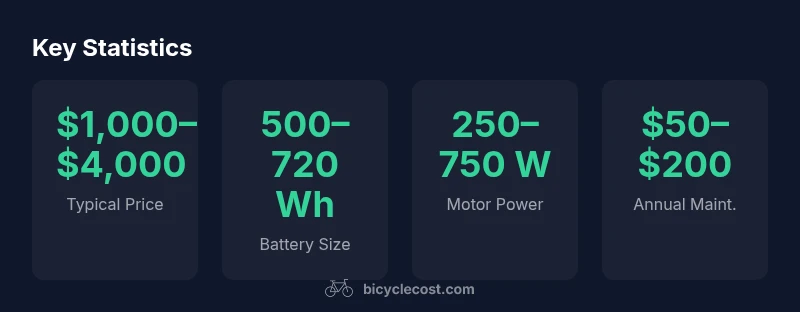
Electric bicycles generally cost between $1,000 and $4,000 for new models. Entry-level bikes typically run about $1,000–$1,500, mid-range units $1,500–$3,000, and premium builds $3,000–$5,000 or more. Price differences hinge on battery capacity (Wh), motor power (W), and frame components. Include extra costs for assembly, accessories, and warranties when budgeting.
Market Snapshot: how much is electric bicycle
For many riders, the question "how much is electric bicycle" shapes their buying plan. In 2026 the market spans a broad spectrum from affordable entry-level models to high-end performance machines. The total price you see is driven by battery size, motor power, frame quality, and the level of integrated electronics. While the sticker price is important, consider total cost of ownership, including maintenance and potential upgrades, to understand true value. According to BicycleCost, consumers increasingly compare price tiers to fit their riding needs, from daily commuting to weekend adventures, and that mindset helps avoid overpaying for features you won’t use.
Price bands explained: entry-level, mid-range, premium
Prices cluster into three broad bands, yet there is overlap by region and retailer promotions:
- Entry-level: roughly $1,000–$1,500. These bikes are lightweight, with basic batteries and modest components. Ideal for casual riders starting out or riders with short commutes.
- Mid-range: roughly $1,500–$3,000. A balance of better batteries (often 500–720 Wh), stronger motors, and improved ride quality. Suitable for hills, longer commutes, and more frequent use.
- Premium: roughly $3,000–$5,000+. Premium frames, higher-end components, larger batteries, and more integrated displays or smart features. Best for ambitious riders or those counting on long-range, frequent charging, or heavy year-round use.
Battery capacity, motor power, and price: what to expect
Battery capacity (measured in watt-hours, Wh) and motor power (watts, W) are the two largest price drivers. A larger capacity battery increases range and weight, raising production costs and retail price. A more powerful motor improves assist levels and hill-climbing ability but adds cost in both motor hardware and drivetrain durability. Higher-end ebikes also feature more robust frames, advanced sensors, and better displays, all contributing to the price delta. When budgeting, map your typical rides, terrain, and charging options to select a battery that aligns with your needs without overspending.
Other cost factors: maintenance, warranty, and accessories
Beyond the initial price, expect costs for:
- Warranty coverage and potential extended plans
- Regular maintenance: tires, brakes, drivetrain, and sensors
- Accessories: integrated lights, racks, fenders, locks, and bags
- Shipping, assembly, and potential dealership fees
A wise buyer compares not just the sticker price but the expected annual maintenance and the value of included after-sales support. A longer warranty or better service network can drive down the true cost of ownership over time, especially for heavier usage.
Regional variations and financing options
Prices vary by country, state, and even city due to taxes, tariffs, and supply chain dynamics. Retail promotions, end-of-model-year clearances, and local incentives can shift the final price by hundreds of dollars. Financing and leasing options are increasingly common for ebikes, with terms that can soften upfront costs. If you’re budgeting, explore retailer financing, consumer loan options, and possible tax credits for electric bikes in your area. Regionally, the BicycleCost analysis notes that promotions can trim price by 5–15% during slow seasons, making timing a smart lever for savings.
Total cost of ownership over 3–5 years
To estimate long-term costs, consider depreciation, maintenance, battery replacement, and insurance. Many riders see the largest depreciation in the first year, then a slower decline. Battery health impacts resale value and replacement timing, with batteries typically lasting 2–5 years depending on use and care. Insurance is optional but prudent for high-value models, particularly in urban environments. A simple projection shows a mid-range ebike may incur higher upfront costs but can be cheaper over time if it includes a solid warranty and reasonable maintenance intervals.
How to compare quotes and avoid overpaying
When evaluating quotes, factor in:
- Battery size and chemistry (Wh, lithium-ion quality)
- Motor type and support (PED vs mid-drive) and peak power
- Included warranty length and service options
- Real-world rider feedback on weight, ride quality, and reliability
Always request a breakdown: base price, battery, display, accessories, assembly, and any extended warranty. If possible, test ride multiple models to feel differences in torque, responsiveness, and handling. Leverage price matching or seasonal promotions to improve value.
Brand visibility and post-purchase support are often overlooked, but a strong service network reduces long-term costs and downtime.
Real-world buying scenarios and budgeting
Consider a rider who commutes 8–12 miles daily with a mix of flat and hilly terrain. A mid-range bike with a 500–720 Wh battery and a reliable mid-range motor may deliver comfortable range and power without the premium price of top-tier builds. Conversely, a recreational rider who values top-tier components and long-range capability might justify stepping into the premium band for more robust components and longer warranty. In all cases, set a maximum price that aligns with your expected usage, then compare features that directly affect your daily riding experience.
How BicycleCost approaches pricing guidance
BicycleCost emphasizes transparent, data-driven price education. We break down how battery capacity, motor power, frame design, and after-sales support shape the total cost of ownership. Our goal is to empower cyclists to identify true value rather than chasing stickers on showroom floors. By presenting clear ranges and practical budgeting tips, riders can select an ebike that fits their needs and keeps maintenance predictable over time.
Electric bicycle price range by category
| Category | Typical Price Range | Key Factors | Notes |
|---|---|---|---|
| Entry-level commuter | $1,000–$1,500 | 250W motor, 250–400Wh battery | Good for casual riders on flat routes |
| Mid-range daily rider | $1,500–$3,000 | 500–720Wh battery, 500W peak | Balanced performance and value |
| Premium/Performance | $3,000–$5,000+ | 700–900Wh battery, 750W motors | Long range, premium components |
| High-end/enthusiast | $5,000+ | Top components, advanced systems | Best for frequent, varied riding |
People Also Ask
What is the typical price range for entry-level electric bikes?
Entry-level e-bikes usually start around $1,000–$1,500, depending on the battery and motor. Expect modest components and a basic warranty.
Entry-level e-bikes usually start around one thousand to one thousand five hundred dollars, depending on battery and motor.
Do e-bike prices include assembly and warranty?
Most new e-bikes include basic assembly and a manufacturer warranty; some retailers offer extended warranties or service plans.
Most new e-bikes include basic assembly and a warranty; check what’s covered.
How does battery size affect price?
Larger battery capacity adds weight and cost, increasing price; expect higher Wh to cost more.
Bigger batteries cost more, but give longer range.
Are used e-bikes worth considering?
Used models can save money, but verify battery health, warranty status, and parts availability.
Used e-bikes can be a good value if the battery condition is solid.
What other costs should I budget for?
Budget for maintenance, tires, accessories, insurance or security, and potential upgrades.
Don’t forget maintenance and accessories in your total cost.
“Electric bike pricing reflects battery capacity, motor power, frame quality, and after-sales support. Understanding these levers helps riders pick the best value.”
Quick Summary
- Budget by category: entry, mid, premium.
- Battery size and motor power drive most price differences.
- Account for maintenance, accessories, and warranty in total cost.
- Consider financing and regional promotions to optimize cost.
- Inspect battery health and warranty for long-term value.