How Much Bicycle: A Practical Price Guide for 2026
Explore practical price ranges for bicycles—from entry-level to e-bikes—and learn what's behind the cost in 2026. This BicycleCost guide covers purchase price, maintenance, and total ownership.


How much bicycle should you budget for? In 2026, the cost range depends on use and drivetrain. The BicycleCost team finds that upfront sticker price is only part of the story, with maintenance, tires, and upgrades adding to total ownership. Define your riding goals first, then map to price bands and long-term costs.
How Much Bicycle Costs in 2026
Readers often ask how much bicycle to budget for, especially when they are shopping for their first ride or upgrading to a more capable model. In 2026, the cost landscape is shaped by your intended riding style, frame material, components, and whether you want pedal assist. According to BicycleCost, the upfront sticker price is only part of the story. The total cost of ownership includes routine maintenance, tires, tubes, consumables, and occasional upgrades over several years. For most riders, a practical approach is to define your primary use (commuting, recreation, or sport), pick a target price band, and then map out maintenance needs, accessories, and potential repairs. This method aligns with the broader economics of cycling: you trade a certain upfront investment for long-term reliability, performance, and enjoyment. The result is a budget that reflects how you actually ride, not just what you want to own.
Price Bands: Entry-Level, Mid-Range, and Premium
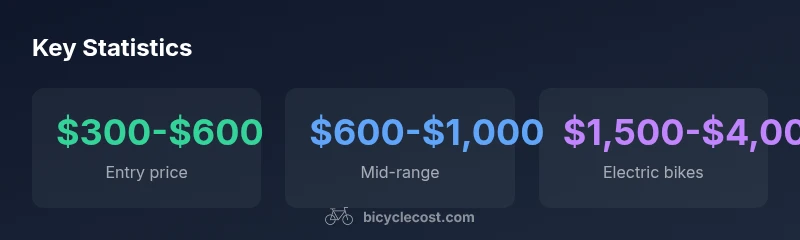
Bicycles are sold across several price bands, each offering different levels of performance, durability, and upgrade potential. Entry-level bikes typically start around $300 to $600 and are ideal for beginners or casual riders who value simplicity and reliability. Mid-range bikes usually run from $600 to $1,000, offering better components, lighter frames, and more optional upgrades. Premium models extend from about $1,000 to $2,500 or more, delivering advanced groupsets, lighter materials, and specialized geometry. Electric bikes, when included, commonly span from $1,500 to $4,000 or higher, reflecting battery capacity and assist levels. Remember, these bands are guidelines; regional taxes, shipping, and dealer promotions can shift prices. The BicycleCost analysis notes that value often comes from choosing a bike that fits your riding goals and provides a comfortable, durable platform for future upgrades, rather than chasing the highest spec immediately.
Total Ownership: Maintenance, Upgrades, and Accessories
Purchasing a bike is just the start. The true cost often appears in maintenance, consumables, tires, brakes, chains, and occasional upgrades. Basic maintenance like tire rotations, chain lubrication, and brake adjustments can cost a few tens of dollars per service and may be needed every 6–12 months depending on use. Expect to replace tires every 2–4 years for many riders, and plan for brake pad or rotor replacements as wear demands. Upgrades—such as new wheels, a higher-tier drivetrain, or a lighter frame—can significantly affect total ownership over 3–5 years. Accessories like a sturdy lock, quality helmet, lights, and a rack add to the bill but improve safety and convenience. In the BicycleCost framework, total ownership costs can exceed sticker price if you overlook ongoing maintenance, especially for riders who ride year-round, ride off-road, or commute long distances. Budget accordingly and consider maintenance as a core part of your purchase decision.
Regional Variations, Taxes, and Where to Buy
Bike prices vary by region due to taxes, import duties, distribution networks, and local competition. In some markets, access to reputable shops, fitting services, and after-sales support can add value beyond price alone. In-store purchases often provide expert sizing and test rides, plus immediate service; online retailers may offer lower upfront prices but deliver longer wait times and uncertain fitting. If you’re buying in a region with a high tax rate on bicycles, the sticker price may not reflect total cost, so factor in tax and possible shipping. BicycleCost recommends visiting local shops for fit and safety checks, while comparing total cost of ownership across retailers and delivery options. Seasonal sales and end-of-model-year promotions can also shift price by 10–20% or more, so plan ahead and use price alerts.
Practical Budgeting and Buying Strategy
A practical budgeting plan starts with your riding goals, then works backward to a price band and ownership costs. Step 1: identify your primary use and required features (weight, components, frame). Step 2: test ride several bikes in your size to confirm fit and comfort. Step 3: evaluate second-hand options carefully, looking for consistent maintenance history and a clean frame. Step 4: calculate total ownership cost, including maintenance, tires, parts, and potential upgrades over 3–5 years. Step 5: allocate funds for safety gear (helmet, lights, lock) and accessories you’ll actually use. Step 6: set a price ceiling and monitor promotions. Following these steps helps you avoid overpaying for features you don’t need and ensures you stay within a sustainable budget.
Common price ranges by bicycle category
| Category | Typical Price Range | Notes |
|---|---|---|
| Entry-level bicycle | $300-$600 | Great for beginners; basic components |
| Commuter/Hybrid | $400-$900 | Balanced for daily riding; comfort-focused |
| Mountain bicycle | $500-$1,200 | Durable frame; versatile components |
| Road bicycle (mid-range) | $800-$2,000 | Lightweight; nicer groupsets |
| Electric bicycle | $1,500-$4,000 | Battery and assist add cost and weight |
People Also Ask
What is the cheapest bicycle you can buy new?
New bikes start around a few hundred dollars, but you’ll often get better value by buying slightly higher in price if you want reliability and resale value. Check component quality and frame integrity during a test ride. Avoid models with poor warranty coverage or hard-to-find replacement parts.
The cheapest new bike is usually a basic entry-level model. Look for reliable components and a solid warranty when possible.
Should I buy online or in a local shop?
Online retailers can offer lower upfront prices, but you lose hands-on fit and local service. A local shop provides sizing, test rides, and post-purchase maintenance, which can save money over time. If buying online, budget for a professional fit and local tune-ups.
Online can be cheaper, but a local shop helps with fit and after-sale service.
How often should I budget for maintenance?
Casual riders commonly plan for roughly $50 to $150 per year in basic maintenance, depending on use and riding terrain. Harsh winters or off-road riding can push costs higher due to more frequent tire and chain wear. Factor in occasional part replacements as wear patterns emerge.
Most riders should expect some annual maintenance costs and plan for occasional bigger purchases.
Do price differences guarantee better safety or quality?
Price does not automatically guarantee safety. The right fit, proper maintenance, and quality components aligned with your riding needs determine safety. Always test fit, check brakes and tires, and ensure the bike meets your local safety standards.
Price isn’t safety—fit and maintenance matter most.
Is an electric bike worth it for commuting?
For long commutes, hills, or multi-branch trips, an e-bike can be cost-effective by reducing fatigue and increasing range. However, initial price and ongoing battery costs raise the total ownership. Evaluate your commute length, terrain, and storage options before choosing.
E-bikes can be great for rough commutes, but weigh upfront and ongoing costs.
What should I check when buying a used bike?
Inspect the frame for cracks, check the drivetrain for wear, test the gears, brakes, and wheels, and verify maintenance history. Ask about past accidents and ensure the tires are safe. If possible, have a trusted shop inspect the bike before purchase.
Inspect frame, brakes, and drivetrain; get a test ride and a quick shop check if possible.
“Price is only one dimension of value; the right bicycle for you is the one that fits your riding goals and lifetime ownership costs.”
Quick Summary
- Define your riding goals to pick a price band
- Expect maintenance to add to total cost
- Consider second-hand options with caution
- Electric bikes carry higher upfront costs but offer benefits
- Prioritize fit and safety for best value