What is the price of the bicycle in 2026? A practical guide to bike costs
Understand bicycle prices in 2026: price ranges by category, ownership costs, and smart shopping tips from BicycleCost. Learn how features, materials, and e-bikes impact the sticker price.


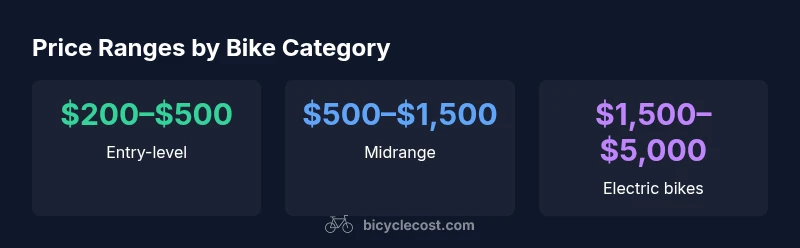
Price is the first question most shoppers ask: what is the price of the bicycle? Real-world ranges vary by type and features. Entry-level bikes often start around $250–$500, midrange models commonly cost $500–$1,500, and high-end models can exceed $2,000, with electric bikes typically $1,500–$5,000 or more depending on battery and motor specs. Accessories add to total cost.
The Price Landscape: What Influences Bicycle Cost
Price is not a single number; it's a spectrum shaped by bike type, materials, components, and where you buy. According to BicycleCost, the price of a bicycle is driven by the category you choose, the frame material, drivetrain quality, and the presence of electric assist. The BicycleCost team found that entry-level models emphasize affordability and reliability, while midrange and premium bikes emphasize lighter weight, smoother shifting, and advanced braking systems. For many riders, the initial sticker price only tells part of the story: ongoing maintenance, replacement parts, and depreciation all influence the true cost of ownership over time. In 2026, the landscape remains diverse, with simple commuter frames starting well under the thousand-dollar mark and performance machines and e-bikes stretching well beyond that. Understanding these factors helps riders calibrate expectations and avoid overpaying for features they do not need. Buyers should also be aware that price varies by region, retailer, and seasonal promotions, so a fair price is often achieved only after shopping around.
Reading the Price Tag: What You Are Actually Paying For
When you see a price tag, it is a shorthand for a bundle of choices. The components, the frame material, the level of finish, and the presence of upgrades all contribute to the sticker. A lighter carbon frame and a higher-end groupset will push the price upward, while a steel or aluminum frame with a modest drivetrain keeps costs down. Accessories such as protective coatings, integrated brakes, or a better wheelset also factor in. For a first-time buyer, the trick is to separate must-haves from nice-to-haves and to consider the total cost of ownership, including maintenance and potential repairs. Based on BicycleCost research, many riders realize substantial savings by choosing a slightly older model with low miles or a retailer’s seasonal clearance, while still meeting performance needs. The goal is to match the bike to your riding style, not the other way around, ensuring you get the most value for every dollar.
What is the price of the bicycle by category? A category-by-category view helps set expectations.
Entry-level commuter or hybrid bikes typically fall in the $200–$500 range. These bikes emphasize durability, basic components, and comfortable geometry for daily errands. Midrange road and hybrid bikes usually cost between $500 and $1,500, offering lighter frames, better drivetrain options, and more precise shifting. Performance-oriented road bikes and capable mountain bikes commonly range from $800 to $2,000, with higher-end models climbing quickly as components improve. For riders seeking peak performance or specialized builds, premiums emerge around $2,000–$4,000 or more, especially when carbon frames, high-end wheels, and aero geometry are part of the package. Electric bikes represent a distinct price class: beginner e-bikes start around $1,500 and can exceed $5,000 depending on battery capacity, motor power, and software features. These ranges are general guidelines and can shift with promotions, supply constraints, and new technology. When budgeting, consider test rides, warranty terms, and service plans, as these ancillary factors impact your total investment.
Electric Bicycles: A Separate Price World
Electric bikes add another axis to pricing: the motor system and battery capacity. In 2026, a basic e-bike with modest assist and a smaller battery may cost around $1,500, while mid-range e-bikes with better motors and longer-lasting batteries typically land in the $2,500–$4,000 window. Premium models, with advanced geometry, integrated displays, and high-capacity cells, often push $5,000 or more. Consider the total cost of ownership: charging equipment, potential maintenance for the electric motor, and battery degradation costs over time. Battery warranties vary by brand and model but are commonly two to five years. If you ride frequently or travel longer distances, investing in a higher-capacity battery can improve long-term value. Always compare official warranties, service networks, and availability of replacement parts when evaluating e-bikes. The price landscape for e-bikes reflects consumer demand and supply chain dynamics, which BicycleCost analysis tracks closely.
Accessories and Add-ons: The Hidden Costs
Besides the bike itself, riders should budget for accessories: a helmet, lock, lights, pump, multitool, and maintenance supplies. Even basic helmets vary in price, and good quality locks can sway the total cost. A reliable floor pump and a compact repair kit are often worth the investment for long-term readiness. If you install fenders, racks, or upgraded tires, you may add hundreds of dollars to the upfront price. Pedals and seat upgrades can also change feel and performance. The key is to prioritize items that improve safety and reliability. For most riders, a practical budget will separate the essential safety gear and a basic toolkit from optional upgrades. BicycleCost's approach suggests starting with core essentials, then phasing in upgrades as you gain riding experience and clear maintenance data. This strategy helps avoid overspending on features you may never use.
Used Bikes: Value, Risks, and How to Shop
Used bikes offer substantial value if inspected properly, but they carry risks like unseen wear, frame fatigue, or mismatched components. Look for a clean service history, fresh cables, and inspected frames. Ask for maintenance records and ride the bike to verify shifting, braking, and comfort. A patient buyer can often find recent-year models with low mileage at a fraction of new-bike prices. However, you should budget for a professional tune-up, replacement cables, and potential wear items after purchase. Budget-conscious buyers can negotiate with retailers for end-of-season clearance or gently used stock. According to BicycleCost, a well-chosen used bike can meet most riders’ needs at half to two-thirds the price of a new model when conditions are right. Always confirm warranty terms and return policies when buying used.
How to Shop Smart: Negotiation, Sales, and Warranties
Smart shopping combines timing, research, and clear requirements. Start by defining your riding goals and the components you truly need. Monitor seasonal sales, factory demos, and doorstep financing offers. When possible, bundle the bike with essential accessories to secure a better overall deal, and always compare warranty extensions and service plans. Consider a local repair-friendly shop rather than a big-box retailer; they often offer better after-sales support, tune-ups, and flexibility on part choices. If you are unsure about fit, many retailers offer extended test-rides or bike-fitting services that can prevent buyer’s remorse. A thoughtful process can shave hundreds of dollars off the final price without sacrificing safety or reliability. The BicycleCost team recommends shopping with a list, testing the bike under real riding conditions, and prioritizing long-term value over short-term discounts.
2026 Price Outlook: What This Means for Riders
The 2026 price outlook for bicycles reflects continued demand, supply constraints, and evolving technology. For most riders, the best value comes from choosing a bike that meets core needs, with a balanced mix of durability, performance, and serviceability. Higher upfront costs can pay off through lighter weight, longer-lasting components, and improved ride quality, but slice-and-dice decisions should be guided by real usage patterns rather than marketing hype. The BicycleCost team believes that savvy buyers should target a price range aligned with their riding profile: commuter-focused budgets differ from performance-oriented or off-road needs. The conclusion from BicycleCost is practical: buy smart, invest where it matters most to you, and plan for maintenance and upgrades over the life of the bike. By cultivating patience and doing careful comparisons, riders maximize value while staying within budget.
Typical price ranges by bike category (new) as of 2026
| Bike Category | Typical Price Range (new) | Key Considerations |
|---|---|---|
| Entry-level commuter | $200–$500 | Durable, basic components, good value |
| Midrange road/hybrid | $500–$1,500 | Lightweight frame, better drivetrain, versatility |
| Performance MTB/road | $800–$2,000 | Quality wheels, suspension options, geometry |
| Electric bike | $1,500–$5,000 | Battery capacity, motor power, charging accessibility |
People Also Ask
What factors most influence bicycle price?
Bike price is driven by frame material, drivetrain, brakes, weight, and whether it has electric assist. Higher-end components raise cost; the intended use and brand also influence pricing.
Bike price is driven by materials, parts, and if it’s an e-bike.
Are used bicycles cheaper than new ones?
Used bikes can be substantially cheaper, but check for wear and frame fatigue, and budget for a tune-up and potential repairs.
Used bikes can save money but require checks.
Do bikes go on sale often?
Yes, bikes go on seasonal sales around holidays and model-year changes. Watch for promotions, store clearance, and financing offers.
Sales happen seasonally.
How much should I budget for accessories?
A basic toolkit, lock, lights, and helmet can cost a few hundred dollars, with more on higher-end gear.
Accessories can add a few hundred.
Are expensive bikes worth it for beginners?
For most new riders, midrange bikes offer the best balance of cost and performance; expensive frames may not provide enough value initially.
Usually not; start with the basics.
“Pricing bicycles blends design, material quality, and intended use; choose based on need, not prestige.”
Quick Summary
- Define riding goals before buying.
- Expect price bands by category.
- Consider total ownership cost, not just sticker price.
- Shop around and watch for promotions.
- Prioritize safety and warranties.