How Much Does a New Bicycle Cost? A Practical Guide
Explore price ranges for new bicycles, what drives cost, and budgeting strategies—from entry-level to premium models—based on BicycleCost Analysis, 2026.


How much does a new bicycle cost? A practical breakdown
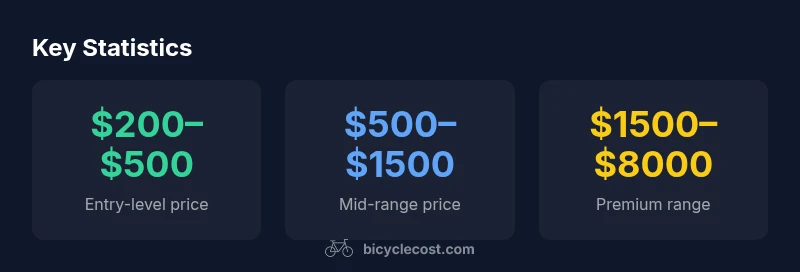
When people ask how much does a new bicycle cost in today’s market, the answer depends on what you need, where you ride, and how much you value weight, stiffness, and component quality. According to BicycleCost Analysis, 2026, the price spectrum is best understood through four broad bands: entry-level bikes around $200–$500, mid-range models typically $500–$1,500, performance or road bikes often $1,500–$3,000, and premium or ultra models ranging from $3,000 up to $8,000. These bands reflect variations in frame material (aluminum versus carbon fiber), drivetrain complexity, braking systems, wheel quality, and overall build quality. Although it’s tempting to target the newest tech, most riders get the best value by aligning their goals with a sensible budget rather than chasing trend-driven features.
The price you pay also depends on where you shop. Online retailers may offer lower sticker prices, but you should factor in shipping, assembly, and potential return costs. Local bike shops, while sometimes pricier upfront, provide expert fitting, immediate service, and test rides that can prevent costly mistakes. Seasonal sales, end-of-year clearances, and bundled accessory offers can tilt a purchase in your favor, especially when paired with proper sizing and a realistic riding plan. In short, pricing isn’t a single number; it’s a ladder you climb based on needs, durability, and long-term value.
Top features that affect price
- Frame material: Aluminum frames are usually cheaper than carbon, with weight and ride feel improving as you move up the ladder.
- Groupset and drivetrain: A higher-level drivetrain (more gears, smoother shifting, lighter components) adds cost but improves efficiency and performance.
- Brakes and wheels: Hydraulic disc brakes and lighter, stiffer wheels add comfort for long rides and rugged terrain but raise price.
- Forks and suspension (where applicable): A quality fork improves ride quality on mountain bikes and reduces fatigue on rough roads, contributing to overall cost.
- Fit and geometry: Bikes designed for a specific riding style (e.g., endurance road, cross-country mountain) may cost more due to testing and CAD-driven geometry.
- Brand and warranty: Reputable brands with robust warranties often price higher, but the trade-off includes better service networks and resale value.
- Labor and build quality: Professional assembly, tuning, and cable routing add value but not always visible on the sticker.
For many riders, selecting a model in the mid-range band often yields the best balance of performance, durability, and long-term ownership costs. A well-fitted bike with components that suit your typical rides can outperform a more expensive model that doesn’t align with your needs.
What drives price beyond the sticker price
Beyond the base price, several factors determine how much you’ll end up paying for a new bicycle. Frame material and manufacturing quality influence weight, stiffness, and durability. Drivetrain complexity, including how many speeds and the type of shifters, rings, and cogs, can dramatically affect cost. Wheelset quality impacts acceleration, traction, and ride smoothness; higher-end wheels reduce rolling resistance and wear. Braking systems—caliper, disc, hydraulic vs mechanical—change performance and maintenance costs over time. Finally, finish quality, paint, and branding can add a premium even when the mechanicals are similar. While top-tier bikes offer performance gains, many riders achieve meaningful value by prioritizing fit, reliability, and serviceability over marginal gains in weight or bling.
Hidden costs and ownership considerations
Owning a bicycle isn’t just the price on the tag. You’ll need a helmet, a reliable lock, a floor pump, spare tubes, and lights—these accessories can collectively add hundreds of dollars. Maintenance costs accumulate over time: tire replacements, chain wear, and occasional tune-ups can add up to a few hundred dollars annually, depending on riding frequency and terrain. If you have a complex or premium build, professional tune-ups at a shop may be worthwhile, especially during early ownership to ensure everything is perfectly aligned. Finally, consider warranty terms and potential freight or assembly charges when buying online. Including these ongoing costs in your budgeting helps prevent sticker shock and ensures you can ride with confidence.
How to estimate your budget and maximize value
Start by defining your riding goals: commuting, weekend rides, or light trail adventures. Then map those goals to a bike category (hybrid, road, or mountain) and estimate a target price within the mid-range band for the type you choose. Research component groupsets that balance performance with maintenance cost, and consider whether you value lighter weight or longer-lasting durability. Use a simple calculation: intended annual maintenance cost plus the bike price should fit within a yearly budget you’re comfortable with for several years. Don’t forget to include essential safety gear and basic tools. Finally, test-ride multiple models to assess fit and comfort; a good fit can dramatically improve your daily enjoyment and perceived value.
Buying new vs used: when it makes sense
Buying new guarantees pristine condition, full warranty, and immediate availability of replacement parts, but it comes at a premium. If you’re comfortable with minor wear and component updates, a lightly used bike can offer substantial savings, particularly in the mid-range categories. Inspect for frame integrity, drivetrain wear, and tyre health; consider having a trusted bike shop evaluate a used purchase before committing. For some riders, buying a used bike and investing in newer tires or a components upgrade can be more cost-effective than purchasing a brand-new entry-level model. If you plan to ride frequently or aggressively, a fresh bike with a warranty may be worth the extra cost for peace of mind.
Practical shopping checklist and next steps
- Define your riding goals and choose a category first.
- Set a realistic budget within the mid-range band for your chosen category.
- Prioritize fit and warranty over cosmetic features.
- Verify shop services: sizing, test rides, and post-purchase support.
- Budget for essential gear: helmet, lock, lights, pump, and spare tubes.
- Compare online prices with local shop offers and check for bundled accessories.
- Schedule a test ride and get a professional fit to maximize comfort and safety.
- Plan for occasional maintenance: tune-ups, chain, and tire replacements.