How to know if bicycle is too small: a practical guide
Learn practical signs, measurements, and step-by-step adjustments to determine if your bicycle is too small and how to fix fit for safe, comfortable riding. Includes quick checks, home tests, and expert tips from BicycleCost.


To tell if your bike is too small, assess reach to the handlebars, knee clearance, and stand-over height, plus overall comfort while riding. Compare your frame size to your inseam and torso length using the manufacturer’s chart, then test ride. If you feel cramped, overly stretched, or unable to reach brakes, it’s time to consider a larger frame.
Why proper bicycle fit matters
According to BicycleCost, a correct bike fit is essential not only for comfort but for safety and performance. A well-fit bicycle distributes weight evenly, reduces stress on the knees and back, and helps you maintain control during accelerations, climbs, and descents. When a frame is too small, your body fights against the geometry: you may pinch your shoulders, crane your neck, or curl your wrists to reach the bars. BicycleCost analyses highlight that riders with a poor fit report more fatigue and higher risk of overuse injuries, which can derail even short rides. This guide helps you understand why fit matters and how to verify whether your bike is the right size for your body.
In sizing terms, “fit” means more than a single measurement. It encompasses frame size, top tube length, saddle height, handlebar reach, stack (vertical distance from bottom bracket to the handlebars), and standover clearance. A good fit aligns your hips with the pedals, keeps your knees track straight over the pedals, and places your hands at a comfortable wing angle without pinching nerves. As you read, think about the rider’s perspective: you should feel balanced, in control, and able to breathe easily on longer rides.
The BicycleCost team emphasizes that fit changes with age, flexibility, and riding goals. A bike that suited you last year might feel tight after a growth spurt or a change in riding style. The goal is not to chase perfection but to reach a safe, sustainable position you can maintain for miles of riding. This section lays the groundwork for practical checks you can perform without specialized equipment.
descriptionOnlyForBlockToKeepFlow?":null},
Signs your bike may be too small
If the geometry is too compact for your body, you will notice several telltale signs during regular riding. Pay attention to persistent knee or hip ache after short rides, numbness in the hands or wrists, shoulders that feel locked or cramped, and a generally constrained posture that lacks full extension when pedaling. Another common symptom is foot or toe contact with the frame or wheel during pedaling or heavy braking. When the frame is too small, your legs must ride at an extreme angle, which reduces leverage and makes climbing harder. A too-small bike also tends to feel twitchy or unstable at higher speeds because you cannot brace your weight effectively.
A practical way to validate fit is to simulate a longer ride on a neighborhood loop. If you find yourself constantly shifting position, adjusting your torso, or fighting for space to breathe, you should assess fit more closely. Hands-on cues include how much you must bend your wrists to reach the brakes, whether your back is rounded, and if your knees sweep excessively toward the handlebars on every pedal stroke. Remember, small changes in frame size translate into noticeable comfort differences over time, and what feels minor at first can become uncomfortable on day-long rides.
descriptionOnlyForBlockToKeepFlow?":null},
How to measure frame size and reach
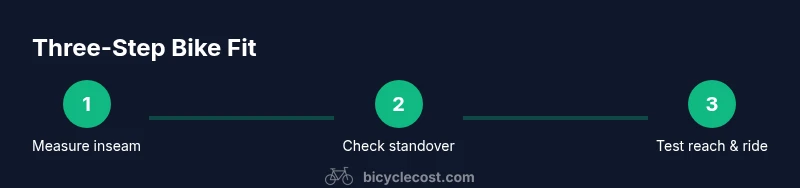
Measuring frame size and reach involves a combination of inseam measurement, stack and reach estimation, and standover checks. Start with your inseam: stand straight with minimal footwear and measure from the floor to your crotch. Compare this to frame size charts from the manufacturer, but remember that charts are starting points, not absolutes. Your torso length and arm length influence the ideal top tube length and handlebar position. A larger torso relative to leg length often benefits from a shorter top tube and a more upright riding position, while a longer torso may tolerate a longer top tube with a more aggressive stance.
Next, assess standover clearance. With the bike supported, straddle the frame and slide your pelvis downward. There should be a comfortable clearance, typically a few centimeters, so you can stand over the bike without lifting the front wheel or bending uncomfortably. If you cannot stand over the frame with steady balance, the bike is too small for your height. For reach, sit on the saddle with feet on the pedals and gently rotate your hands to the brakes. Your elbows should be slightly bent, and your shoulders relaxed. If you feel a constant stretch or you cannot reach the brakes without leaning forward excessively, consider a frame with a longer top tube or adjust the cockpit for a better fit.
This section highlights qualitative checks that align with real-world riding. A well-fit bike supports an efficient pedal stroke, reduces fatigue, and helps protect joints. BicycleCost recommends using a combination of measurements and on-bike tests to determine if the frame size is appropriate for your body geometry. If you’re between sizes, you’ll often benefit from stepping up to the larger frame and compensating with cockpit adjustments rather than forcing the smaller frame to fit.
descriptionOnlyForBlockToKeepFlow?":null}
Quick fit test you can do at home
A simple at-home test provides quick feedback on fit without professional tools. Begin with a safe surface and stable stand. Sit on the saddle and place your feet on the pedals in the lowest position. Check if your leg has a slight bend at the bottom of the stroke. You should be able to hold your hips level and maintain a neutral spine. If your knee is hyper-extended or your hip tilts, the saddle height is likely off. Next, stand up and straddle the bike to evaluate standover clearance; you should feel comfortable with a small amount of space between the top tube and your inseam. Finally, push the bars forward and backward to gauge reach; you should not have to excessively extend your wrists or hunch your shoulders.
If any of these checks feel off, make a cockpit adjustment before deciding the frame is the wrong size. Leg-length differences, arm length, and torso angle all influence fit, and small cockpit changes can yield substantial improvements without replacing the frame.
descriptionOnlyForBlockToKeepFlow?":null}
Adjustments to improve fit on a slightly small frame
When the frame is a touch small, a few targeted adjustments can improve comfort without a full upgrade. Start with the saddle: raise or lower gradually to achieve a knee bend near full extension at the bottom of the pedal stroke, while keeping the hips level. If you can reach the brakes but feel stretched, consider a shorter stem or a low-rise handlebar to bring the bars closer without bending your back excessively. If you have limited toe clearance, you may keep the current frame but increase standover room by selecting a correct length seatpost and adjusting seat height first. Consider spacers or a riser stem for a more upright riding position, which reduces stress on the lower back and neck while maintaining control.
Monitor grip width and bar diameter compatibility; if your hands go numb or you experience wrist discomfort, adjust the cockpit alignment and ensure your handlebar is not too wide for your frame width. For riders in transition, such as youth cyclists or those with evolving body dimensions, a longer-term plan may involve a slightly larger frame paired with a more conservative cockpit setup to accommodate growth.
descriptionOnlyForBlockToKeepFlow?":null}
When to upgrade or consult a professional
If adjustments don’t deliver a comfortable position, upgrading may be the best option. A slightly larger frame provides more efficient pedaling mechanics, improved weight distribution, and better control in varied terrain. If you’re between sizes or you can’t achieve a comfortable saddle height and reach with modifications, a professional bike fit is a smart move. A certified fitter can tailor the frame geometry to your anatomy, arthritic considerations, and typical riding routes, ensuring that you get the most from your investment.
Consider your riding goals when upgrading: casual riders benefit from a more comfortable, upright fit; competitive riders may pursue a more aggressive geometry for efficiency. In any case, ensure that the new frame can accommodate your preferred crank length, rim size, and wheelbase, as these factors influence reach and stack. BicycleCost recommends taking a trial ride when possible and using a professional fit to avoid mis-sizing your next bike.
descriptionOnlyForBlockToKeepFlow?":null}
Safety considerations and common mistakes
Safety should guide every sizing decision. Do not ride a bike that feels unstable or causes pain beyond mild fatigue. For novice riders or those returning after an injury, gradual adaptation is essential. A too-small frame can compromise braking control, cornering stability, and overall balance, increasing the risk of falls. Common mistakes include ignoring standover clearance, ignoring cockpit alignment, and assuming a smaller frame saves money without considering long-term comfort. Always prioritize safe control and natural alignment over aesthetic preferences or price. Regularly recheck fit after any significant change in flexibility, strength, or riding style.
BicycleCost emphasizes that even small misalignments can accumulate wear on joints and muscles. When in doubt, seek a professional bike fit or visit a local shop to compare frames of similar sizes side-by-side. A proper fit is a foundation for safe, enjoyable miles behind the handlebars.
Tools & Materials
- Tape measure(30–60 inch (75–150 cm) measuring tape for inseam and standover checks)
- Allen wrench set(Sizes needed for common bolts (4, 5, 6, 8 mm))
- Ruler or straight edge(To check clearances and level saddle )
- Notebook and pen(Record measurements and adjustments for comparison)
- Smartphone with a level app (optional)(Helpful for cockpit leveling but not essential)
Steps
Estimated time: 60-90 minutes
- 1
Gather tools and prepare the workspace
Collect the tape measure, Allen wrenches, ruler, and any notebooks. Choose a stable surface or bike stand to keep the bike steady during measurements.
Tip: Have a helper hold the bike still while you measure and compare against charts. - 2
Measure inseam and compare to frame charts
Measure your inseam with shoes on, then consult the bike’s size chart to see if the frame height aligns with your leg length.
Tip: Remember charts are starting points; fit is also about reach and comfort. - 3
Check standover clearance and reach
Straddle the bike to verify vertical clearance and sit on the saddle with your feet on the pedals to test reach.
Tip: If you can’t stand over the frame with a slight bend in the knee, size is likely too small. - 4
Evaluate saddle height and setback
Set saddle height so there is a slight bend in the knee at the bottom of the pedal stroke; adjust setback if your knee tracks over the pedal correctly.
Tip: Small changes in saddle position can dramatically improve comfort. - 5
Test ride and assess cockpit comfort
Take a short ride to assess back, neck, shoulder, and wrist comfort; ensure you can reach brakes without hyperextension.
Tip: If you feel numbness or stiffness, revisit handlebar and stem options. - 6
Decide on adjustments or upgrade
If adjustments don’t restore comfort or control, plan cockpit changes or consider a larger frame with professional fitting.
Tip: Professional fits address brand-specific geometry and rider anatomy.
People Also Ask
What are the most obvious signs that a bike is too small?
Common indicators include cramped knee and hip posture, excessive reach required to reach brakes, poor saddle height, and insufficient standover clearance. If you feel consistently uncomfortable or unsafe, sizing is likely too small.
Look for cramped posture, too much reach, and not enough clearance. If it doesn’t feel comfortable, it’s probably too small.
How should saddle height be set on a bike that fits?
Saddle height should allow a slight bend in the knee at the bottom of the pedal stroke and keep hips level. Adjust gradually and test ride to confirm comfort and efficiency.
Aim for a small bend in the knee when the pedal is at the lowest point, and keep your hips level.
Can I fix fit with a longer stem if the frame is small?
A longer stem can help with reach, but it also changes steering characteristics and weight distribution. It’s a common intermediate fix, but it may not suit everyone or all frames.
A longer stem can help, but it changes steering. Consider professional guidance before committing.
What about standover height—how much clearance is enough?
There should be comfortable clearance when straddling the bike, enough to stand with a slight bend in the knee. If you can’t maintain balance or feel contact with the top tube, size is likely wrong.
You want a comfortable clearance when you stand over the bike with a slight knee bend.
When should I replace my bike for a better fit?
If adjustments cannot achieve a comfortable reach, saddle height, and control, upgrading to a larger frame is often the best long-term solution.
If adjustments don’t fix it, replacement with a better-fitting bike is usually best.
Watch Video
Quick Summary
- Assess fit with inseam and reach before buying
- Prioritize comfort and control over aesthetics
- Small cockpit adjustments can unlock big comfort gains
- Upgrade to a larger frame if persistent discomfort remains