How to Measure a Bicycle Size: A Practical Rider Guide
Learn how to measure bicycle size accurately with step-by-step methods for frame height, reach, and overall fit. Practical, rider-focused guidance from BicycleCost.


You will learn how to measure a bicycle size accurately by checking frame size, standover height, reach, and wheel size. This quick guide highlights essential measurements, common sizing myths, and practical tips to ensure a comfortable, safe ride. Start by identifying your inseam and preferred riding position, then apply standard sizing charts.
Why measuring bicycle size matters
For most cyclists, choosing the right bicycle size is not about fashion—it's about comfort, efficiency, and safety. The phrase how to measure a bicycle size isn't just a slogan; it's the first step toward a bike that fits your body, riding style, and goals. A properly sized bike reduces knee strain, improves power transfer, and makes handling feel natural rather than awkward. Beginners often assume that seat height alone determines fit, but frame geometry, standover clearance, reach, and stack height play equally large roles. By learning how to measure a bicycle size, you create a baseline you can trust across brands and models. This guide from BicycleCost helps you translate your body measurements and preferences into a frame that truly matches you. Along the way, we’ll share practical tips, common mistakes to avoid, and a simple method you can apply at home or in a shop.
Core sizing concepts: frame size, standover, reach, and top tube length
Understanding bicycle size starts with four core measurements. Frame size is the most visible, usually labeled in centimeters or inches and linked to your overall height and inseam. Standover height ensures you can stand over the bike with clearance, especially at stops or tight maneuvers. Reach and top tube length determine how far you sit from the handlebars, influencing control and comfort in your riding posture. These metrics are interdependent: a larger frame with a short top tube can feel cramped, while a small frame with an overly long top tube can force you into an awkward reach. When you know how to measure a bicycle size, you can compare geometry across models and quickly flag bikes that won’t fit your body. Throughout this guide, we’ll apply practical examples to illustrate how these measurements translate into real-world fit.
How inseam, height, and riding style shape sizing
Your inseam is the starting point for frame height recommendations because it directly relates to standover clearance and saddle height. But inseam alone isn’t enough. Your overall height, torso length, arm length, and flexibility also influence reach and cockpit comfort. A rider who favors upright touring will need a different balance of frame size and saddle setback than a sprint-focused road racer. Sizing should reflect your preferred riding position: a more aggressive posture requires a longer reach and a slightly taller stack, while a relaxed position benefits from a shorter reach and a lower cockpit. By aligning inseam-based estimates with your riding style, you’ll achieve a more natural pedal stroke and less fatigue on long rides. BicycleCost’s approach combines measurements with rider preferences to help you choose models that genuinely fit your goals.
How to measure frame size: practical steps you can follow
Measuring frame size begins with consistent reference points. Start by locating the seat tube’s center-to-top or the manufacturer’s stated frame size. Compare that value to your inseam-based target. Next, verify the effective top tube length, which affects reach, and consider stack height for head- and cockpit clearance. When you test fit a bike in a shop, bring your inseam and height measurements so staff can verify frame size without forcing you into an uncomfortable position. Remember, size is not just one number—it’s a geometry package that affects how you climb, sprint, and descend. The more you understand the relationships between frame size, reach, and standover, the easier it becomes to select bikes that fit your body and riding goals.
How to measure standover height and reach accurately
Standover height is the distance from the ground to the top of the top tube when the bike is upright. To measure, stand over the frame with flat shoes and ensure there is a comfortable clearance (about 1-2 cm for casual riding, more for tall riders). For reach, measure from the midpoint of the bottom bracket to the handlebars along the centerline of the frame, or use a straight line from the saddle nose to the bar’s hoods as a practical proxy. These measurements should be taken with the saddle at a typical riding height and the handlebars in a neutral position. If you’re between two sizes, favor the smaller size and adjust with cockpit changes such as saddle setback or handlebar width.
Tools and techniques for accurate home measurement
A reliable measurement setup includes a stable work surface, a wall or bike stand, and clear reference marks. Use a flexible measuring tape to capture inseam, standover clearance, and top tube length. A ruler or calipers helps with precise measurements on the frame’s geometry. Document every value in a notebook or digital file, noting the brand and model because sizing can vary between models. Where possible, take measurements with the rider in their typical riding posture and with the saddle set at a comfortable height to reflect real-world fit. If you have access to a friend or shop staff, a second measurement can catch small errors that would otherwise go unnoticed.
Interpreting sizing charts and geometry data across brands
Most brands publish size charts that map rider height or inseam to frame size. However, geometry varies between manufacturers, so it’s essential to look at top tube length, stack, reach, and effective seat tube, not just the frame size label. When comparing bikes, compute the expected cockpit reach and knee clearance for your leg length and riding style. If a chart shows a frame that seems large, you might still fit if the top tube is shorter and the handlebars sit closer to you. Conversely, a larger frame with an extended top tube may force you into a stretched posture that reduces control. The goal is a harmonious combination of frame size, reach, saddle height, and handlebar position that enables efficient pedaling and confident handling.
Common sizing mistakes and how to fix them
Mistakes are common when new riders size by height alone or assume “one size fits all.” Don’t rely on seat height alone to judge fit, and beware overly aggressive cockpit positions that pinch the hips or raise the shoulders. A frequent error is not accounting for saddle setback, which can significantly alter reach. If you’re between sizes, opting for the smaller frame and adjusting with the saddle position or stem length can improve control and balance. Ensure you can stand over the frame with comfortable clearance and that your heels barely touch the ground when seated on the pedals in your typical position. Finally, always validate sizing with a test ride in a controlled setting to confirm comfort across your most common riding conditions.
Fit verification during a test ride: key checks and adjustments
A test ride helps you confirm the theoretical measurements in practice. Pay attention to knee clearance during full extension, spinal posture, and whether your hands and wrists feel relaxed. Check the saddle tilt and distance to the handlebars; a slight tilt or backward/forward shift can dramatically affect comfort. If you notice numbness, tingling, or fatigue after a few minutes, you may need to adjust saddle height, setback, handlebar width, or even consider a different frame size. A short, structured ride that includes climbing, sprinting, and standing intervals will reveal misalignments that aren’t obvious from measurements alone. Capture notes about what feels easy versus what produces strain so you can adjust before you buy.
Special considerations for kids and petite riders
Kids and smaller riders require ongoing sizing checks as they grow and develop. Start with a bike that allows for gradual height and reach adjustments, such as bikes with adjustable saddles and quill stems. Regularly re-check inseam measurements and compare them to the brand’s child-specific sizing chart. For petite riders, consider step-through frames or smaller wheel sizes, which can improve balance and control. If you’re helping a young rider, make the sizing process a hands-on activity with a trusted mechanic or coach who can explain how frame geometry changes with body growth. By staying proactive about sizing, you’ll help young riders stay safe, comfortable, and engaged in cycling for years to come.
Authority sources
For solid, evidence-based guidance on measurement standards and safe cycling practices, refer to trusted sources:
- https://www.nist.gov/
- https://www.cdc.gov/
- https://www.sciencemag.org/
Tools & Materials
- Measuring tape (at least 2m)(Main tool for frame dimensions and inseam)
- Flat wall or bike stand(Stability for accurate measurement and alignment)
- Ruler or calipers(Precise measurements for top tube and seat tube)
- Notebook and pen(Record measurements and notes)
- Smartphone or camera(Document posture and setup)
- Brand sizing charts (printable)(Reference for frame size vs rider height)
Steps
Estimated time: 60-90 minutes
- 1
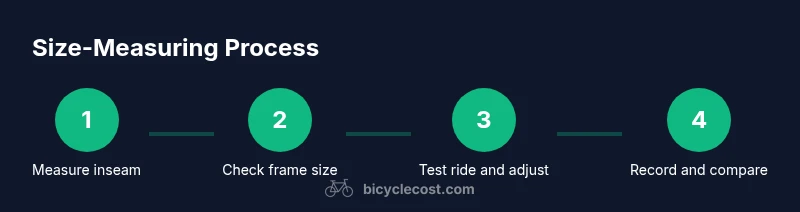
Determine inseam and rider height
Have the rider stand with bare feet on a flat surface. Measure inseam from the floor to the crotch along the inner leg, and record the height. This establishes a baseline for frame height decisions and helps translate body measurements into frame size. Ensure the rider is standing upright with a relaxed posture.
Tip: Take three measurements and average them for accuracy. - 2
Calculate target frame size range
Using inseam-based guidelines, estimate a frame size range (e.g., XX cm or XX inches). Compare your range with the brand’s chart to identify potential model sizes. Remember, charts are starting points; real-world feel matters most.
Tip: Start with the middle size in your range and adjust later. - 3
Check standover clearance
With the bike upright, stand over the top tube and confirm at least a 2.5–5 cm (1–2 in) clearance for casual riding, more for aggressive stops or tall riders. If clearance is tight, size down or adjust with a different frame geometry.
Tip: Clearance should feel comfortable, not forced. - 4
Assess reach and cockpit comfort
Measure horizontal reach from the saddle nose to the handlebars. Ensure your elbows are slightly bent and your wrists aren’t hyperextended when gripping the bars. If reach is too long or too short, consider frame size changes or cockpit adjustments (saddle setback, stem length).
Tip: Aim for a neutral wrist posture during riding. - 5
Check saddle height and setback
With a typical riding position, set saddle height so your leg has a slight bend at the bottom of the pedal stroke. Adjust saddle setback to bring your knee over the pedals and align hips with knee position for efficient pedaling.
Tip: Small saddle changes can dramatically affect fit. - 6
Evaluate top tube length and stack
Compare the effective top tube length (ETTL) and stack height to your torso and arm length. A longer ET tube can push you forward, while a tall stack raises your handlebars for an upright position. Use the chart to assess the balance of these two factors.
Tip: Write down the target ETTL and stack values for reference. - 7
Test ride in a controlled environment
If possible, ride on a quiet street or indoor trainer. Pay attention to comfort in multiple positions: seated climbs, standing sprints, and low-speed maneuvers. Note any rubbing, numbness, or fatigue across joints.
Tip: Take a few short breaks to reset posture during the ride. - 8
Record and compare measurements
Document your measurements, frame size, and ride impressions. Compare with multiple models to determine the best balance of size, weight, and geometry. This record helps future bike searches and model changes.
Tip: Keep a consistent format for easy cross-model comparisons. - 9
Adjust components as needed
If the frame size is near a limit, optimize by changing saddle position, stem length, or handlebar width. These adjustments can improve fit without a full frame change.
Tip: Small cockpit tweaks can yield big comfort gains. - 10
Confirm with a second opinion
Have a trusted bicycle shop technician or experienced rider re-check your measurements and fit. A second set of eyes can catch mistakes and confirm that your chosen size is appropriate.
Tip: Two sets of eyes are better than one. - 11
Document the final size
Record the final frame size, saddle height, saddle setback, stem length, and handlebar width. Keep this profile for future purchases or sizing updates, ensuring consistency across bikes.
Tip: Keep a copy in your phone or bike bag for quick reference. - 12
Reassess as needed
Riding style, flexibility, or growth may alter fit over time. Recheck sizing after major changes like new shoes, training, or growth spurts, and update your records accordingly.
Tip: Set a reminder to recheck sizing every 6–12 months for growing riders.
People Also Ask
What is frame size and why does it matter?
Frame size refers to the main geometry measurement of a bike, usually the seat tube or the top tube length. It influences leg extension, reach, and overall posture. Getting the right size improves pedaling efficiency and reduces discomfort.
Frame size is the bike’s core geometry; choosing the right size improves comfort and efficiency.
Do different brands size differently?
Yes. Geometry varies by brand and model, so always compare to the brand's size chart and test ride when possible.
Brand sizing varies; always check the chart and test ride.
Is standover height more important than top tube length?
Standover height is crucial for clearance when mounting/dismounting, while top tube length affects reach and control. Both matter; prioritize comfort.
Standover matters for clearance, but reach matters for control.
Can I size a bike without riding it?
You can estimate using measurements and charts, but a test ride is the best way to confirm fit.
You can size using measurements, but a test ride confirms fit.
What tools do I need for home sizing?
A measuring tape, ruler or calipers, a level, notebook, and brand sizing charts cover most home measurements.
You mainly need a tape, ruler, and charts.
How often should I recheck bike size?
Recheck after major changes (saddle height, handlebar) or growth; sizes are sensitive to adjustment and rider changes.
Recheck after big changes or growth.
Watch Video
Quick Summary
- Anchor sizing with inseam-based estimates
- Balance frame size, top tube length, and reach for comfort
- Validate with a test ride and cockpit adjustments
- Document measurements for future bikes
- Remember that different brands have different geometry