How to Check Bicycle Size: A Practical Guide for 2026
Learn how to accurately check bicycle size for road, mountain, and hybrid bikes. Measure inseam, height, reach, and standover to pick the right frame size and optimize fit with practical steps from BicycleCost.


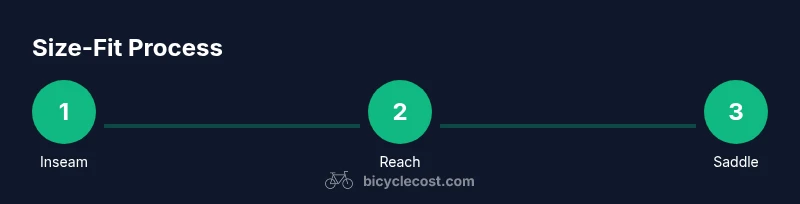
You’ll determine the correct bicycle size by pairing your inseam-based frame size with the bike’s geometry, then confirming with a test ride and simple checks. Start with body measurements (inseam, height, torso length) and compare against manufacturer charts. Then verify standover clearance, reach, and saddle height to guarantee a comfortable, efficient riding position. This guide from BicycleCost covers practical steps and checks to avoid buying the wrong size.
Understanding Why Size Matters
Selecting the correct bicycle size is the foundation of a comfortable, efficient ride. A frame that is too small forces you to bend your knees awkwardly, while a frame that is too large invites overreaching and unstable handling. Even small mismatches in frame geometry can translate into fatigue after long spins, or worse, repetitive strain over months of riding. According to BicycleCost, getting sizing right is the first step toward a happy, injury-free cycling routine. The goal is a natural riding position you can hold for 30-60 minutes without constantly adjusting. This guide explains how to check bicycle size by combining inseam measurements with geometry checks.
Size also influences how you respond to different terrains and riding styles. Road bikes demand a precise balance between reach, stack, and saddle height; mountain bikes require a shorter stem and adjusted cockpit to manage rough trails; city bikes benefit from a relaxed reach for easy mounting and frequent stop-start riding. When you size correctly, steering feels responsive but controllable, braking feels proportional, and your weight sits comfortably over the pedals rather than your wrists or lower back. While many riders rely on height alone to pick a size, the most reliable approach mixes body measurements with geometry checks. This guide walks you through inseam-based sizing, reach and stack considerations, standover clearance, and practical checks you can perform at home or in a shop. The emphasis is on actionable steps you can repeat across brands, so you can compare apples to apples when you’re browsing online catalogs or visiting a local shop.
Key Sizing Concepts
To read a bike’s size correctly you must understand a few core terms. Frame size is the fundamental dimension used by most manufacturers; on road bikes it is often labeled in centimeters (the seat tube length or the effective top tube length), while on many mountain bikes it’s given in inches. Reach is the horizontal distance from the bottom bracket center to the head tube; stack is the vertical distance to the same reference point. Together reach and stack determine how stretched or compact the cockpit feels. Standover height is the critical clearance between the top tube and your inseam when you stand over the bike with both feet on the ground. A generous standover margin helps you mount and dismount confidently, especially for beginners and kids.
Wheel size matters, but it does not alone define fit. A 29-inch wheeled mountain bike can ride on a bigger frame than a 27.5 version, but the frame geometry often dictates whether that wheel size yields the right reach and stack. Across brands, the same nominal size can feel different because of seat tube angle, head tube angle, and the length of the top tube. Always cross-check the manufacturer’s sizing chart for the model you’re considering, and use the chart to compare sizes across brands. If you understand frame size, top tube length, and standover height, you’ll be in a strong position to select a bike that matches your body proportions and riding goals.
Measuring Your Body Preliminarily
Measurement accuracy is the foundation of correct sizing. Start with a clean, flat floor, barefoot or wearing thin socks for consistency. Have a helper hold a hardcover book vertically between your legs, pressing gently against your pubic bone to simulate compression from the saddle. Mark the top of the book where it meets your torso and measure from the ground to that mark to determine inseam length. Do this three times and use the average to reduce error. Next, measure your overall height, torso length (from the top of your sternum to your lower back), and arm reach. Maintain a relaxed, natural posture. Record all measurements in a notebook and bring them when you shop or order online.
While inseam is the most influential metric for frame size, don’t ignore height and torso length. A tall rider with a long torso may require a longer top tube and a higher stack, while a shorter rider with a short torso benefits from a shorter reach. If you already own a bike, measure the current frame to compare with the new model. When possible, measure the model’s published size chart. When shopping online, check both the chart and user reviews for notes about fit, as different brands may interpret the same frame size differently.
How to Check Bike Size by Category
Not all bikes use the same sizing conventions, so it helps to categorize the bike you’re considering. Road bikes typically emphasize a smaller frame with a longer top tube for efficient aerodynamics; mountain bikes prioritize a balance between reach and stand-over height to manage uneven terrain; hybrids try to blend comfort and efficiency for everyday riding.
- Road bikes: Look for a frame size that corresponds to your inseam in the manufacturer’s chart, then verify reach and stack by attempting a quick seat-to-handlebar test. If you’re between sizes, leaning toward the larger size with a slightly steeper seat angle can improve comfort on long rides.
- Mountain bikes: For trail riding, ensure you can stand over the top tube with a couple of centimeters of clearance and still reach the brakes and shifters without stretching. A slightly shorter stem can help with control on tight turns.
- Hybrids and city bikes: Prioritize an upright posture, ensuring the handlebars sit near chest level when you sit on the saddle. If you’ll carry cargo or ride in traffic, confirm that you can touch the ground confidently when stopping.
Always consult the model-specific size chart and, if possible, test ride to validate fit. If you ride with clip-in pedals or cycling shoes, factor that added sole thickness into your sizing decision.
Using Frame Size Charts and Adjustments
Once you have your body measurements, the next step is to translate them into a frame size using the manufacturer’s chart. Start by identifying the size category (road, mountain, hybrid) and locate your inseam-based frame size on the chart. If you’re between two sizes, consider your typical riding style: endurance riders may prefer the larger frame for stability, while riders who want a snappier feel may opt for the smaller size.
- Top tube length and reach: If the chart shows a choice between two sizes with similar standover, the decision should lean on whether you prefer a longer reach (for aggressive riding) or a shorter reach (for comfort in urban riding).
- Seat height and saddle setback: Frame size affects seat height, but you’ll often fine-tune fit with the saddle position. Start with a saddle height that allows a slight bend in the knee at the bottom of the pedal stroke; adjust forward/backward as needed to balance knee clearance and hip comfort.
- Stem length and handlebar width: If you’re between sizes or you need to tailor reach, a longer or shorter stem and narrower or wider handlebars can adjust cockpit geometry. Keep changes gradual to maintain control.
Remember that sizing charts are guides, not guarantees. If possible, bring your bike or a measuring tape to a shop for a professional fitting and allow time to ride and adjust after a few spins.
Fitting Essentials and Practical Tests
A formal fit session often involves dynamic checks beyond static measurements. Put on the shoes you’ll ride in, sit on the saddle, and place your hands on the hoods or handlebars to evaluate reach. Your knee should clear the handlebars and you should be able to pedal with a comfortable hip angle. The scale of “comfort” includes your back, neck, and wrists; if you notice persistent discomfort after a 15-minute ride, revisit your saddle height, fore-aft position, and stem length.
- Reach test: From the saddle, grab the brakes and measure the distance to the handlebars. You should be able to reach without shoulder tension or a 'dead arm' sensation.
- Saddle height: With your heel on the pedal at the bottom of the stroke, your leg should be almost fully extended; remove your heel to ride and you should have a slight knee bend. An overly high saddle reduces knee efficiency; an overly low saddle reduces power.
- Standover check: With feet on the ground and the bike between you and a wall, there should be at least 2-3 cm of clearance at the top tube for adults; more clearance is advisable for aggressive riders and beginners.
If you’re shopping online, request a virtual fitting, ask for a size exchange policy, and consider a shop visit for a professional assessment before making a final decision. Finally, consider future growth if sizing a bike for a teenager or a rider who expects to grow over the next year.
Common Pitfalls and How to Avoid Them
- Relying on height alone: Height is a weak predictor of frame size; body proportions and limb length are more important. Use inseam and reach as the primary metrics.
- Ignoring standover clearance: A near-zero clearance can cause discomfort mounting and dismounting and may lead to safety issues on steep descents.
- Assuming wheel size dictates fit: Wheel diameter matters, but frame geometry determines how a bike feels in real-world riding.
- Skipping a test ride: Always ride the bike in conditions similar to your daily use. A short spin in a showroom is not enough.
- Forgetting about shoe thickness: Cycling shoes add thickness to your sole; if you size online, account for this extra height when predicting saddle height and crank clearance.
- Overlooking adjustability: If you cannot adjust the saddle, stem, or bars to achieve a comfortable position, your bike size is not right even if it matches the chart.
Tools & Materials
- Flexible measuring tape(50–150 cm; soft, without stretch)
- Rigid ruler or carpenter's square(For precise top-tube measurements)
- Notebook and pen(Record inseam, reach, and chart references)
- Helper for inseam measurement(A second person makes inseam checks accurate)
- Bike stand or stable surface(Helpful for static checks and adjustments)
- Smartphone or camera(Capture a quick ride test for reference)
Steps
Estimated time: 60-120 minutes
- 1
Measure inseam accurately
Stand with feet about shoulder-width apart and place a book snugly between your legs as you would sit on a saddle. Have a helper slide the book up until it lightly touches your pubic bone. Record the distance from the floor to the top of the book. Repeat 3 times and average the result to minimize error.
Tip: Keep shoes off and use a consistent, flat floor surface. - 2
Record torso length and overall height
Measure your torso length from the top of your sternum to your lower back, and your total height from head to toe. Maintain a relaxed posture and write both numbers down. This helps you infer whether you’ll need a longer top tube or a higher stack.
Tip: Ask a friend to help hold tape measure vertically for accuracy. - 3
Consult manufacturer size charts
Find the model you want and locate the size that corresponds to your inseam. If you’re between sizes, note how other riders with similar proportions rate the fit in reviews or in brand-fit guides.
Tip: Compare inches to centimeters carefully when switching brands. - 4
Check standover clearance
Stand over the bike with both feet on the ground. There should be comfortable clearance between the top tube and your body—roughly a few centimeters for adults, more for beginners or riders with long legs.
Tip: If you’re teaching a child, ensure extra clearance for growth and quick dismounts. - 5
Assess reach and cockpit geometry
Mount the bike and check your reach to the handlebars. Your shoulders should relax, elbows soft, and a slight bend in the knee at the pedal’s bottom position. Adjust saddle position if needed.
Tip: If the handlebars feel too far away, consider a shorter stem or wider bars. - 6
Make final adjustments and test-ride
Adjust saddle height so your knee is slightly bent at the bottom of the pedal stroke. Fine-tune the fore-aft saddle position and, if necessary, the handlebar height. Take a 10–15 minute ride in conditions similar to your typical use.
Tip: Bring your usual shoes to simulate the real ride.
People Also Ask
What is the quickest way to know if my bike fits?
Start with inseam-based frame size and stand-over clearance, then verify reach and saddle height. A short test ride will confirm comfort and controls before you buy.
Start with inseam-based frame size and stand-over clearance, then verify reach and saddle height. A short test ride confirms comfort.
Is inseam the only measurement that matters?
No. Inseam is crucial for frame size, but reach, stack, and stand-over clearance determine how the bike actually feels when riding.
No. Inseam matters, but reach, stack, and clearance determine real-world feel.
How do I size kids bikes?
Kids bikes use age and height-based charts, but inseam and growth room matter too. Choose a size that allows several inches of growth and easy mounting.
Kids bikes use height-based charts; allow room to grow and ensure easy mounting.
What if I’m between sizes?
If you’re between two sizes, prioritize the one with a comfortable reach and standover; consider stem or handlebars adjustments to fine-tune fit.
If between sizes, pick the one with comfortable reach and adjust the stem if needed.
Can I size a bike I buy online without trying it?
Yes, but use the brand’s size guide, read reviews about fit, and choose a retailer with a friendly return policy for fittings.
Online sizing works with guides and reviews; choose a retailer with good returns for fittings.
How often should bike size be checked?
Check sizing when you notice changes in riding posture, growth, or after major adjustments like a new saddle or handlebars.
Check sizing when posture changes or after big adjustments.
Watch Video
Quick Summary
- Size matters for comfort and safety.
- Inseam, reach, and stand-over are your core metrics.
- Use manufacturer charts to compare across brands.
- Test ride and adjust saddle/handlebar settings.
- Avoid common sizing mistakes with a controlled fitting.