What Bicycle Is Right for Me: A Practical Sizing Guide
Learn how to choose the right bicycle for your body, riding style, and goals. This step-by-step sizing guide covers measurements, frame sizes, bike types, and test-riding strategies for comfortable, efficient rides.


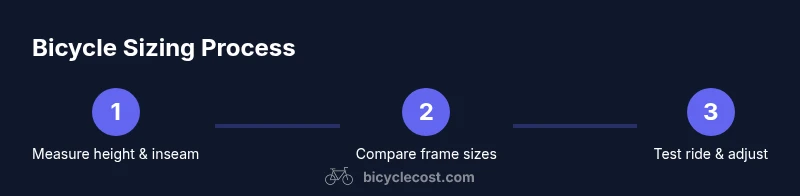
Goal: Find a bicycle that fits your body, riding style, and spaces between joints. To start, identify your riding goals (commuting, trails, or casual rides), know your inseam and height for frame size, and compare bicycle geometries (road, mountain, or hybrid). Test-ride multiple sizes and adjust components like saddle height and reach. According to BicycleCost, fit matters most for comfort and efficiency.
Why proper sizing matters
Sizing is the foundation of comfort, efficiency, and safety on any bike. When a frame is too large or too small, you’ll feel overreaching, cramped knees, or poor weight distribution, which can lead to fatigue or injury on longer rides. The right fit improves pedal efficiency, control, and comfort across different surfaces. According to BicycleCost, improper fit is a common reason riders abandon bikes after the first few rides, so investing time in sizing pays off quickly. In this section we’ll unpack how fit affects your posture, power, and confidence on the bike, and set up a practical approach to finding your ideal ride.
Understand your riding style and bike types
Riding goals determine the kind of bike that suits you best. Road bikes with a long reach and compact geometry feel fast on pavement, while mountain bikes emphasize stability and control on rough terrain. Hybrid designs blend comfort and versatility for mixed use. Each category has a distinct geometry, which influences fit. BicycleCost analysis shows that riders who align their chosen bike type with their daily routes report higher satisfaction and fewer comfort issues. Start by mapping your typical trips — commuting, weekend rides, or off-road adventures — and use that map to shortlist bike types with geometry that supports your goals.
Take accurate body measurements
Accurate measurements are the bridge between your body and the bike. Begin with your inseam length to gauge stand-over height, then record your overall height, torso length, and arm length. Have a friend assist to keep the measurements true and repeatable. Use a flat, level surface and wear typical riding clothes and shoes. Write down each measurement and note the context (sitting vs standing). These numbers guide frame size, saddle height, and handlebar reach, but remember that brands vary, so use them as a starting point rather than a fixed rule.
How to translate measurements into frame size
A frame size is a rough starting point; fit is a combination of frame size, top tube length (affects reach), and seat tube geometry. Stand-over clearance should allow you to straddle the bike with a few centimeters of room; your knee should have a comfortable bend with the pedal at the lowest point. Saddle height influences knee alignment, while reach determines how stretched you feel at the handlebars. Re-check after initial setup and be prepared to adjust stack (handlebar height) and reach to fine-tune the fit. Remember: the same size label may feel different across brands, so always test-ride before buying.
Choosing a bike type for your goals
Consider where you ride most and your priorities: speed vs comfort, stability vs versatility, and maintenance needs. Road bikes excel on smooth pavement and long distances but require careful fit for efficiency; gravel bikes offer a balance between light terrain and road, with forgiving geometry; mountain bikes prioritize control and traction on uneven surfaces; hybrids provide a comfortable middle ground for casual riders. By aligning your size and geometry with your riding goals, you minimize post-purchase regret and maximize enjoyment.
Test ride protocol and adjustments
Plan a structured test ride that includes common riding situations: a flat loop, small hills, corners, and braking scenarios. Check saddle height by placing heel on pedal at bottom of stroke; you should have a slight knee bend when the ball of the foot is on the pedal. Confirm reach by placing hands on the bars and ensuring elbows are relaxed; you should not feel cramped or overly stretched. Take notes on comfort, handling, and visibility, and note any numbness, tingling, or discomfort in wrists, neck, or back. Bring basic tools to tweak saddle height or handlebar position and aim for 15–20 minutes per bike size. If something feels off, repeat measurements or re-check your stance and alignment.
Tools & Materials
- Measuring tape (inches or cm)(To measure inseam and stand-over height.)
- Notebook and pen(Record measurements, ride feedback, and bike specs.)
- Adjustable bike stand or safe rack(Helps hold bike steady during measurements.)
- Friend or coach to assist(Helpful for accurate inseam and reach checks.)
Steps
Estimated time: 60-90 minutes
- 1
Define your riding goals
Identify whether you’ll mostly commute, ride for fitness, or hit trails. Your goal shapes bike type, geometry, and features to prioritize (comfort, efficiency, or durability).
Tip: List top three riding scenarios you want to enjoy without discomfort. - 2
Measure your body accurately
Measure inseam, height, torso length, and arm length with a partner to ensure consistency. Use a level surface and wear typical riding gear. Record each measurement with the context (standing or in a saddle).
Tip: Have someone help you hold the tape straight for reliable results. - 3
Compare frame sizes using brand charts
Use the brand size charts as starting points, but expect minor differences between manufacturers. Compare stand-over height and top tube length to gauge reach and clearance.
Tip: Always verify with a test ride in at least two sizes. - 4
Consider geometry and fit factors
Reach, stack, and saddle setback influence riding posture. Shorter torsos usually need more saddle setback; longer arms may need a longer top tube.
Tip: Check if you can reach controls without locking wrists or overextending. - 5
Test ride with real-world scenarios
Ride on varied surfaces, conditions, and speeds. Pay attention to comfort, stability, and control. Take notes on any pain or numbness.
Tip: Bring pedals you’ll actually use to feel accurate fit. - 6
Tune and adjust after choosing
Once you pick a size, fine-tune saddle height, handlebar position, and toe clearance. Document adjustments for future reference or professional fitting.
Tip: If pain persists after adjustments, revisit measurements or seek a fitter.
People Also Ask
What is frame size and why does it matter?
Frame size refers to the length and geometry of the bicycle’s frame. An incorrect size can cause discomfort, reduced pedaling efficiency, and poor handling. Getting the right size improves power transfer, posture, and overall control.
Frame size is the starting point for fit; testing different sizes is essential to confirm comfort.
Do sizes vary across brands?
Yes. Each brand uses its own sizing system and geometry. Always consult the specific brand chart and, when possible, test ride multiple sizes from the same brand.
Sizes aren’t standardized across brands, so always check the chart and ride test options.
Is stand-over height important for beginners?
Stand-over height matters for confidence during stopping and mounting. Ensure a comfortable clearance so you can place both feet flat on the ground when stopped.
Stand-over matters for stability and confidence, especially for new riders.
How long should I test ride a bike before buying?
Aim to test ride at least two different sizes or models to compare fit, feel, and handling across typical riding scenarios.
Take enough time to feel how it handles and whether you’re comfortable throughout the ride.
Do I need professional fitting?
A professional fitting can help tailor saddle height, reach, and handlebar position, especially if you have pain during rides or unique body proportions.
A pro can fine-tune your setup for long-term comfort.
What if I have long legs or a short torso?
Focus on top tube length, saddle setback, and reach rather than just frame size. Test bikes with adjustable components to find the best balance.
Fit is about how the bike feels, not just a number.
Watch Video
Quick Summary
- Define riding goals before choosing size
- Measure accurately and compare across brands
- Test ride multiple sizes and adjust after purchase
- Prioritize comfort and control over aesthetics and brand labels