Bicycle Tire Sizes Chart: A Practical Reference Guide
A practical guide to bicycle tire sizes chart explaining ETTRTO sizing, bead diameter, and width ranges. Learn to read charts, measure tires, and choose compatible tires for road, mountain, and hybrid bikes.


A bicycle tire sizes chart maps the relationship between tire width, bead diameter, and wheel diameter to help you pick compatible tires with confidence. It covers ETTRTO/ISO standards, sidewall markings, and common width ranges for road, mountain, and hybrid bikes. Using this reference reduces the chance of wrong fit and saves time when shopping.
Why a bicycle tire sizes chart matters
A bicycle tire sizes chart is more than a reference; it's a practical tool that helps riders avoid mismatches that can lead to flats, poor performance, or unsafe handling. According to BicycleCost, understanding tire sizing reduces trial-and-error shopping and speeds up upgrades or replacements. The chart clarifies how different standards relate to each other and shows where common sizes sit in real-world bikes. For daily riders, a clear chart translates into faster decision-making at the shop or online, fewer returns, and more predictable ride quality across seasons.
Understanding tire sizing standards: ETTRTO, ISO, and more
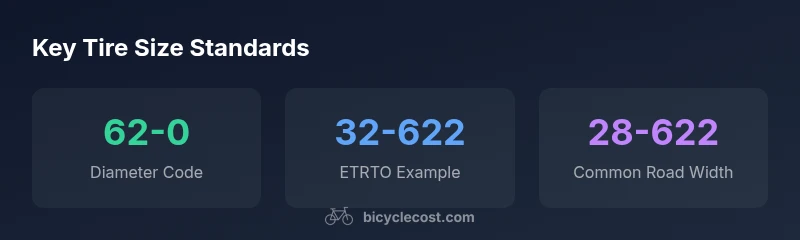
The most widely used modern standard is ETTRTO (ISO) sizing, written as width-diameter, such as 32-622. This notation directly communicates the tire width in millimeters and the bead seat diameter in millimeters. Other traditional notations include bead diameter alone or imperial inch equivalents like 29er and 27.5. While road tires typically use 622 mm beads, mountain bikes often use 584 or 622 depending on the wheel, and kids’ bikes may use smaller diameters. A tire chart helps you cross-map these standards when mixing brands or upgrading components.
Reading sidewall markings and common notations
Sidewalls carry critical information in compact codes. You may see formats like 700x32c or 32-622. The first is an approximate traditional size, while the second is the precise ETTRTO sizing. Always compare the ETTRTO numbers when possible, but also note the tire’s width range and the rim compatibility. If you’re unsure, cross-reference the markings with your bike’s official documentation or a trusted tire chart to verify fit before purchasing.
Wheel diameter categories: road, mountain, hybrid, and kids' bikes
Road bikes most commonly use 622 mm bead diameter tires, with widths often in the 25–32 mm range for performance and efficiency. Mountain bikes frequently use 584 mm or 622 mm diameters with wider widths, from about 50 mm down to 2.0 inches in some models. Hybrid bikes sit in between, offering a mix of durability and comfort. For kids' bikes, smaller wheel diameters like 305 mm to 406 mm appear as you move through early bicycle stages. A tire chart helps you translate between these classes when upgrading wheels or tires.
Measuring tire size and rim compatibility accurately
To measure, start with the tire sidewall markings to identify ETTRTO and diameter codes. Verify the rim width and bead seat diameter using a metric ruler or calipers. If possible, remove the wheel and test fit a few sizes in a controlled setting to ensure clearances with brakes, fork, and frame. Remember that tire width and rim width determine the usable tire volume; too wide a tire on a narrow rim can cause bead leaks or rubbing.
Tire width, clearance, and ride quality: practical sizing tips
Width affects grip, comfort, and rolling resistance. Wider tires provide more float and stability on loose surfaces but can hinder cornering on tight frames. Narrow tires reduce rolling resistance but may feel harsh on rough pavement. When selecting tires, consider your frame and fork clearances, brake type (rim vs. disc), and typical riding surfaces. A chart can help you identify safe width ranges for your bike family and upgrade path without trial-and-error.
How to use a tire size chart when upgrading or replacing tires
Start by locating your wheel diameter and width range in the chart. Check the ETTRTO code and cross-check the closest matches with your rims. If you upgrade to wider tires, ensure your frame clearance and brake system remain compatible. Use the chart to estimate the likely impact on ride feel, speed, and puncture resistance, and double-check with retailer product pages or the manufacturer’s sizing guidance.
Common compatibility pitfalls and how to avoid them
Pitfalls include mismatched diameter, incompatible rim widths, or trying to mount tubeless tires on non-tubeless rims. The goal is consistent bead seating, correct inflation range, and clearances that won’t rub under load. Always confirm the wheel’s bead seat diameter and tire width compatibility, and consult the tire chart when evaluating cross-brand combinations. When in doubt, reach out to a qualified mechanic or the brand’s support team.
Using a tire chart across brands and bike types: practical examples
A chart is especially helpful when navigating multiple brands with subtle naming differences. For example, a road tire labeled 32-622 may have different performance characteristics than a 32-622 road tire from another brand, even if both share the same ETTRTO. The chart helps you compare bead diameters, widths, and intended uses side-by-side, enabling more informed decisions during sales or maintenance.
Sample ETTRTO size mappings for common tire types
| ETRTO Size | Bead Diameter (mm) | Typical Width (mm) |
|---|---|---|
| 37-622 | 622 | 28-37 |
| 47-622 | 622 | 38-50 |
| 32-584 | 584 | 25-47 |
| 54-584 | 584 | 50-60 |
People Also Ask
What is a bicycle tire sizes chart?
A tire sizes chart maps tire width to bead diameter and wheel diameter across standards, helping you find compatible tires quickly. It simplifies shopping and maintenance decisions.
A tire sizes chart shows which tires fit your wheel so you don’t guess when buying.
What does ETTRTO mean, and why is it important?
ETTRTO stands for European Tyre and Rim Technical Organization sizing. It expresses width and bead diameter, giving a precise fit reference that can be cross-checked across brands.
ETTRTO is a precise sizing standard that helps you pick the right tire.
How do I measure my tire size correctly?
Look for the ETTRTO markings on the sidewall, measure the bead diameter with calipers, and confirm the width ranges. Cross-check with your rim’s compatibility and frame clearance.
Check the sidewall codes and measure the diameter and width to confirm the size.
Can I mix wheel diameters, like 27.5 and 29, on the same bike?
Typically not. Different wheel diameters require different rims and frames. Always match diameter to the wheelset and frame specifications.
No—stick to the recommended wheel diameter for your bike.
Why do some tires have a different width mark than the actual usable width?
Width marks indicate nominal ranges. The actual usable width is affected by rim width, tire construction, and pressure. Always check the recommended tire range for your rim.
Width markings are nominal; the real width depends on your rim and pressure.
“A clear bicycle tire sizes chart reduces misfits, speeds upgrades, and improves safety by ensuring the tire and rim pair correctly across brands.”
Quick Summary
- Know the main sizing standards and how they relate
- Read ETTRTO codes to verify compatibility
- Check both diameter and width for fit and clearance
- Use a tire sizes chart for quick comparisons
- Measure carefully and verify with your bike’s specs