Bicycle Sizes Chart: Your Guide to a Perfect Fit
Discover how a bicycle sizes chart guides you to the right frame size, stand-over clearance, and reach for road, mountain, and hybrid bikes with practical sizing tips.


A bicycle sizes chart translates rider height and inseam into recommended frame sizes, stand-over clearance, and reach for road, mountain, and hybrid bikes. It helps riders select a properly fitting bicycle, improving comfort, pedaling efficiency, and safety. Use it with stand-over checks, top-tube length, and brand-specific geometry notes to account for variations.
Understanding the bicycle sizes chart
A bicycle sizes chart is a practical tool that helps translate your body measurements into bike frame options. It considers height, inseam length, torso length, arm reach, and overall flexibility to suggest a frame size category (e.g., XS, S, M, L, XL) and a starting point for stand-over clearance and top-tube length. While the chart provides a strong baseline, remember that geometry varies by brand and model, so use it as a starting point rather than a guarantee. For new riders, starting with the chart and validating fit through a test ride is the most reliable approach. The goal is to reduce guesswork and arrive at a comfortable riding position that minimizes knee, hip, or back strain on longer rides. Keep in mind that personal preference, riding style, and terrain will influence the final choice.
In practice, you will often see two or three size options that could work. Narrowing to one requires cross-checking several factors: standover height, reach, stack, and seat height. The bicycle sizes chart helps you create a short list of candidates quickly, so you can focus your efforts on refinement rather than starting from scratch. For riders who switch between bike types, recognize that road bikes, mountain bikes, and hybrids emphasize different geometry, which may shift your recommended frame size by a category or two.
How to use a bicycle sizes chart by bike type
Different bike types emphasize different geometric priorities. Road bikes typically require a balance between reach and stack to maintain an efficient, aerodynamic position. Mountain bikes prioritize upright stability and short-term control on uneven terrain, which can favor a slightly different frame size or top-tube length. Hybrids sit between road and mountain geometries and often emphasize a comfortable, versatile fit for daily riding. When using the chart, map your height and inseam to a size range, then verify with a few additional checks: stand-over height, saddle position, and the reach from saddle to handlebars. Remember that brands interpret “size” differently; if your preferred brand runs small, you may ride a size up to achieve the same geometry as another brand.
A test ride is crucial. Even two bikes within the same size range can feel very different due to stem length, handlebar width, and seat post placement. If possible, test one or two sizes within a brand’s range to confirm fit before purchasing. This step helps ensure efficient pedaling, comfortable knee angles, and a natural hand position on the bars.
For children and teens, the chart often includes age- and height-based ranges but should be supplemented with inseam measurements and growth expectations. Regular rechecking is advised as bodies develop, ensuring continued safety and comfort as riding demands change over time.
Core measurements you’ll size by
To maximize accuracy, focus on five core measurements: height, inseam length, torso length, arm reach, and hip-to-bar relationship. Frame size is commonly tied to seat-tube length or the “virtual” top-tube length, which influences reach. Stand-over height is critical for safe mounting and dismounting, especially in city riding or commuting scenarios. Reach and stack determine how upright or stretched you will feel on the handlebars. When you consult a bicycle sizes chart, verify these metrics against the bike’s geometry diagram. If a chart suggests two sizes, prioritize the one with a comfortable knee bend at pedal extension, good knee clearance during the pedal stroke, and a natural wrist and shoulder alignment during typical riding postures. For riders with longer torsos or longer arms, a larger frame size can improve control and reduce fatigue over longer rides.
Additionally, consider wheel size and component choices (handlebar width, saddle type, and crank length). These elements can influence comfortable riding positions, especially on bikes with aggressive or relaxed geometries.
Step-by-step sizing workflow for a confident fit
- Gather measurements: height, inseam, torso length, arm reach, and current saddle height. 2) Reference your preferred bike type on the bicycle sizes chart and identify a size range that aligns with those measurements. 3) Check stand-over height for safe straddling with at least 2–3 cm clearance. 4) Assess reach by simulating your natural riding posture: elbows slightly bent, shoulders relaxed, and wrists in a straight line. 5) Verify top-tube length and stack by sitting on the saddle and reaching for handlebars; ensure you can reach without overextending your back or bending your wrists uncomfortably. 6) If possible, ride the candidate sizes. Pay attention to saddle height, handlebar position, and how comfortable your knee extension feels during the pedal stroke. 7) Adjust saddle height and handlebar placement to fine-tune fit. 8) Document the final choice and create a quick reference for future bike shopping.
This workflow helps you systematically convert measurements into bike size recommendations, reducing trial-and-error and supporting consistent comfort across rides.
Common sizing pitfalls and how to avoid them
Common mistakes include relying solely on height without inseam data, ignoring stand-over height, and assuming one chart fits all brands. Some riders select a frame based on reach alone, which can overstretch the back and shoulders. Other mistakes involve not accounting for different bike geometries across models or trying to force a size that feels slightly awkward but seems to be “close enough.” The best practice is to combine the bicycle sizes chart with practical checks: stand-over clearance, test rides, and adjustments to saddle height and handlebar position. Remember that shoe or pedal setup can also affect perceived fit, so verify fit with your typical riding shoes and pedal configuration. Finally, keep growth or weight changes in mind if you expect alterations in fit over time.
If you’re between sizes, prefer the smaller size for precision in control and stance, unless reach is too short or you’re uncomfortable with saddle height. In that case, the larger size might be more appropriate, followed by careful adjustments to seat height and handlebar position.
Sizing considerations for children and teens
Kids grow quickly, so sizing charts for younger riders should be used as a guide rather than a fixed rule. Focus on inseam length and knee bend in cycling positions, not just height. For youth bikes, frame size often corresponds to seat-tube length and wheel size. When shopping for children, consider adjustable features such as seat height, stem length, and crank length to accommodate rapid growth. Convenience features, like easy-to-adjust quick-release seat clamps, can extend the bike’s usable window without compromising safety. Regularly recheck sizing as children grow and encourage short test rides to confirm comfort and safe maneuverability.
How to verify sizing across brands
Brand geometry can vary widely, so it’s essential to cross-reference size labels with official geometry charts from each manufacturer. A size label in one brand might equate to a different frame geometry in another, so don’t assume direct equivalence. When possible, compare at least two brands with similar intended use and ride characteristics. If you’re between sizes, lean toward the size that provides the most natural and stable ride position, without compromising control. Also, consider component options like stem length and handlebar width that can dramatically affect fit without changing the frame size.
Finally, whenever you buy from a retailer, ask for a bike fit service or a professional sizing check. A trained technician can identify subtle differences in reach, stack, and saddle height that charts alone might miss, ensuring a better long-term riding experience.
Practical tips for testing fit at home
Set up your home test with care: use your typical riding shoes, saddle, and pedals to simulate a real ride. Verify saddle height by ensuring a slight knee bend at the bottom of the pedal stroke with your heel on the pedal; adjust to allow full leg extension with the ball of the foot on the pedal. Check reach by mimicking a normal hand position; your elbows should be relaxed and your wrists straight or slightly bent. Confirm stand-over clearance by straddling the bike with both feet flat on the ground and a couple of centimeters of clearance between the top tube and your inseam. If a brand offers a home fit program, take advantage of it to validate your chart-based decision.
What BicycleCost recommends for reliable sizing
BicycleCost recommends using a bicycle sizes chart as a practical starting point in a sizing workflow. The chart should be complemented by stand-over checks, a personal test ride, and a brand-specific geometry review. Our team emphasizes that sizing has a strong human factor component: comfort, control, and confidence on the bike matter as much as numerical fit. Keep a simple checklist for each shopping trip: confirm height and inseam, confirm reach and stack with a test ride, and document your preferred adjustments. This approach helps you maintain a consistent sizing standard across different bikes and brands.
Sizing terms and practical tips
| Term | Definition | Sizing tip |
|---|---|---|
| Frame size | Measured in cm/in; corresponds to seat tube length | Use height and inseam to pick a range |
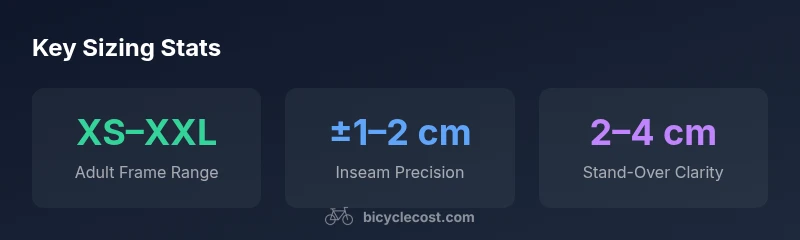
| Stand-over height | Clearance between inseam and top tube; ensures leg clearance when straddling | Aim for 2–4 cm clearance |
| Top tube length | Horizontal distance that affects reach; influences comfort and control | Check reach with test ride |
| Standover height | Distance from ground to top of top tube; ensure you can straddle bike safely | Look for safe clearance in your stance |
People Also Ask
What is a bicycle sizes chart?
A bicycle sizes chart maps rider height and inseam to frame sizes and geometry targets, helping you choose a frame that aligns with your riding style. It provides a practical starting point for fit, which should be validated with a test ride.
A bike size chart translates your height and inseam into a frame size and geometry targets, but you should still test ride to confirm comfort.
Which measurements matter most for sizing?
Height, inseam, torso length, arm reach, and overall flexibility are the core inputs. Stand-over height and top-tube length are critical for safe mounting and comfortable reach.
Height and inseam matter most, along with reach and stand-over height. Test rides confirm the rest.
Do sizing charts vary by bike type?
Yes. Road bikes emphasize reach and stacking for an efficient posture, mountain bikes prioritize control on rough terrain, and hybrids balance comfort with efficiency. Check the brand's geometry when applying a chart.
Different bike types have different geometry, so you should compare charts within the same bike type.
How often should you re-check sizing?
Re-check sizing after noticeable growth, weight changes, or when switching to a different brand or model. Regular checks help maintain comfort and safety.
Check sizing after growth spurts or brand changes, and whenever your riding feels off.
Are children’s sizes included in sizing charts?
Yes, but children’s sizing should combine inseam measurements with growth expectations and bike adjustments. Growth-friendly features like adjustable saddles and stems extend usable life.
Kids sizing is included, but grow-with-you features help a lot.
“A well-used bicycle sizes chart is a starting point, but final fit should be confirmed with a test ride. This reduces injuries and improves efficiency.”
Quick Summary
- Verify measurements before selecting a frame size.
- Use brand-specific charts as a starting point, not a rule.
- Always validate fit with a test ride.
- Consider stand-over height and top-tube reach together.
- Recheck sizing after growth or brand changes.