Bicycle Frame Size Guide: Find Your Perfect Bicycle Fit
Learn to choose the right bicycle frame size using inseam and reach measurements, with practical charts and tips for road, mountain, and hybrid bikes.


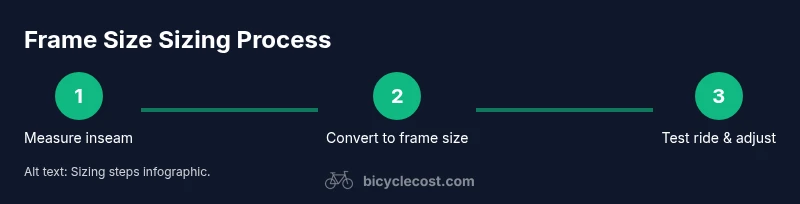
With the right bicycle frame size, you gain efficient pedaling, better control, and reduced risk of injury. This guide shows how to measure your inseam and reach, translate those numbers to road, mountain, and hybrid frames, and apply quick checks to confirm a comfortable, safe riding position. Whether you ride daily commutes or weekend adventures, start here.
Why Frame Size Matters
According to BicycleCost, frame size strongly influences efficiency, comfort, and long-term joint health. A correctly sized frame aligns your hips, knees, and shoulders with the bike’s geometry, enabling smoother power transfer and less fatigue on longer rides. If the frame is too small, you’ll feel cramped and may experience knee or lower-back strain. If it’s too large, you’ll struggle to reach the handlebars, which can compromise steering and control at speed. This section explains why size matters and how geometry—reach, stack, standover—directly affects your ride quality and safety. By understanding these concepts, you’ll be better equipped to interpret size charts and evaluate a bike in the store or online.
How Frame Size is Measured
Frame size is not a single number; it’s a set of measurements that describe the bike’s geometry. The most common references are inseam-based charts, top tube length (the horizontal distance to the handlebars), and standover height (clearance between the top tube and your inseam when standing over the bike). In practice, sizing starts with your inseam and overall height, then uses manufacturer charts to map those numbers to a frame size in centimeters or inches. Remember that different brands may label sizes differently, so always compare against the brand’s specific chart. A good fit will allow you to stand over the bike with comfortable clearance and maintain a slight bend in the knee at the bottom of the pedal stroke.
Key Geometry Terms: Reach, Stack, and Top Tube Length
Two critical terms frequently appear in sizing discussions are reach and stack. Reach measures how far the handlebars are from the saddle horizontally, while stack measures vertical distance from the center of the bottom bracket to the handlebars. The effective top tube length is closely related to reach and helps predict how stretched you’ll feel on the bike. A balanced combination of reach and stack complements your torso length and arm length, enabling an efficient riding position. When sizing, focus on these geometries rather than just the seat tube length to ensure a comfortable, stable ride.
Sizing Guidelines by Bike Type
Road bikes, mountain bikes, hybrids, and gravel bikes each have their own sizing nuances. Road bikes typically emphasize a shorter top tube and a lower cockpit for aerodynamics, while mountain bikes may favor a longer reach and taller stack to accommodate aggressive handling on rough terrain. Hybrids sit in between, offering a comfortable upright position for daily riding. Use the bike type’s size chart as a starting point, then fine-tune with saddle height and handlebar reach. If you’re between sizes, consider the frame with the more forgiving geometry or seek a professional fitting.
Tools and Methods for Accurate Home Sizing
Accurate body measurements are foundational for sizing. Use a flexible tape measure for inseam, a stadiometer or a buddy to verify height, and a ruler or tape to compare top tube length on a preferred frame. When possible, bring a well-fitting bike or borrow a size sample from a local shop to test ride. Don’t rush the process—alignment checks, smooth pedal stroke, and lightweight handling during the first ride often reveal size gaps that numbers alone cannot.
How to Read and Use Size Charts
Most brands publish size charts that map inseam, height, and reach to frame sizes. Start with your inseam-based estimate, then adjust by checking your torso length, arm reach, and preferred ride position. Pay attention to standover clearance and the minimum seat-post insertion. Remember, charts provide a baseline; a test ride or professional fitting will confirm the final choice and can reveal subtle adjustments to stem length or saddle tilt that improve comfort.
The Fit Check: Quick In-Store and At-Home Tests
Before purchasing, perform a fit check: stand over the bike and ensure a comfortable clearance, reach and hand position while holding the brakes, and a test pedal from a static position. In a shop, request a brief ride on a trainer or demonstrator bike to feel how the frame size handles weight transfer, cornering, and braking. At home, try a few gentle rides in a safe area to verify that you can easily reach the brakes, shift gears, and maintain proper posture for at least 15 minutes without discomfort.
A Practical Sizing Checklist
- Measure inseam and height accurately.
- Compare to the brand’s size chart, then consider reach and stack.
- Check standover clearance with the garment you usually wear when riding.
- Test ride if possible; adjust saddle height, tilt, and stem length as needed.
- If between sizes, lean toward the smaller size with precise adjustment rather than stretching to a larger frame.
Tools & Materials
- Tape measure (metric cm and inches)(Flexible and long enough to reach from crotch to floor and measure top tube length)
- Flat surface or wall for stand test(Use to verify stand-over height and shoot alignment with a straight posture)
- Notebook or device for recording measurements(Log inseam, height, reach, and chart references)
- Brand size charts (printout or tablet)(Use to map measurements to frame sizes; helpful for cross-brand comparisons)
- Level or plumb line (optional)(Useful for evaluating true vertical alignment during test fits)
- Partner or bike stand (optional)(Helps stabilize the bike during measurements and quick adjustments)
Steps
Estimated time: 40-60 minutes
- 1
Prepare your space and tools
Set up a clear area with a wall or tall mirror. Gather a tape measure, notebook, and access to brand size charts. This ensures you can measure accurately and record values without distractions.
Tip: Ask a friend to help hold the bike steady during measurements. - 2
Measure inseam accurately
Stand straight with shoes on and measure from the floor to your crotch along the inseam. Use the measurement to estimate initial frame size via the brand chart.
Tip: Keep the tape perpendicular to the floor for a consistent reading. - 3
Assess torso length and arm reach
Estimate how far you reach to the handlebars by extending your arms while seated on a stand-in saddle position. Compare this reach to the target frame’s effective top tube length.
Tip: A slightly shorter reach often means a more comfortable ride on longer distances. - 4
Consult brand size charts
Compare your inseam, reach, and height to the chart for road, mountain, or hybrid frames. Note any discrepancies between brands and seek the smallest size that fits your reach comfortably.
Tip: If you’re between sizes, prioritize the size that allows a correct knee bend and a neutral hip angle. - 5
Check standover clearance
With shoes on, stand over the bike and ensure you have comfortable clearance at the top tube without pinching your legs. Adjust saddle height if needed to achieve a balanced position.
Tip: Aim for a small clearance that allows a quick, confident stop without toe contact. - 6
Test ride and adjust fit details
If possible, take a short ride to evaluate pedal reach, handlebars, and stem length. Fine-tune saddle height, tilt, and, if necessary, stem length to optimize comfort.
Tip: Don’t force a large frame; small adjustments can improve fit dramatically. - 7
Finalize decision and document
Record your final frame size and any adjustments (saddle height, stem length). Consider a professional fitting if you’re between sizes or planning aggressive riding.
Tip: Keep your measurements handy for future bike changes or upgrades.
People Also Ask
What is the best way to determine bike frame size?
Start with inseam measurements and height, then compare to the brand’s size chart. Check reach and stack to ensure a comfortable cockpit, and always test ride when possible to confirm fit.
Begin with inseam and height, compare to size charts, and test ride to confirm fit.
Can frame size differ between road and mountain bikes?
Yes. Road and mountain bikes use different geometry; a size that fits one may feel too stretched or cramped on the other. Always consult brand-specific charts and consider professional fitting for accurate cross-type sizing.
Road and mountain bikes have different geometries, so check each brand’s chart.
What if I’m between sizes?
If between sizes, prioritize the smaller frame with cockpit adjustments (saddle height, stem length) to achieve proper reach and knee bend. A professional fit can confirm the best option.
If between sizes, try the smaller frame first and adjust the cockpit.
Is standover height the only factor in sizing?
No. Standover height is important for safety, but reach, stack, and overall cockpit geometry determine long-term comfort and control.
Standover matters, but reach and stack matter more for comfort.
Should I get a professional bike fitting?
For many riders, especially beginners or those with discomfort, a professional fit offers precise measurements and adjustments that maximize efficiency and comfort.
Yes, a professional fit can optimize your geometry and comfort.
Watch Video
Quick Summary
- Measure inseam and height accurately
- Use brand charts to map measurements to sizes
- Prioritize fit over aesthetics or brand hype
- Check standover clearance before riding
- Test ride and fine-tune saddle and cockpit