Bicycle Height Size Chart: A Practical Sizing Guide
Learn how a bicycle height size chart guides frame selection, maps inseam to frame size, and supports precise fit for road, mountain, and hybrid bikes with practical steps and brand-specific charts.


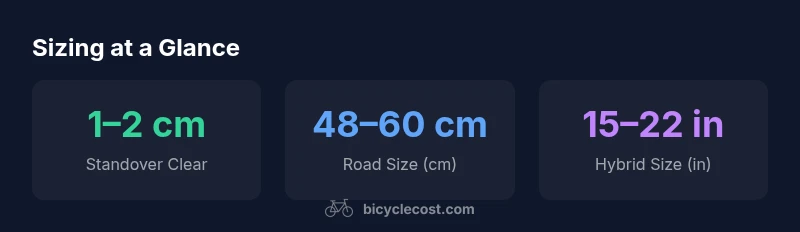
From a sizing perspective, a bicycle height size chart maps inseam length to frame size, usually with about 1–2 cm standover clearance. For most adults, road bike frames range roughly from 48 cm to 60 cm, while hybrid frames fall around 15–22 inches. Always verify with the brand's specific sizing chart, and adjust for torso length, arm reach, and riding style.
Why a Height Size Chart Matters
A well-constructed height size chart helps riders of all levels avoid common discomfort and safety issues, such as knee strain, higher saddle pressure, or overreaching. By correlating inseam length and standing height with frame geometry, the chart provides a practical starting point for choosing a frame. This is especially important for newcomers, riders with limited mobility, and those switching between bike types. According to BicycleCost, relying on height alone is insufficient; inseam length, torso proportions, and arm reach must be considered to achieve an efficient, comfortable riding position. A good chart also reduces trial-and-error shopping, supports safer fit in traffic, and guides you toward brands whose geometry aligns with your measurements.
Measuring Inseam and Torso for Accurate Sizing
Accurate sizing starts with measuring your inseam properly. Stand against a wall with feet hip-width apart and place a flat book between your legs, spine facing upward. Push the book up until it firmly contacts your pubic bone, then measure from the floor to the top of the book edge. This inseam length directly informs the frame size you should target. Additionally, capture your torso length and arm reach by using a measuring tape from your sternum to the armpit and from the back of your shoulder to the fingertip. These measurements influence stack and reach, which affect saddle height and handlebar position. When you combine inseam, torso, and reach data with your preferred riding style, you’ll have a robust baseline from which to start trying frames.
Road, Mountain, and Hybrid: How Sizing Varies by Bike Type
Geometry varies by bike type, which means the same rider may fit differently across road, mountain, and hybrid frames. Road bikes typically emphasize a lower, longer position for aerodynamics, so frame sizes are often smaller than seat tube geometry would imply. Mountain bikes prioritize control and clearance, often requiring taller standover and shorter top tubes for agile handling. Hybrids sit between road and city bikes, balancing comfort and efficiency. Use the inseam-based chart as a starting point, then adjust for reach and stack based on your torso length and arm length. It’s common to need a different size across bike types even if your height remains constant.
Practical Steps to Create Your Personal Height Size Chart
Begin with your inseam, torso length, and arm reach. Plot a baseline frame size from your inseam to a nearby brand’s chart (noting the cm or inch units used). Record the top-tube length, saddle offset, and headtube angle as additional geometry cues. Next, try two sizes within a 2–4 cm window and perform a controlled test ride on flat ground. Pay attention to saddle height, knee bend, hip rotation, and reach to the handlebars. Finally, adjust saddle height first, then stack and reach, and verify comfortable knee extension and unobstructed pedal stroke. Maintain a simple notebook or mobile note for quick future references.
Common Sizing Pitfalls and How to Avoid Them
One frequent error is assuming height alone dictates size. Brands vary in geometry, and seat tube vs. effective top-tube length can dramatically alter fit. Another pitfall is ignoring stack and reach: a frame that matches inseam size but feels cramped in the cockpit creates shoulder and neck tension. Don’t chase a single number; aim for a fit that allows a slight bend in the knee at pedal extension and a natural shoulder position. Finally, remember standover height matters for mounting and dismounting, especially on taller bikes or with riders wearing bulky gear.
Tools, Apps, and Brand Charts to Use
Use official brand sizing charts as your baseline, then compare across several brands to observe geometry differences. Online sizing tools and bike-fit apps can help estimate your position by inputting inseam, height, torso length, and arm reach. However, no tool replaces a proper test ride. Seek out shops that offer measurement sessions or professional fittings to refine your chart based on real-world feel. BicycleCost recommends building a personal chart that combines objective measurements with subjective comfort signals.
Test Ride and Fine-Tuning: Saddle Height, Reach, and Stack
The final validation step is a test ride. Adjust saddle height so your knee has a slight bend at the bottom of pedal stroke, then adjust saddle fore-aft to balance knee tracking and hip stability. Check reach by ensuring the handlebars are reachable without locking your elbows or hunching your shoulders. Stack affects head and upper-back posture; add spacers or adjust stem height if needed. Repeat multiple gradual adjustments on different terrains to confirm that your sizing is robust across riding scenarios.
How to Use a Height Size Chart in Shopping and Maintenance
Use your chart as a decision-aid during bike shopping and routine maintenance. When evaluating a new bike, compare the brand’s chart to your inseam and torso measurements, then plan for saddle height and handlebar adjustments. For maintenance, track seat tube angle, saddle position, and stem length to preserve the intended riding posture as you replace parts. Periodic re-measurement is wise after a long ride season or after major changes in gear or riding goals.
Sizing chart cross-check by bike type
| Metric | Road size (cm) | Hybrid size (in) | Notes |
|---|---|---|---|
| Frame size range | 48–60 | N/A | Road sizing varies by brand geometry |
| Standover clearance | 1–2 cm | 1–2 cm | Aim for clear ground clearance when standing over bike |
| Inseam mapping | Depends on brand | Depends on brand | Use brand-specific charts for precise mapping |
| Test-ride guidance | Required | Required | Always validate with a ride before purchase |
People Also Ask
What is a bicycle height size chart?
A height size chart maps your inseam and height to a recommended frame size, considering bike type and geometry. It’s a starting point that should be refined with a test ride and adjustments.
A height size chart links your measurements to a frame size, but you should still ride it and fine-tune the fit.
How do I measure my inseam correctly?
Stand barefoot, place a flat book between your legs, and raise it until it touches your pubic bone. Measure from the floor to the top of the book edge to obtain your inseam.
Stand with feet apart, place a book between your legs, and measure from floor to the top edge.
Does torso length affect bike size?
Yes. Torso length and arm reach influence cockpit comfort and reach. You may need a different frame size to achieve proper saddle height and handlebar position.
Torso length changes how far you reach the handlebars, so it can change the best frame size.
Are size charts universal across brands?
No. Geometry varies by brand. Always cross-check a brand’s chart and verify reach and stack during a test ride.
No, charts differ by brand; always test and adjust.
What is standover height and why does it matter?
Standover height is the distance between the top tube and your body when standing over the bike. It matters for safe mounting and dismounting.
Standover height is how much clearance you have when you stand over the bike; it’s important for safety.
Should I size up or down for comfort?
Follow the chart for an initial size, then fine-tune saddle height and reach to achieve a comfortable, efficient position.
Start with the chart size and tweak saddle height and reach for comfort.
“"Fit accuracy directly translates to comfort, efficiency, and safety on the bike. A thoughtful height size chart reduces postural strain and helps riders perform better."”
Quick Summary
- Measure inseam and torso length before choosing a frame.
- Use brand-specific charts; expect some variation across brands.
- Road, mountain, and hybrid sizing differ; don’t assume one size fits all.
- Test-ride with proper saddle height and reach adjustments.