Bicycle Wheel Size Guide
A practical, expert-led guide to identifying and selecting the right bicycle wheel size for road, mountain, and hybrid bikes. Learn measurement methods, compatibility checks, and safety tips from BicycleCost.


You will learn how to identify and select the correct bicycle wheel size for your bike and riding style. The guide covers common diameters, how sizes are measured, compatibility considerations, and safety tips so you can ride confidently with the right wheels. Whether you ride road, mountain, or kids’ bikes, the steps below help you verify sizing at a glance.
What 'bicycle wheel size' means
For most riders, the phrase 'wheel size' refers to the diameter of the wheel including its tire, but the industry standard used for compatibility is the bead seat diameter (BSD), measured in millimeters. This bicycle wheel size guide aims to translate BSD into the common diameters you’ll see in catalogs and on frames. According to BicycleCost, BSD—not the outer tire diameter—determines whether a wheel will fit your frame, brakes, and hubs. Getting this right is essential for safe handling, correct gearing, and reliable braking. Different naming conventions—such as 26", 27.5" (650B), 29", and 700c—can be confusing because the same nominal diameter may map to different BSDs depending on the era and market. The practical checks below help you verify size without dismounting your bike. The BicycleCost team emphasizes that accurate wheel sizing is a foundational maintenance step that affects every ride.
Common wheel size standards
The bead seat diameter (BSD) is the decisive measurement in wheel sizing. The most common BSDs today are 559 mm, 584 mm, and 622 mm. These map to popular wheel labels you’ll encounter in stores and online. Here’s how they break down in everyday terms:
- 559 mm BSD: commonly associated with 26-inch wheels; found on many older mountain bikes and some BMX setups.
- 584 mm BSD: known as 27.5 inches or 650B; a versatile option that bridges traditional 26" and modern 29" platforms.
- 622 mm BSD: the highway-standard size for 700c wheels; used by most modern road bikes and many gravel setups. 29ers, when paired with appropriate tire widths, also clock in on BSD 622.
In practice, tire labels like 26x2.0, 27.5x2.1, or 700x25c refer to the tire's outer dimensions, but the frame compatibility hinges on BSD and hub standards. BicycleCost analysis shows that BSD 622 mm is the dominant standard across road and many cross-overs, while 559 and 584 mm BSD dominate older or niche markets. Always confirm the BSD in your bike’s documentation and check rim width and axle type when shopping. Remember: rim width and tire width interact with brake clearance and fork/frame spacing, so sizing is a system, not a single datum.
How wheel size affects ride feel and fit
Wheel size directly influences ride quality, stability, and handling. Larger BSD wheels (like 622 mm or 635 mm for some mountain setups) roll over obstacles more smoothly, maintaining momentum and reducing jarring impacts on rough pavement. They also require different frame clearances and can slightly alter the effective standover height and steering geometry. Conversely, smaller BSD wheels accelerate quicker and feel more nimble, but can demand more precise braking and gearing to maintain speed on rough terrain. The choice of wheel size also affects tire width compatibility and brake performance. BicycleCost analysis indicates that riders often trade off quickness for rollover comfort when selecting a wheel, so aligning wheel size with riding goals is key. When you pick a wheel size, you’re shaping your bike’s geometry, tire options, and overall ride mood, so consider your typical terrain, cadence preferences, and confidence level.
Measuring wheel size at home and checking compatibility
To determine your wheel size at home, start with the tire label. Look for markings like 700x25c or 29x2.0; these labels usually reflect the outer diameter and width but don’t replace BSD. For BSD accuracy, remove the tire and measure the inner diameter of the rim where the bead seats the tire. If you don’t have calipers, you can approximate by using a ruler across the rim, then corroborate with the tire label and the bike’s documentation. When swapping wheels, verify hub axle type (quick-release vs. thru-axle), brake compatibility (rim brakes vs. disc brakes), and rotor size if applicable. If you’re shopping online, compare the BSD on the wheel with the frame’s manufacturer specifications and ensure the tire width won’t rub against the frame, fork, or brakes. BicycleCost recommends cross-checking all three dimensions—BSD, axle type, and brake compatibility—to prevent fit issues before purchase.
Choosing wheels for different bike types
Road bikes typically use 700c wheels with narrow tires, prioritizing low rolling resistance and weight. Mountain bikes favor BSDs around 559–584 mm with wider, rugged tires for grip. Gravel bikes often employ 700c wheels with wider tires for versatility on mixed surfaces. For kids or shorter riders, size availability may skew toward 559–584 BSD and smaller bead seat diameters. When selecting wheels, consider rim width (which affects tire profiles), tire width compatibility with the frame (clearance), and whether the brakes are rim-based or disc-based. Also account for hub compatibility, including axle type, freehub body, and spoke count. The key is to match the wheel’s BSD to the frame’s designed BSD and ensure the overall diameter preserves steering feel and ground clearance. A precise fit supports safe braking, accurate gear shifting, and predictable handling on your chosen terrain.
Safety and maintenance considerations when changing wheels
Safe wheel changes require attention to torque specs, proper tire seating, and correct inflation. Always check that quick-release skewers or thru-axles are properly tightened and aligned. Confirm rotor alignment and bolt torque for discs, and ensure rim braking surfaces are clean and free of oil. Inflate tires to the recommended pressure range printed on the tire sidewall, adjust tire width for the terrain, and inspect for wear indicators or cracks on rims and spokes. If you’re unsure about compatibility, consult the bike’s manufacturer documentation or seek advice from a qualified shop. Regular maintenance—checking spoke tension, hub bearings, and axle tolerances—helps prevent sudden wheel failures during rides.
Common mistakes and how to avoid them
Common errors include assuming outer tire diameter dictates fit, mixing wheel sizes between front and rear axles, and overlooking brake clearance when upgrading rims. Another frequent pitfall is ignoring hub compatibility, which can cause poor engagement or rotor misalignment. Finally, neglecting to verify the recommended tire width for a given rim can lead to tire bulging or sidewall damage. To avoid these, always verify BSD with the frame manual, check brake clearance with the widest tire you plan to run, and consult the wheel manufacturer’s compatibility chart for hub and axle requirements. A careful cross-check saves time, money, and bike safety.
Quick-start checklist for your wheel size decision
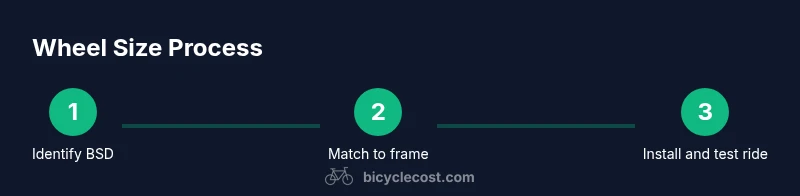
- Identify your BSD from the bike manual or a measurement with calipers
- Confirm rim width and tire compatibility with your frame
- Check brake type (rim vs. disc) and rotor clearance if applicable
- Compare BSD to your existing wheel set or the wheel you plan to buy
- Verify correct axle type and quick-release or thru-axle requirements
- Ensure tire width fits without rubbing and that the tire label aligns with BSD
Tools & Materials
- Measuring tape or ruler(Flexible metric tape or rigid ruler; read to the nearest millimeter)
- Calipers or a digital caliper(For precise BSD measurement; optional if you have a good ruler)
- Allen wrenches / hex keys(Common sizes: 4mm, 5mm, 6mm; used for axle or brake components)
- Tire gauge(To verify tire pressure after installation)
- Bike manual or manufacturer specs(Reference for BSD, axle type, brake compatibility, and torque specs)
Steps
Estimated time: 45-60 minutes
- 1
Gather tools and consult docs
Collect measurement tools and the bike's documentation. This ensures you have the BSD, axle type, and brake information before starting.
Tip: Having everything ready reduces trips to the toolbox and lowers risk of mistakes. - 2
Read the tire label for outer size
Check the tire sidewall for markings like 700x25c or 29x2.0. This gives a quick hint of the wheel category, but BSD remains the deciding factor.
Tip: Use the tire label as a sanity check against the BSD you measure. - 3
Remove the wheel if needed
If you’re swapping wheels, release the quick-release or thru-axle following the manufacturer’s procedure and carefully remove the wheel.
Tip: Support the bike frame to prevent scratches or damage. - 4
Measure the BSD with calipers or ruler
Measure the inner diameter of the rim where the tire bead seats. Record the measurement in millimeters.
Tip: Measure at multiple spots to catch any small deviations. - 5
Cross-check with common sizes
Compare your BSD measurement to common standards (559, 584, 622 mm). Verify also that your frame clearance and brake type align with the new wheel.
Tip: If in doubt, contact the frame or wheel manufacturer for compatibility charts. - 6
Check axle type and hubs
Confirm whether your bike uses quick-release or thru-axles and ensure the new wheel matches the hubs and spacers.
Tip: Mismatched axles cause installation issues and unsafe rides. - 7
Install the wheel and align brakes
Mount the wheel, reattach any brake components, and align the brake calipers or rotors as needed. Ensure smooth rotation without rub.
Tip: Spin the wheel slowly to check for rubbing and alignment before inflation. - 8
Inflate and test ride
Inflate to the tire’s recommended pressure and take a short test ride to confirm fit, handling, and braking feels.
Tip: Recheck tire pressure after the test ride; adjust if necessary.
People Also Ask
What is the difference between wheel diameter and bead seat diameter (BSD)?
Wheel diameter refers to the overall outer size, including the tire, while BSD is the inner rim diameter where the tire bead sits. BSD is what actually determines compatibility with a frame and brakes. Always verify BSD when sizing wheels.
Wheel diameter is the outer size; BSD is the inner rim diameter. BSD is the key compatibility factor for frames and brakes.
Can I use road wheels on a mountain bike?
Only if the BSD matches and the frame has enough clearance for the wider tire and different geometry. Brake compatibility and hub type must also align.
Only if BSD matches and there’s enough clearance; check brakes and hubs too.
What wheel size is best for beginners?
There’s no one-size-fits-all. For versatility, 27.5" (584 mm BSD) and 29" (622 mm BSD) offer good balance for many riders. Your choice should align with your bike type and terrain.
There isn’t a single best wheel size for beginners; consider your bike type and terrain.
How do I know if the wheel will fit my brakes?
Check whether your brakes are rim- or disc-based and verify rotor size and caliper clearance for the new wheel. The rotor alignment and hub compatibility must be correct.
Make sure the wheel matches your brake type and rotor size.
Are there safety concerns when changing wheel sizes on a frame?
Yes. Changing wheel sizes can affect frame geometry, braking performance, and shifting. Always follow manufacturer specs and perform a careful test ride after installation.
Yes. Follow specs and test the bike carefully after changes.
Watch Video
Quick Summary
- Know the BSD dictates frame compatibility
- Match BSD to the frame, then verify brakes and hubs
- Check tire width and rim width for clearance
- Use the tire label as a guide but rely on BSD for fit
- Always test ride after wheel changes