How to Measure Bicycle Wheel Size: A Practical Guide
Learn how bicycle wheel size is measured, including diameter, BSD, and tire width. This BicycleCost guide covers standard sizes, tools, and step-by-step methods to ensure proper compatibility for road, mountain, and kids' bikes.


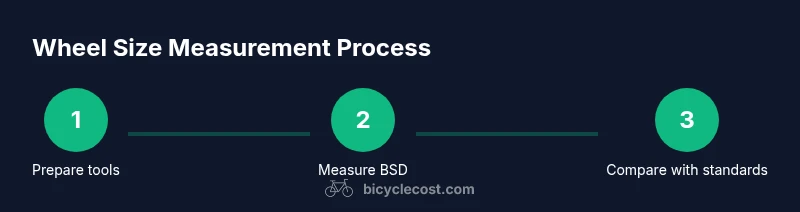
To measure bicycle wheel size, start by recording the external diameter of the tire, then determine the rim's bead seat diameter (BSD) and standard wheel diameters. Use a tape measure across the wheel to approximate the overall size, then verify BSD against common standards (559, 584, 622 mm). This quick method applies to road, mountain, and hybrid bikes and sets the baseline for compatible tires and rims.
Why wheel size matters for compatibility and safety
Wheel size is a foundational measure that affects braking, gearing, tire compatibility, and frame clearance. Getting it right ensures safe handling, predictable tire fit, and reliable component performance across road, mountain, and hybrid bikes. According to BicycleCost, correct wheel sizing reduces common issues like rubbing, brake misalignment, and rim/tire mismatch, saving time and money over the bike’s lifetime. In this guide we unpack what to measure, why it matters, and how it translates into real-world decisions when upgrading or replacing wheels and tires. You’ll learn how to interpret BSD, external diameter, and tire width, and how those values interact with your frame and brakes. By the end, you’ll be equipped to shop with confidence and avoid sizing pitfalls that lead to costly returns or unsafe riding conditions.
Key measurements and terminology you’ll encounter
Before you measure, know the core terms: wheel size, bead seat diameter (BSD), rim diameter, and tire width. For most everyday bikes, common wheel sizes include 26", 27.5" (650B), and 29" (commonly called 29er). In metric terms the BSDs are 559 mm, 584 mm, and 622 mm. BicycleCost analysis shows these standards cover most brands, models, and generations, so recognizing them helps you match wheels and tires accurately. The external wheel diameter (with the tire mounted) can differ from the BSD by the tire’s height, which is important for frame clearance and brake compatibility. Some bikes carry size labels on the chainstay or seat stay, but labels wear off; rely on measurements and cross-check with manufacturer specs when possible. Using consistent units (mm vs inches) avoids confusion during comparisons and purchases.
How to measure the wheel diameter with a tape measure
Begin by securing the bike on a stand or a stable surface to keep the wheel perfectly vertical. If you don’t have a stand, you can place the bike on the ground and stabilize it with chocks. Place the tape measure across the wheel’s widest point, edge to edge across the tire’s tread, and record the external diameter in both inches and millimeters. Note that the tire adds height, so the actual rim diameter is smaller than the overall wheel diameter. For sizing, use the external diameter as a quick reference and then translate that to BSD when selecting rims or tires. Always re-measure after inflation to reflect riding conditions, especially if you plan to use wider tires that alter overall diameter.
Measuring the rim diameter and BSD accurately
Deflate the tire and remove it to access the rim's bead seating area. With calipers (or a precise ruler), measure the diameter where the tire bead sits—that’s the bead seat diameter (BSD). Standard BSD sizes include 559 mm (26-inch), 584 mm (27.5-inch), and 622 mm (29-inch). Take measurements at multiple points around the rim and average them to reduce error. Cross-check BSD against hub compatibility, brake type, and frame clearance. The BSD is the most critical metric for rim-to-tire combinations and for ensuring future upgrades fit without rubbing or binding.
Measuring tire width and overall diameter for compatibility with brakes and frames
With the tire mounted, measure its width at the widest point along the tread. This width impacts whether frame clearances, fenders, and disc or rim brakes will interfere. For overall diameter, measure from the center of the axle to the outermost tire surface and multiply by two for a full wheel diameter, if needed. Use the same tape method you used for diameter to ensure consistency, and inflate the tire to your typical riding pressure to get an accurate reading. These numbers help you pick tires that won’t rub on the fork or chainstay and confirm you have adequate clearance when turning or cornering.
Practical examples by bike type and common scenarios
Road bikes typically use 700C wheels, which map to a BSD of 622 mm. Mountain bikes vary more, with 27.5" (584 mm BSD) and 29" (622 mm BSD) being common; the choice affects tire volume, traction, and gearing. Kids’ bikes often use smaller BSD values like 355–406 mm, depending on age and frame design. When upgrading tires or wheels, compare the BSD alongside the brake type (hydraulic disc, mechanical disc, rim brakes) and frame clearance to avoid rubbing at the top of the fork crown or under the seat stays. The more you know about BSD and external diameter, the easier it is to select compatible components that improve ride quality and safety.
Troubleshooting, verification, and when to seek help
If measurements don’t align with manufacturer specifications, double-check your setup, deflate the tire, and re-measure. Some bikes have mixed standards (e.g., a 27.5" wheel on a frame designed for 29er tires). Use a sizing reference sheet from the brand or a reputable guide to verify the BSD and overall diameter. If in doubt, consult a shop or a BicycleCost maintenance guide and carry your measurements to help staff recommend compatible tires and rims. The BicycleCost team also notes that some frames are designed for specific tire widths, so verify clearance at full steering lock and compression.
The concluding note: applying the measurements in practice
With BSD, external diameter, and tire width in hand, you can confidently compare wheel/tire options across brands. Always cross-check with your frame’s clearance diagram, brake caliper reach, and hub compatibility. The goal is a precise fit that preserves braking performance, pedal clearance, and overall safety. The BicycleCost team recommends documenting your measurements and keeping a reference sheet for future replacements or upgrades.
Tools & Materials
- Tape measure (preferably metal or flexible fabric)(At least 60 inches / 150 cm long; metric markings preferred for precision)
- Calipers or a precise ruler(Digital calipers are best for BSD measurements; ensure jaws are clean)
- Bike stand or stable bike support(Helps keep wheel perfectly vertical during measurement)
- Marker or chalk(Useful for marking measurement points on the tire or rim)
- Notebook or digital note app(Record measurements with units (mm and inches) for reference)
- Deflation tool (if needed)(Deflate the tire to remove it safely when measuring BSD)
Steps
Estimated time: 20-40 minutes
- 1
Gather tools and secure the bike
Collect a tape measure, calipers, a bike stand, and a notebook. Secure the bike on the stand or a stable surface so the wheel remains perpendicular to the ground during measurements.
Tip: Place markers on reference points to ensure consistent measurements across retries. - 2
Deflate and remove the tire (if needed)
Deflate the tire and carefully remove it from the rim to access the bead seat area. This step is essential for an accurate BSD measurement and reduces the risk of damage to the tire or rim.
Tip: If you’re unsure, consult a bike shop rather than forcing the bead off. - 3
Measure the external wheel diameter
With the tire mounted (or after reinflation), place the tape across the wheel from one edge of the tread to the opposite edge at the tire’s widest point. Record the measurement in inches and millimeters.
Tip: Measure at the tire’s widest point and at multiple spots to confirm consistency. - 4
Measure the bead seat diameter (BSD)
Using calipers or a precise ruler, measure the rim’s inner diameter where the tire bead sits. Take readings at two or three points around the rim and average them for accuracy.
Tip: Ensure the rim is clean and free of old sealant or debris that could skew readings. - 5
Cross-check with standard sizes
Compare your BSD with common standards (559 mm, 584 mm, 622 mm) and confirm the wheel’s compatibility with tires and brakes. Also consider tire width and clearance in your frame.
Tip: Consult manufacturer specs or a trusted guide if your BSD doesn’t match typical sizes. - 6
Document and verify
Record all measurements, note unit choices, and revisit any mismatches by re-measuring. If in doubt, test-fit a known compatible tire or wheel on the frame to verify clearance.
Tip: Keep a sizing sheet for future repairs or upgrades.
People Also Ask
What does BSD stand for and why does it matter?
BSD stands for bead seat diameter. It’s the inner rim diameter where the tire bead sits and is the critical measurement for tire and rim compatibility. Knowing BSD helps ensure your chosen tires fit properly and work with your braking system.
BSD stands for bead seat diameter, which determines rim and tire compatibility. It’s essential for safe mounting and reliable braking.
Can I measure wheel size with the tire inflated?
You can estimate a wheel’s overall size with the tire inflated, but for accuracy you should deflate and remove the tire to measure BSD and the rim diameter precisely. Inflated measurements can overstate the actual rim dimensions.
Measuring with the tire inflated is less accurate. Deflate and remove the tire to measure BSD precisely.
Why are there different wheel sizes like 26, 27.5, and 29?
Different wheel sizes affect ride characteristics, tire volume, and frame clearance. Smaller wheels offer quicker acceleration and lighter weight, while larger wheels provide smoother rolling and better stability on rough surfaces.
Different sizes change ride feel and clearance. Pick based on your bike type and terrain.
Is there a universal wheel size for bikes?
There is no single universal size. Most modern bikes use standard BSDs like 559, 584, or 622 mm, but compatibility with frames, brakes, and hubs varies. Always verify BSD and clearance with your specific bike.
No universal size. Always check BSD and frame clearance for your bike.
How do I know if new tires will fit my bike’s frame?
Check BSD and tire width against your frame’s clearance. Measure the tire diameter with inflation at riding pressure and confirm there’s no rubbing at full steering lock or under compression.
Check BSD and width against clearance; verify with inflated size at riding pressure.
Why do some labels show both inches and millimeters?
Manufacturers provide both units to accommodate different markets and measuring tools. Use one unit consistently in your notes to avoid confusion when comparing sizes.
Labels often show both units; pick one and stay consistent when measuring.
Watch Video
Quick Summary
- MeasureBSD first to determine rim compatibility
- Know common standards: 559, 584, 622 mm
- Record diameter with the tire and BSD separately
- Check frame and brake clearance after sizing
- The BicycleCost team recommends keeping a sizing reference for future upgrades