Why Is My Bicycle Hard to Pedal? Troubleshooting Guide
Discover why your bicycle is hard to pedal with BicycleCost's expert troubleshooting. Learn common causes, quick fixes, and when to call a pro for a smoother ride.


If you’re asking why is my bicycle so hard to pedal, the most common causes are drivetrain drag, low tire pressure, and seized components. Start with the basics: check chain tension and lubrication, inspect the derailleur and cables, verify brake rubbing, and pump tires to the recommended pressure before testing again.
Common Causes of Hard Pedal Effort
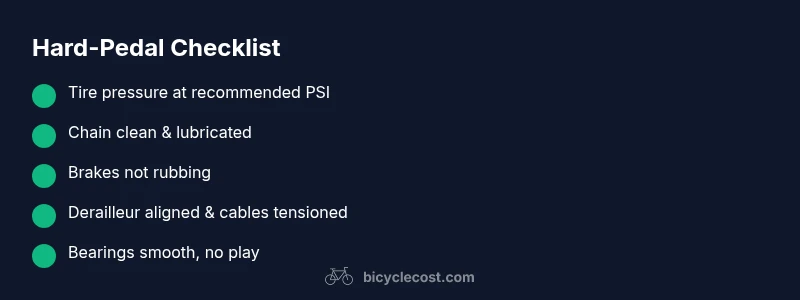
When a bicycle feels noticeably heavier to pedal, it’s the result of friction or drag somewhere in the system. According to BicycleCost, the most frequent culprits are drivetrain resistance (stiff links, rusted cogs, or poor lubrication), underinflated tires that increase rolling resistance, and brakes that rub or drag while you ride. Environmental factors like temperature and terrain can amplify these issues, but the core problems usually boil down to wear, misadjustment, or simple neglect. Before you start disassembling parts, perform a quick mental checklist: tires inflated to the manufacturer’s range, chain clean and well-lubricated, derailleur aligned, and brakes not rubbing. By prioritizing these basics, you’ll often regain a comfortable pedal stroke in minutes.
- Drivetrain friction: a dry chain, stiff link, or worn cassette can make pedaling feel sluggish.
- Tires and wheels: underinflation or a heavy wheel setup raises rolling resistance.
- Braking drag: misadjusted brake calipers or worn pads can rub and create resistance.
- Fit and technique: too much weight on the handlebars or a high/low saddle position can affect pedal efficiency.
Quick At-Home Checks: 2-Minute Starter Diagnostics
If you’re short on time, start with two-minute checks that cover the most common causes. Inspect tire pressure with a gauge and inflate to the recommended PSI printed on the tire sidewall. Spin each wheel to listen for rubbing or wobble, and touch the brake rotors or rims to detect heat buildup suggesting brake drag. Check the chain for lubrication, rust, and stiffness; a squeaky or gritty drivetrain is a red flag. Look at the derailleur hangers and cable tension—misalignment here can cause the derailleur to rub against the chain. Finally, ensure the brakes aren’t rubbing when you pedal; a light rub when coasting is normal, but constant contact is not. If any of these checks reveal an issue, address it before you ride again.
Drivetrain Wear and Lubrication: Chain, Cassette, Joints
A healthy drivetrain is the silent engine of easy pedaling. Over time, chains wear, joints stiffen, and lubrication gets thin or dirty. A worn chain increases wear on the cassette and chainrings, creating resistance and poor shifting. Clean the chain with a degreaser, dry it, and apply a thin coat of lubricant designed for your riding conditions. Check chain length and wear using a ruler or chain checker tool; replace if stretched. Inspect the cassette and chainrings for worn teeth, which bite into the chain rather than smoothly engaging it. If you notice stiff links or rust, address them promptly—rust can dramatically increase friction.
Wheel and Tire Factors: Pressure, Rims, and Bearings
Rolling resistance is highly sensitive to tire pressure. Underinflated tires deform more as they roll, increasing drag and making you work harder to move forward. Inflate tires to the recommended PSI, and consider switching to tubeless or puncture-resistant tires if you ride rough terrain. Check wheel bearings and hubs for roughness or play; dials or hands-on feel can reveal rough bearings that slow motion. Spin each wheel with the bike off the ground; smooth, quiet rotation is a good sign, while gritty or crunchy feelings indicate maintenance is needed. If you detect a wobble, crooked rim, or loose axle, address it before continuing.
Brakes and Drag: When The Brakes Bind
Brake drag is a frequent culprit behind stiff pedaling. Misadjusted brake calipers or pads can press against the rim or rotor, even when you’re not braking hard, wasting energy and adding resistance. Inspect brake pads for wear and alignment; ensure quick-release levers function properly and that brake cables are not stretched. If you hear a constant rubbing sound, inspect the rotor or rim for trueness and check that the wheel is centered in the frame. In disc brakes, a misaligned caliper can pull slightly, causing drag; aligning the caliper or replacing pads may solve the issue.
Fit, Pedal Stroke, and Efficiency
Your bike’s fit affects how easy it is to pedal. A saddle that’s too high or too low, or handlebars that push weight forward, forces your legs into awkward angles and can create fatigue that feels like pedal resistance. Check crank length relative to your inseam and adjust saddle height by a small amount (2–4 mm) to find a more natural pedal stroke. Consider pedal type (clipless vs. platform) and ensure proper cleat position if you use clip-ins. Efficient pedaling hinges on a smooth circle and balanced weight distribution; tiny changes here yield big results.
Environmental Conditions and Riding Style
Terrain, temperature, and riding style all impact pedal effort. Hilly routes, headwinds, and heavy luggage raise the energy required to spin the cranks. If you routinely ride on rough roads, the chance of chain and bearing wear increases, so maintenance intervals should be shorter. Adjust your gearing to match terrain and technique—cadence matters. Pedals feel stiff when cadence drops and legs burn; focus on maintaining a steady pace and consistent power delivery.
Diagnostic Path: From Symptom to Solution
This section outlines a practical flow you can follow on the trail or in your garage. Start with the simplest check (tire pressure) and move toward more complex issues (drivetrain wear, brake drag). Keep notes of what you test and what changes, then retest after each adjustment. If you cannot isolate the cause after a thorough home diagnostic, it’s time to seek professional help to avoid accidental damage.
Maintenance Schedule to Prevent Stiff Pedaling
Prevention beats reaction. Build a simple maintenance routine that fits your riding calendar: weekly chain lubrication, monthly drivetrain cleanup, quarterly bearing inspection, and annual brake inspection. Regularly check tire pressure before rides and replace worn components in a timely manner. A proactive approach minimizes sudden stiffness and extends your bike’s life.
Steps
Estimated time: 60-75 minutes
- 1
Inspect tires and inflate to spec
Check each tire’s sidewall for the recommended PSI and fill to that range using a gauge. Inspect for punctures, wear, or flats, and ensure the tire bead seats evenly on the rim. A properly inflated tire reduces rolling resistance significantly.
Tip: Always carry a portable pump or CO2 inflator on rides. - 2
Clean and lubricate the chain
Wipe the chain clean to remove old lubricant and grime. Reapply a thin coat of bike-specific lubricant, ensuring you cover the inner plates and rollers. Wipe off excess lube to prevent dirt attraction.
Tip: Lubricate after riding in wet conditions to avoid rust. - 3
Inspect the drivetrain for wear
Check the chain wear with a chain checker tool; replace if stretched beyond manufacturer limits. Inspect cassette and chainrings for worn teeth, which cause skipped shifts and drag. Clear any rust or grime that could slow movement.
Tip: If you’re unsure about part longevity, replace the chain rather than risk drivetrain damage. - 4
Check brakes for rubbing
Spin the wheels with light pressure on the brake lever to see if calipers rub the rim or rotor. If rubbing occurs, adjust caliper alignment, replace worn pads, or true rotors as needed.
Tip: Avoid riding with brakes constantly rubbing; it wastes energy and wears pads. - 5
Verify derailleur alignment and cable tension
Check that the derailleur hanger is straight and that the cable tension allows smooth shifting. Misadjustments can cause chain rub against the cassette or chainring, increasing pedal resistance.
Tip: After adjustments, shift through all gears to confirm smooth operation. - 6
Inspect bearings and wheel hubs
Move the wheel side-to-side to feel for play and rotate to listen for roughness. If you hear grinding or feel roughness, service or replace bearings.
Tip: Dirty or dry bearings are a common source of pedal resistance. - 7
Test ride and assess changes
Take a short ride and observe whether pedal resistance remains. Note any unusual noises, heat, or wheel wobble that indicate remaining issues.
Tip: Record notes so you don’t forget what you changed. - 8
Know when to seek professional help
If you’ve performed standard checks and the problem persists, consult a certified bike mechanic. Complex drivetrain or frame issues may require specialized tools.
Tip: Professional help prevents misdiagnosis and costly mistakes.
Diagnosis: Bike feels hard to pedal during ride
Possible Causes
- highLow tire pressure/rolling resistance
- highDrivetrain drag: stiff links, worn cassette, insufficient lubrication
- mediumBrake rubbing/drag
- lowMisadjusted derailleur or cables
Fixes
- easyInflate tires to the recommended PSI and check for slow leaks
- easyClean and lubricate the chain; replace worn links or chain if stretched
- easyInspect and adjust brakes to remove rubbing; true rotors if disc brakes
- mediumAlign derailleur, check cable tension, and inspect housings for wear
People Also Ask
Why does my bike feel heavy to pedal after a ride in the rain?
Water can wash away lubrication and cause rust or drivetrain stiffness. Clean and lubricate the chain, dry components, and inspect brakes for any drag. If the problem persists, check for rust buildup on chainrings and gears.
Rain can wash away lubrication and cause stiffness; clean and lubricate the chain, then recheck brakes and drivetrain.
Can low tire pressure alone make pedaling feel hard?
Yes. Underinflated tires increase rolling resistance, making every push feel harder. Inflate to the recommended PSI and recheck after a ride.
Yes, low pressure can make pedaling hard; inflate to the recommended PSI.
Should I replace my chain if it’s skipping or slipping?
If the chain shows wear beyond recommended limits, replacement is wise to prevent further drivetrain damage and improve pedaling efficiency.
If the chain is worn or skipping, replace it to restore smooth pedaling.
What if my brakes rub even when I’m not braking?
Check caliper alignment and rotor true. Misalignment can cause constant rubbing and pedaling resistance. Adjust or service as needed.
Brakes rubbing can cause drag; check and adjust alignment or rotor true.
How can I tell if my derailleur is misadjusted?
If the chain hesitates to shift or rubs on gears, the derailleur hanger or cable tension may be off. Fine-tune alignment and tension.
A misadjusted derailleur rubs the chain and borders of gears; adjust tension and alignment.
When should I seek professional help?
If basic checks don’t solve the issue or you notice unusual noises, heat, or frame damage, consult a professional mechanic for a precise diagnosis.
If issues persist after basic checks, see a bike mechanic for a thorough diagnosis.
Watch Video
Quick Summary
- Start with tire pressure and drivetrain cleanliness
- Address brakes dragging early to reduce resistance
- Maintain a consistent pedal cadence for efficiency
- Follow a step-by-step diagnostic flow to isolate causes
- Know when to seek professional help for safe, reliable fixes