Why Won't My Pedals Work on My Bike? A Practical Troubleshooting Guide
Urgent, practical guide to diagnose and fix pedal problems on your bike. Quick checks, step-by-step fixes, and maintenance tips from BicycleCost.


The most likely reason your pedals won’t work on your bike is a mechanical issue that you can diagnose and fix at home. Start by checking pedal tightness, thread condition, and whether the pedals spin freely in the crank. If the issue persists, follow the diagnostic flow to identify slipping, seized bearings, or a worn bottom bracket.
Why this happens when you ask why won't my pedals work on my bike
If you're wondering why won't my pedals work on my bike, common culprits include loose components, worn threads, seized bearings, or a tired bottom bracket. In many cases, the cause is a simple maintenance issue rather than a damaged crank. This guide from BicycleCost walks you through a practical, safety-conscious diagnosis so you can ride away quickly rather than pushing the issue. Early checks save time and money and reduce the risk of additional damage.
Quick checks you can do before reaching for tools
Before disassembly, perform quick checks that can reveal the simplest fixes. Wiggle each pedal to feel for play; a hissing sound or grinding in rotation is often a sign of bearing wear. Spin the crank with the bike off the ground and watch for any side-to-side wobble. Ensure the pedals are securely tightened with the correct wrench size and that the pedal cuffs or toe clips are not binding. If you use clipless pedals, verify cleat engagement and spring tension. These fast checks can pinpoint whether you need lubrication, a simple re-torquing, or a deeper service. According to BicycleCost, many pedal problems start with improper torque or stubborn threads rather than catastrophic component failure.
Inspect the pedal threads and axle
A common cause of pedal issues is damaged threads or corrosion on the pedal axle. Remove the pedal to inspect the threads in both the pedal body and the crank arm. If threads are stripped or heavily corroded, replacement is often required. Clean any debris from the threads with a small brush and apply a thin coat of bicycle-specific grease before reassembly. Be mindful of left and right pedal threads; they are opposite on each side. If you notice cross-threading or progressive resistance during re-installation, stop and reassess to avoid further damage.
Check for seized pedals or dry bearings
Seized pedals or dry, worn bearings can prevent rotation and cause stiffness. With the pedal removed, try turning the spindle by hand—if it's stiff or gritty, the bearings may be worn. Apply a penetrating oil to stubborn areas and work it in with a gentle back-and-forth motion. If the pedal spins freely after lubrication without resistance, the problem may be the pedal bearings or the bottom bracket rather than the crank. In some cases, the whole pedal or axle assembly must be replaced.
Examine the crank axle and bottom bracket
If the issue persists after addressing threads and pedals, the problem may lie in the crank axle or bottom bracket. A loose or worn bottom bracket can create play felt in the crank and pedaling resistance. Check for movement by holding the crank arm and trying to wiggle the spindle. If you detect noticeable play, this indicates bottom bracket wear or bearing failure. It's important to avoid riding with a failing bottom bracket as it can cause major damage and safety risks.
Safety considerations: what to assess before riding again
Pedal issues can compromise control, especially at speed or on uneven terrain. Check for play in the pedal body, looseness in the crank, or any risk of pedal detachment. If you notice unusual noises, excessive heat after a ride, or the pedal detaches during pedaling, stop riding and seek professional service. Riding with compromised pedal systems can lead to loss of control, falls, or chain derailment. Safety first: if you're unsure, consult a bicycle technician.
How to fix loose pedals: step-by-step guidance
Fixing loose pedals is usually straightforward. Start by ensuring the correct torque: tighten the right pedal clockwise and the left pedal counterclockwise. Use a pedal wrench or hex key suited to your pedal type. If the pedal is difficult to turn, apply a touch of grease to the threads and re-insert; avoid overtightening which can strip threads. Recheck both sides after a few spins. If play remains, it's likely a bearing issue or crank-sleeve wear requiring replacement.
How to unstick seized pedals or corroded threads
Seizing typically requires penetrating oil and careful levering. Remove the pedal, apply a penetrating oil to the threads, and let it soak for 15–30 minutes. Gently back off counterclockwise with a wrench, using a smooth, steady motion. If still stuck, apply heat around the crank arm near the pedal threads (but do not heat the bearings) and attempt another gentle rotation. If you break a thread in the crank, replacement is necessary, and you should seek professional help.
Replacing or servicing pedals and bottom bracket: when to swap parts
If inspection reveals worn bearings, stripped threads, or a damaged bottom bracket, replacement is the safest option. Choose pedals compatible with your crank and riding style (platform vs. clipless). For bottom brackets, consider cartridge-type units for easier service and consistent performance. When in doubt, replace worn parts in pairs to avoid uneven wear. A professional tune-up can confirm the exact components that need replacement and ensure proper torque and thread integrity.
Prevention tips: maintaining pedal health for the long run
Regular lubrication of pedal threads and the bottom bracket seals reduces corrosion and prolongs life. Wipe down pedals after rides in wet conditions and inspect for play every 1–2 rides during the first few weeks after installation. When installing new pedals, always consult the user manual for the correct torque specification and the proper grease type. Routine inspections prevent most issues and keep your rides safe and efficient.
Steps
Estimated time: 60-90 minutes
- 1
Inspect the pedals and crank area
Visually inspect both pedals for damage, and check the pedal wrench contact points. Look for cracks, bent axles, or misalignment when the crank is stationary. Confirm you have the correct tool size and a stable work surface.
Tip: Use a bright work light to spot hairline cracks and thread damage. - 2
Check torque and tighten
Place the pedal wrench on the flat surfaces and apply even pressure to snug the pedal. Ensure the right pedal tightens clockwise and the left pedal counterclockwise. Re-check after a few spins to confirm no play.
Tip: Avoid using excessive force; overtightening can strip threads. - 3
Test spin and check for play
Reinstall the pedal and spin the crank with the bike supported. If there is still lateral movement or grinding, move to the next checks for threads, bearings, or bottom bracket.
Tip: Have a friend gently apply pressure while you rotate to feel for play. - 4
Inspect threads for damage
Remove the pedal and inspect both pedal and crank arm threads for wear, cross-threading, or rust. Clean threads with a brush and reapply grease before reinstallation.
Tip: If threads are damaged beyond cleaning, plan a replacement. - 5
Lubricate and reassemble
Apply a thin layer of bicycle grease to the threads and threads only. Reinstall carefully, ensuring the pedal is aligned and engages smoothly.
Tip: Grease helps prevent seizure and makes future removal easier. - 6
Check bottom bracket and bearings
If play persists after pedal reinstallation, inspect the bottom bracket and crank bearings for wear. Spin the crank by hand to listen for grinding or roughness.
Tip: If you hear grinding, replace bearings or whole bottom bracket. - 7
Address stubborn corrosion
For corroded threads, use penetrating oil and allow time to soak. Gently work the pedal loose with steady pressure.
Tip: Avoid twisting too hard—you can snap the spindle in severe cases. - 8
Plan replacement if needed
If inspection reveals significant wear or damage, replace the pedal assembly and/or bottom bracket. Consider replacing both pedals to maintain balanced performance.
Tip: Choose components that match your crank and riding style.
Diagnosis: Pedals won\'t rotate smoothly or feel loose
Possible Causes
- highLoose pedals or worn pedal bearings
- mediumCross-threaded or damaged pedal/crank threads
- mediumSeized bottom bracket or worn crank bearings
- lowDamaged pedal or crank-arm threads requiring replacement
Fixes
- easyTighten pedals to the correct torque using a pedal wrench or hex key
- easyClean threads, re-lubricate, and re-seat the pedal; ensure opposite-thread pattern
- mediumApply penetrating oil and gradually work the pedal free; heat cautiously if stubborn
- hardReplace pedal assembly or bottom bracket if wear or damage is confirmed by inspection
People Also Ask
What tools do I need to fix pedal issues at home?
A pedal wrench, hex keys, a torque wrench if available, penetrating oil, a brush, and bicycle grease are the basics for most pedal problems. For clipless systems, you may need the appropriate cleat tools. Always consult your pedal manufacturer guidelines.
You’ll typically need a pedal wrench, hex keys, penetrating oil, and grease to handle most pedal fixes at home.
How can I tell if the bottom bracket is the problem?
If you feel play in the crank or hear grinding even after addressing pedals, the bottom bracket might be worn. Check by holding the crank and twisting; any wobble or roughness indicates bottom bracket wear. A professional assessment is recommended if unsure.
Look for wobble or grinding when rotating the crank to test the bottom bracket.
Can I ride with loose pedals temporarily?
Riding with loose pedals is unsafe and can damage threads or cause a crash. Stop riding, secure the pedals, and inspect for damage before resuming.
No, do not ride with loose pedals; stop and fix them first.
Should I replace both pedals at once?
If one pedal is damaged or excessively worn, it’s often smart to replace both to ensure balanced performance and even wear across the crank.
If one pedal is worn, consider replacing both for balanced performance.
Is pedal maintenance different for clipless vs platform pedals?
Yes. Clipless systems require cleat inspection and spring tension checks, while platform pedals focus more on bearing condition and axle integrity. Always follow the manufacturer’s service guidelines.
Clipless and platform pedals have different service needs; check manufacturer guidance.
When should I visit a shop?
If you discover damaged threads, a seized bottom bracket, or you cannot safely secure pedals, visit a bicycle technician. Complex problems require professional tools and expertise.
If in doubt, take it to a pro to avoid safety risks.
Watch Video
Quick Summary
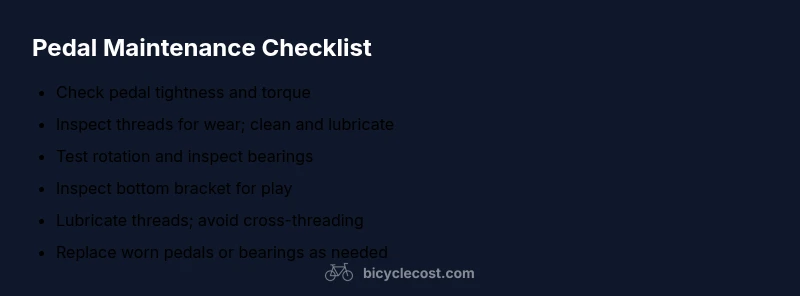
- Tighten pedals to spec; avoid cross-threading
- Inspect bottom bracket if pedal play persists
- Lubricate threads to prevent seizing
- Replace worn components rather than forcing a fix
- Schedule regular pedal maintenance to prevent future issues