How to Fix a Bike That Won't Pedal: A Practical Guide for Riders
Learn to diagnose and fix a bike that won't pedal with a clear, step-by-step approach. From pedals to bottom brackets, keep your ride safe and smooth with practical, repeatable repair routines.


This guide shows you how to diagnose and fix a bike that won't pedal. You'll learn how to test pedals, cranks, bottom brackets, chain, and derailleur, with safe steps and essential tools. By following these steps, you can restore pedal motion and ride safely again. This approach emphasizes safety, proper torque, and progressive testing. No specialized knowledge is required; common tools will suffice.
Diagnosis: what's happening when the crank won't move
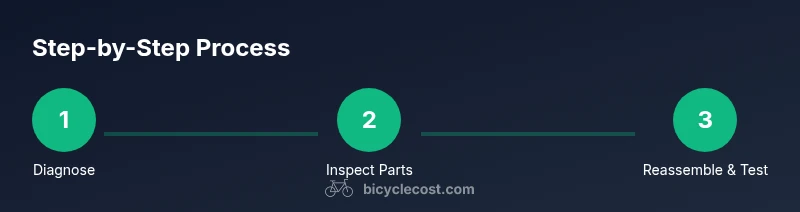
When you try to pedal and the crank refuses to rotate, the problem could lie in the pedals, the crankset, the bottom bracket, or the chain drive. In this guide about how to fix a bike that won't pedal, we break down the checks into safe, accessible steps you can perform with a basic toolkit. Start by observing whether the rear wheel spins freely as you apply pressure to the crank, or if the drivetrain binds somewhere in the chain or derailleur. This initial diagnostic helps narrow root causes and prevents unnecessary disassembly. According to BicycleCost, documenting the observed symptoms before taking things apart keeps repairs efficient and focused.
Safety first: prepare your workspace and tools
Before you touch any moving parts, secure the bike on a stable stand or invert the frame for a solid, tip-free position. Wear gloves and eye protection if you’ll degrease or work with sharp tools. Work in a well-lit area with ample space to lay out parts in order. A clean, organized workstation reduces the risk of losing small fasteners and makes it easier to track what you removed. The BicycleCost team emphasizes a patient, methodical approach to prevent damage and injuries during pedal-related repairs.
Inspect the pedals, cranks, and bottom bracket
Spin the cranks with your hands while the bike is supported to feel for play or roughness. Excessive looseness or grinding can indicate worn bearings in the bottom bracket or a loose crank arm. If the pedals feel sticky or bind when turning, the pedal bearings or axle threads might be at fault. In some cases, a seized bottom bracket will prevent the crank from turning even when the chain and chainring seem fine. A careful inspection helps you decide whether parts need cleaning, lubrication, or replacement.
Check the chain, chainring, and cassette for wear or misalignment
A stretched chain or worn chainring teeth can stall rotation and create pedal resistance. Inspect for stiff links, kinks, or missing rollers, and replace the chain if wear is beyond recommended limits. If the chain is slipping or riding over derailleur pulleys, check chainline and compatibility with the chainring. Realigning a mis-tracked chain or replacing worn components can restore smooth pedaling motion and prevent future issues.
Evaluate derailleur alignment and gear indexing
If you notice the chain drift or bind between gears, the derailleur or limit screws may be misadjusted or the cable tension may be off. Check the rear derailleur hanger for bending and ensure the derailleur cable tension matches the manufacturer's specification. A misadjusted derailleur can cause the chain to rub on the cassette or chainring, which feels like the pedal doesn’t move cleanly. Correct indexing allows the chain to engage properly in each gear, restoring smooth pedaling.
Look for interference: brakes, frame, and wheels
Check for brake caliper rub or wheel interference that pulls the wheel while you pedal. Any rubbing or catching can prevent the wheel from rotating smoothly, making it feel like the pedal is stuck. Also inspect for a loose wheel, misaligned brakes, or frame damage that could obstruct crank rotation. Addressing brake alignment and wheel true issues often resolves pedaling resistance without replacing parts.
Remove pedals safely and inspect the crank threads
With the bike supported, use a pedal wrench to remove the right pedal first (as viewed from the rider’s position), then the left. Clean the threaded interfaces and inspect for stripping or corrosion. Apply fresh grease to pedal threads and crank threads before reinstalling, and torque to the manufacturer’s specification. If a pedal spindle is damaged, replacement is usually required rather than forcing a repair.
Inspect bottom bracket bearings and crank axle for play
With the crank removed, rotate the bottom bracket axle by hand to feel for smoothness. Lateral play, grinding, or gritty sensation indicates worn bearings or cups that may need servicing or replacement. Reinstall the crank with careful alignment and smooth movement to ensure there’s no binding when spinning the chainring. If the BB is significantly worn, consider a professional overhaul or replacement.
Reassemble, lubricate, and test the drivetrain
Reinstall pedals and crank securely, ensuring the chainline remains straight. Lightly lubricate the chain and pivot points, avoiding excess that can attract dirt. After assembly, rotate the crank and spin the rear wheel to verify there’s no binding and that pedaling feels smooth across all gears. A short test ride confirms that the issue is resolved and helps catch any lingering misadjustments.
When to seek professional help and preventive maintenance
If the root cause remains unclear after these checks or if you encounter stubborn components (like a stubborn bottom bracket) that require special tools, a professional bike mechanic is the safest option. Regular maintenance—cleaning, lubrication, bearing inspections, and correct torque—prevents many pedal-related problems. The BicycleCost team recommends routine checks after long rides, crashes, or exposure to harsh conditions to maintain drivetrain health.
Common mistakes to avoid and quick checks
Avoid forcing threads or components, which leads to cross-threading and damage. Don’t mix thread standards or use incorrect tools, as that can ruin the crank or pedals. Keep a clean workspace, document critical measurements, and double-check torque values to prevent future pedal issues. Quick checks after reassembly—rotate pedals, listen for unusual noises, and ensure gear engagement—save time and avoid road-side repairs.
Tools & Materials
- Bike repair stand(Stable, clamps frame; makes inspection easier)
- Pedal wrench (flat 15mm) or hex wrench (6mm/8mm)(Use correct tool for pedal axles)
- Allen keys set (3mm-6mm)(For crank bolts and derailleur mounting bolts)
- Various sized wrenches (adjustable)(For bolt heads not covered by hex keys)
- Crank puller (if applicable)(Only for certain crank types)
- Bottom bracket tool (as needed)(Only if BB removal is required)
- Grease (pedal threads and BB threads)(Prevents galling and seizing)
- Degreaser(Dissolves old lubricant on chain and parts)
- Chain lubricant/lresh WD-40 style spray (as appropriate)(Light, not oily, avoid overspray on brakes)
- Rags/paper towels(Clean surfaces during inspection)
- Chain wear tool (optional)(Helps assess chain stretch)
- Replacement parts (if necessary)(New pedals, BB bearings, chain, etc.)
Steps
Estimated time: 60-120 minutes
- 1
Assess safety and workspace
Set up a stable work area and secure the bike. This prevents accidents and makes it easier to inspect components without the bike moving.
Tip: Wear gloves and keep a clean surface to avoid losing small parts. - 2
Test basic rotation
With the bike supported, gently rotate the cranks. Note whether the crank spins freely, binds, or grinds. This determines where to start the inspection.
Tip: If you hear grinding, focus on the bottom bracket and crank interfaces first. - 3
Inspect pedals and crank arms
Check pedal axle and crank arm for play or damage. If a pedal is seized, remove it using the correct pedal wrench and apply penetrating oil if needed.
Tip: Never force a stubborn pedal; apply gentle torque and pause to avoid stripping threads. - 4
Remove pedals safely
Loosen the right pedal first (viewed from the rider) and then the left. Clean threads and reapply grease before reinstallation.
Tip: Record the handedness of the pedals to avoid reassembly mistakes. - 5
Inspect the bottom bracket
With pedals removed, check the bottom bracket for lateral play and smooth rotation. Any grinding or roughness indicates bearing wear.
Tip: If BB bearings feel gritty, replace them rather than attempt simple cleaning. - 6
Check chain, chainring, and cassette
Examine chain wear, chainring teeth, and cassette for signs of wear. Replace if stretch or tooth damage is evident to restore pedaling smoothness.
Tip: A worn chain can cause slipping and pedaling resistance across gears. - 7
Evaluate derailleur alignment
Check derailleur tension and alignment; ensure the chain engages properly in each gear.
Tip: If indexing is off, adjust the cable tension and limit screws per the manufacturer's specs. - 8
Ignore no-go problems
If you identify parts that require professional tools or expertise, stop and seek help to avoid making things worse.
Tip: Document part numbers and take photos to aid the mechanic. - 9
Reassemble with care
reinstall pedals and crank with the correct torque. Clean and re-lubricate pivot points as you go.
Tip: Torque values protect threads and prevent future pedaling issues. - 10
Test the drivetrain
Rotate cranks and run through gears. Confirm smooth engagement and absence of grinding or binding.
Tip: Take a short test ride in a safe area to verify real-world performance. - 11
Finalize maintenance
Clean excess lubricant and ensure the drivetrain stays clean and dry after use. Schedule future checkups.
Tip: Keep a simple maintenance log to track wear and replacement needs. - 12
Know when to escalate
If problems persist after these steps, consult a pro. Rare issues like cacentered BB misalignment or frame damage require expert attention.
Tip: Professional help can prevent expensive damage and ensure safety.
People Also Ask
What are the most common causes for a bike that won't pedal?
Common causes include a seized bottom bracket, worn or stretched chain, misadjusted derailleur, or pedal bearings that have failed. Start by testing each subsystem in order to isolate the fault safely.
Common causes include a seized bottom bracket, worn chain, misadjusted derailleur, or bad pedal bearings. Start by testing each area to isolate the fault safely.
Do I need to remove the chain to fix pedal issues?
Often you can diagnose pedal issues without removing the chain, but removing it makes inspecting the chainring, chain, and BB easier. If the chain is worn, replace it to restore smooth pedaling.
Often you can diagnose pedal issues without removing the chain, but removing it helps inspect key parts. If the chain is worn, replace it.
Can a seized bottom bracket stop pedaling entirely?
Yes. A seized or overly tight bottom bracket can prevent the crank from turning, even if the chain and gears look fine. This usually requires bearing servicing or replacement.
Yes, a seized bottom bracket can stop the crank from turning. It often needs bearings serviced or replaced.
Is it safe to ride if the crank makes grinding noises?
Grinding noises often indicate bearing wear or damage. Do not ride long-term in this condition, as it can worsen the wear and lead to sudden failure.
Grinding usually means worn bearings; don’t ride long-term until inspected by a professional.
How often should I service pedals and bottom brackets?
Plan periodic inspections every few months or after heavy riding. Lubricate threads, check for play, and replace worn bearings as needed.
Check pedals and BB every few months, lubricate threads, and replace worn bearings when needed.
Watch Video
Quick Summary
- Identify the root cause before replacing parts.
- Use proper tools and torque specs.
- Test ride after interim adjustments.
- Maintain chain and bearings regularly to prevent issues.
- Seek professional help when in doubt.