Bicycle Repairs: A Practical Step-by-Step Guide for Cyclists
Learn essential bicycle repairs with a clear, step-by-step approach. From flats to chain care, this BicycleCost guide helps cyclists diagnose, fix, and prevent problems for safer, longer-lasting rides.


Learn how to perform essential bicycle repairs at home with a clear, step-by-step approach. This guide covers flats, brake tuning, chain care, and drivetrain health, plus when to seek professional help. You’ll need a basic repair kit and a stable workspace. By following these steps, you’ll save time, ride safer, and extend your bike’s life today.
Why bicycle repairs matter
Bicycle repairs are an essential skill for any rider. Regular maintenance keeps you safe, extends the life of components, and reduces the risk of costly roadside failures. The BicycleCost team emphasizes that a small, consistent effort goes a long way toward reliable performance. According to BicycleCost, adopting a proactive repair mindset lowers downtime and helps riders ride with confidence across diverse terrains. When you know how to diagnose and fix common issues, you react faster to problems and stay on the bike longer. This guide focuses on practical repair steps you can perform at home, using a basic toolkit and common spare parts. As you build confidence, you’ll expand your repair repertoire and reduce the need for professional service for ordinary maintenance tasks.
For most riders, bicycle repairs begin with a simple safety inspection: tires, brakes, drivetrain, and bolts. A quick check before every ride can catch problems early and prevent dangerous failures. This approach also stretches the value of each component, from tires to gears, by ensuring optimal performance. The goal is not to become a bike mechanic overnight but to develop a reliable routine that makes routine maintenance seamless and cost-effective.
Common issues that DIY repair can solve
While some tasks require professional tools or expertise, many common problems can be resolved at home. Flat tires, squeaky chains, misadjusted brakes, and sloppy gear indexing are frequent culprits that deter riders. With a few essential tools and steady hands, you can fix most of these issues without special equipment. The key is to stay patient, follow a step-by-step plan, and keep your workspace organized. Remember to always prioritize safety: secure the bike, wear eye protection when necessary, and never force parts that resist.
Bicycle repairs are not just about fixing a problem; they’re about preventing one. Regular inspection and timely replacement of worn components keep your ride smooth and predictable. If you’re new to maintenance, start with the simplest tasks—like tire patching and chain lubrication—and gradually tackle more complex jobs such as bearing servicing or wheel truing. Frame integrity, bolt torque, and brake alignment are critical for rider safety and should be checked routinely.
Understanding the repair workflow
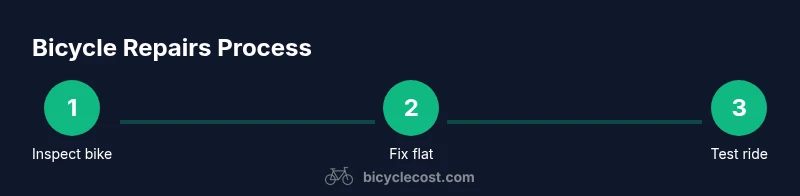
A structured workflow helps you stay organized and reduces error. Begin with preparation, then diagnose, repair or replace, reassemble, and test. Each step builds on the previous one, so skipping ahead can lead to missed problems or incorrect reassembly. A consistent routine makes bicycle repairs predictable and repeatable. Keep a small notebook or digital log to document what you did, what parts you used, and when you plan to recheck. This habit supports long-term reliability and can save time on future fixes.
In this guide, we’ll cover flats, brakes, and drivetrain maintenance, since those areas most commonly require attention for riders of all levels. You’ll learn practical tips, common pitfalls, and best practices to keep your bike in peak condition. Following the right sequence minimizes the chance of damage and ensures you finish with a ride that feels safe and responsive.
Safety-first approach to DIY repairs
Before touching any moving parts, ensure the bike is stable and the area is well-lit. Avoid wearing loose clothing or jewelry that can get caught in components. If you’re uncertain about a repair, consult the manufacturer guidance or seek a quick online tutorial from reputable sources. When you’re ready to begin, work slowly, verify each reassembled part, and test the bike in a safe environment before resuming regular riding. A cautious mindset reduces risk and improves the quality of your repairs.
How to build a reliable at-home repair routine
A dependable routine includes a monthly inspection, a quarterly deeper check, and occasional professional service for complex tasks. Start with basic maintenance like cleaning, lubrication, and tightened bolts, then assess wear on tires, chains, and brake pads. Keeping a repair log helps you plan parts purchases, track component life, and schedule preventive maintenance. Over time, your at-home repairs will become faster and more accurate, paving the way for longer, safer rides across all seasons.
Tools & Materials
- Bike repair stand(Stability and hands-free access are ideal, but not mandatory)
- Tire levers(Two or more for removing stubborn beads)
- Spare inner tube(s)(Choose size/valve type to match wheel)
- Patch kit or tire boot(Patches for tubeless or tubed tires as needed)
- Portable pump with gauge(Inflation accuracy matters for safety)
- Multi-tool with hex keys and screwdriver(Carry common sizes (4, 5, 6, 8 mm))
- Chain tool and spare chain links(For chain repair or replacement)
- Chain lubricant (wet or dry)(Apply after cleaning and prior to riding)
- Degreaser and brushes(Keeps drivetrain clean and efficient)
- Rags or shop towels(Clean hands and parts during repair)
- Torque wrench (optional)(For precise bolt torque on sensitive parts)
- Bike cleaning spray(Safely remove grime after repairs)
Steps
Estimated time: 60-120 minutes
- 1
Prepare workspace and secure bike
Set up a stable area with good lighting. If you have a bike stand, secure the frame to keep the bike steady while you work. This initial setup reduces the risk of slips and protects you from sharp edges or moving parts. Why: A solid foundation makes every repair safer and faster, especially when handling tires and brakes.
Tip: Use a dedicated repair mat to protect your floor and catch small parts. - 2
Identify the issue through quick inspection
Do a quick walk-around: check tires for flats or embedded objects, test brakes for responsiveness, and scan the chain and gears for wear or stiffness. Listen for unusual sounds when spinning the pedals or wheels. Why: Pinpointing the problem guides you to the appropriate repair path and prevents unnecessary disassembly.
Tip: Note any irregular wear or missing parts for future replacement. - 3
Remove wheel to access inner tube
Loosen the quick release or thru-axle, deflate the tube completely, and remove the wheel from the frame. Break the tire bead at two sides with tire levers to free the tube. Inspect the rim for damage or embedded objects.
Tip: Be gentle with the rim to avoid pinching the new tube during reinstallation. - 4
Patch or replace inner tube
If the puncture is repairable, patch the tube from the inside and recheck for leaks. If the damage is severe or near the valve, replace the tube. Inspect the tire for glass, thorns, or sharp edges that may cause another puncture.
Tip: Always inspect the tire bead and rim tape for damage before reassembly. - 5
Reinstall tire and inflate tube
Reseat the tire bead onto the rim, reinsert the tube, and inflate gradually to the recommended pressure. Check that the tube sits evenly and that there are no bulges. Spin the wheel to ensure true seating.
Tip: Inflate in small increments and check for bead seating to avoid pinch flats. - 6
Lubricate chain and inspect drivetrain
Wipe the chain clean, apply lubricant evenly, and wipe off excess. Inspect chain wear and ensure gears shift smoothly. If shifting is rough, you may need a derailleur adjustment or chain replacement.
Tip: Use a clean rag to remove old lubricant before applying new lube. - 7
Adjust brakes and derailleur for proper function
Check brake pads for wear, replace if necessary, and adjust cables for proper bite and stopping power. Align the derailleur so the chain shifts cleanly across all gears and returns to the highest gear smoothly.
Tip: Follow manufacturer torque specs for bolts and use the correct hex sizes. - 8
Test ride and finalize maintenance notes
Take a short test ride in a safe area. Listen for rub, rubbing, or poor braking performance. Record the maintenance performed and any parts replaced for future reference.
Tip: Note the date and parts used in a maintenance log to track wear over time.
People Also Ask
How often should I service my bicycle?
A light pre-ride check monthly and a more thorough inspection every 3-6 months is typical for most riders. If you ride daily or in harsh conditions, increase the frequency. Regular maintenance helps prevent minor issues from becoming major repairs.
Do a quick monthly check, and a deeper inspection every few months; adjust frequency based on use and conditions.
What is the easiest repair for beginners?
Fixing a flat tire is the most approachable entry point. It teaches tire removal, tube handling, and reinflation. Practice with an old tube before working on a road tire to build confidence.
Flat-tix is the easiest starting point; practice with a spare tube first.
Do I need a bike stand to repair at home?
A stand is very helpful but not strictly required. A stable surface or wall-mounted rack can work in a pinch. A stand makes complex tasks easier and safer by freeing both hands.
A stand helps a lot, but you can manage with a sturdy surface if needed.
How do I fix a flat tire?
Remove the wheel, take out the tube, inspect for sharp objects, patch or replace the tube, reseat the tire, and reinflate. Check the rim and tire bead for damage before reassembly.
Remove wheel, replace or patch the tube, then reassemble and inflate slowly.
How should I set tire pressure?
Follow the tire sidewall or manufacturer guidelines. If in doubt, start at a moderate pressure and adjust based on ride feel and terrain. Avoid under-inflation or over-inflation for safety and performance.
Check the tire's recommended range and adjust based on your ride.
When should I replace a chain?
Replace a chain when it shows excessive wear or skipping on gears. A worn chain speeds up wear on gears and can cause poor shifting. Regular checks help you time replacement for best performance.
If shifting gets rough or you notice wear, consider replacing the chain.
Watch Video
Quick Summary
- Inspect tires and brakes before every ride.
- Carry a basic repair kit for roadside fixes.
- Clean and lube the chain regularly.
- Schedule monthly maintenance to prevent major failures.