Why is My Cycle So Heavy? A Pro Troubleshooting Guide
Urgent, practical troubleshooting to diagnose and fix a heavy-feeling ride. Learn common causes like brake drag, tire pressure, and drivetrain friction, plus step-by-step fixes from BicycleCost to get you back on the road fast.


Heavy pedaling is usually caused by brake drag, underinflated tires, or a dragging drivetrain. Start with quick checks: inflate tires to the recommended range, inspect brakes for rubbing, and lubricate the chain. If the issue persists, consult a bike mechanic for a thorough tune-up. A quick check often solves the majority of cases.
Diagnosing a heavy ride: why is my cycle so heavy
According to BicycleCost, when a cycle feels heavier than normal, the cause is almost always something dragging rather than your own effort. The BicycleCost team found that brake drag, low tire pressure, or a dry drivetrain account for the vast majority of cases, especially on daily riders. If you’re wondering why is my cycle so heavy, the answer is often the simplest culprits: a brake that hasn’t released fully, tires that aren’t inflated to spec, or a chain that needs lubrication. In most cases, correcting these issues eliminates the added effort and restores smooth acceleration. BicycleCost’s analysis shows that many riders underestimate small friction points that accumulate into a noticeably heavier ride over short distances. Addressing these issues quickly can prevent longer-term wear and save energy on every pedal stroke.
A practical first question in diagnosing why is my cycle so heavy is to check for obvious drag sources: brakes that rub, a tire flattened below its recommended PSI, or a chain that isn’t moving freely. If you find one of these culprits, you’re likely to eliminate a substantial portion of the resistance and restore efficiency. Remember, simple fixes beat complex fixes in most real-world scenarios. The BicycleCost team recommends starting with the easiest checks before moving to more involved adjustments.
Quick Checks You Can Do in 10 Minutes
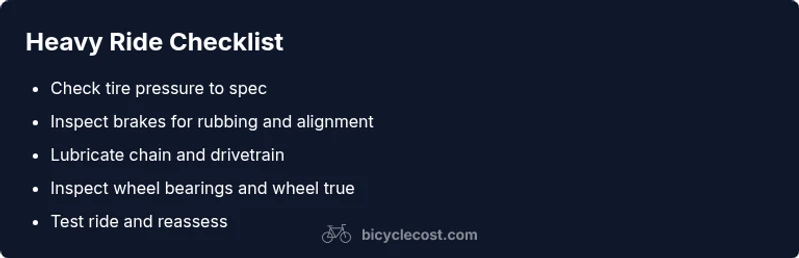
- Check tire pressure: Look at the tire sidewall for the recommended PSI and inflate both tires to that range using a reliable gauge. Subtle underinflation can dramatically increase rolling resistance.
- Spin the wheels: Lift the bike and spin each wheel. If you hear rubbing or feel resistance, this points to brake drag or a misaligned wheel.
- Inspect brakes: Check that brake pads clear the rim or rotor fully when released. Loose cables or misadjusted calipers can keep pads in contact with the rim, adding drag.
- Inspect the drivetrain: Ensure the chain moves smoothly and isn’t dry or rusted. Apply a light coating of bicycle-safe lubricant to the chain and derailleur pivots if needed.
- Check wheel bearings and alignment: Wiggle the wheel at the axle and spin it again. Any side-to-side play or wobble indicates bearing problems or a loose/uneven wheel.
- Recheck spread and frame: Ensure there’s no foreign object caught in the wheel or frame that could create extra resistance. If something feels off, don’t ride—address it first.
Pro tip: Keep a small maintenance log and quick-check checklist in your tool kit so you can repeat these checks before every ride. This habit reduces the chance of a heavy ride sneaking up on you and helps you spot wear early.
Steps
Estimated time: 30-45 minutes
- 1
Check tire pressure and inflate to spec
Locate the PSI range on the tire sidewall and inflate both tires to that range using a reliable gauge. Avoid overinflating, which can cause a hard ride, or underinflating, which increases rolling resistance.
Tip: A quick check before every ride keeps rolling resistance predictable. - 2
Inspect brakes for rubbing
Spin the wheels and watch the brake rotors/pads during release. If pads stay close to the rim or rotor, the brakes are rubbing. Adjust the calipers or replace worn pads as needed.
Tip: Even small toe-in adjustments can remove drag and improve stopping feel. - 3
Lubricate the drivetrain
Wipe down the chain and apply a thin layer of bike-specific lubricant. Spin the crank to distribute lubrication, then wipe off excess. Check for stiff linkages or a dry derailleur that could cause friction.
Tip: Lubrication reduces energy loss and extends chain life. - 4
Check wheel bearings and axle
Hold the wheel steady and try to wiggle it side to side. If there’s noticeable play, you may have worn bearings or loose axle hardware. Service or replace components as needed.
Tip: Worn bearings can silently sap efficiency over time. - 5
Test gear alignment and derailleur
Shift through gears to ensure the derailleur aligns properly with each cog. A misadjusted derailleur can create drag in certain gears and reduce efficiency.
Tip: A clean shifter and derailleur setup prevents unexpected friction. - 6
Re-test ride and evaluate
Take a short ride on a flat stretch and note effort vs. speed. If the cycle still feels heavy, consider professional inspection for hidden issues.
Tip: If in doubt, a pro diagnosis saves time and prevents misdiagnosis.
Diagnosis: Cycle feels heavier to pedal than usual
Possible Causes
- highBrakes rubbing or dragging
- highUnderinflated tires or incorrect tire pressure
- mediumDragging drivetrain due to insufficient lubrication or a worn chain
- lowWorn bearings or wheel hub drag
Fixes
- easyCheck tire pressure and inflate to the tire’s recommended PSI range
- easyInspect brakes for rubbing; adjust calipers and toe-in if needed
- mediumLubricate and clean the chain; replace worn chain if stretched beyond spec
- mediumInspect wheel bearings for play; service or replace as needed
- hardIf no improvement, schedule a professional tune-up
People Also Ask
What are the most common causes of a heavy ride on a bike?
Brakes rubbing, low tire pressure, and a dragging drivetrain are the most frequent culprits. Worn bearings can also contribute. Start with the easiest fixes and progress to inspection if needed.
Brakes rubbing and underinflated tires are the usual suspects. Check these first; if not resolved, inspect the drivetrain and bearings.
How can I tell if my brakes are rubbing?
Spin the wheel and listen for rubbing noises or feel a slight drag when the brake lever is released. Visual inspection should show pads close to the rim or rotor not fully clearing.
Spin the wheel and listen for rubbing. Look for pads that don’t fully clear the rim or rotor.
Is it safe to ride with a suspected dragging brake?
Riding with dragging brakes can overheat pads and rotors and is unsafe, especially on long descents. Stop riding and fix the issue before proceeding.
No, don’t ride if you suspect dragging brakes. Stop and fix the issue first.
Can a simple lubrication fix a heavy ride?
Lubricating the chain and derailleur can reduce friction and improve efficiency in many cases. If the chain is clean and lubricated and you still feel heavy, other causes should be checked.
Lubricating the drivetrain helps, but if problems persist, check brakes and tires too.
How often should I perform these checks?
Do quick checks before every ride for tires and brakes, and schedule a full drivetrain and bearing inspection every few months or after heavy use.
Do quick checks before each ride and a full inspection every few months.
Quick Summary
- Start with brakes and tires for the heaviest ride fix
- Lubricate the chain and check drivetrain wear
- Inspect wheel bearings and wheel true to rule out bearing drag
- If unresolved, seek a professional tune-up and inspection
- Regular maintenance prevents heavy-ride issues before they start