Why is My Bicycle So Slow? A Practical Troubleshooting Guide
Struggling with a slow ride? Learn practical, fast checks and proven maintenance steps to restore speed, including tire pressure, drivetrain cleaning, brake inspection, and professional tips.


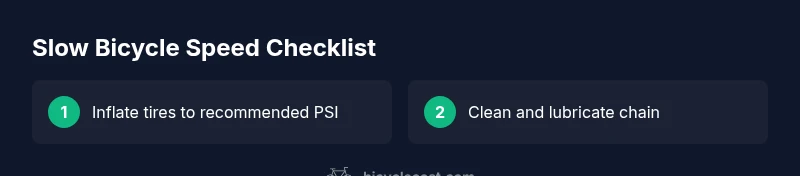
The most likely reason your bike feels slow is resistance from underinflated tires or a dirty drivetrain. Check tire pressure and gear rubbing first, inflate to the recommended PSI, and lubricate the chain. If performance remains poor, inspect brakes for rubbing and check wheels for drag.
Why slow riding happens and how to approach it
According to BicycleCost, a fast, safe ride starts with a clean drivetrain and proper tire inflation. When cyclists ask, "why is my bicycle so slow?" the answer is rarely one single fault. More often, it’s a combination of tire pressure, drivetrain friction, and braking forces that collectively sap speed. This guide helps you diagnose quickly and prioritize fixes from fastest to most effective. Start with the simplest checks you can do on the road or at home, then move to more involved maintenance if needed. By treating slow riding as a system problem—tires, chain, gears, brakes, and wheels—you’ll identify the dominant drag sources and reduce wasted effort on every ride. BicycleCost analysis, 2026, shows that most complaints resolve after a few straightforward steps: correct inflation, clean drivetrain, and mindful brake inspection.
Immediate quick checks you can do today
The fastest way to regain speed is to perform three quick checks that don’t require special tools. First, verify tire pressure with a gauge and inflate to the manufacturer’s recommended PSI; underinflated tires create rolling resistance that noticeably slows you down. Second, inspect the chain and derailleur for grime or stiff links; a dirty chain can dramatically lower efficiency. Third, glide your fingers along the rims and brake surface to feel for rub or drag. If you detect rubbing, you’ll need to adjust brakes or wheels. These steps usually deliver an immediate improvement and set a baseline for further maintenance.
Drivetrain and wheel drag: how to pinpoint
A slow ride often hides in the drivetrain or wheel alignment. Start by checking the chain for roughness and stiff links; a well-lubricated chain reduces friction and improves efficiency. Inspect the cassette, chainrings, and derailleur pulleys for wear or misalignment, which can create drag in certain gears. Spokes should be evenly tensioned; an out-of-true wheel can rub against brake pads or the frame, slowing you down. Don’t overlook the possibility of a foreign object wedged in the wheel or rotor that can cause intermittent drag. By isolating the source—chain, gears, wheel true—you can apply targeted fixes rather than broad, unnecessary adjustments.
Tire conditions and pressure: air as the first throttle
Air is the most controllable variable affecting speed. Inadequate tire pressure not only increases rolling resistance but also makes the tire more susceptible to pinch flats and wheel hops over rough pavement. If you ride on high-volume tires, ensure inflation is balanced with rider weight and terrain. For tubeless setups, check bead seating and sealant levels; a poor seal can create additional drag due to airflow around the tire. Keep a portable pump and gauge in your saddle bag for on-the-go checks, especially after weather changes that can alter tire pressure.
Brake system checks: rub and drag
Brakes are a common source of drag, especially if pads rub against rims or rotors. Inspect both brake pads and rotors for glazing, contamination, or improper alignment. For rim brakes, ensure pad clearance is even and the brake calipers return fully after each press. For disc brakes, check rotor warping and caliper alignment. If you hear squeal or feel a noticeable drag while spinning the wheel, adjust or service the brake system before Ride Day. Remember, a well-tuned braking system not only improves speed but also safety.
Environmental and rider-related factors
Speed isn’t only mechanical. Wind, gradient, and road surface play a huge role in perceived speed. A headwind or uphill sections will naturally slow you down, as will low-fitness levels or heavy load. Check tire selection for terrain—grippy tires on smooth roads can feel sluggish if they’re over-tired for the surface. Rider position and cadence also matter; a more efficient aero position and smooth pedal stroke can shave seconds off climbs. Use this section to differentiate mechanical drag from environmental or user-related factors.
When to seek professional help and maintenance cadence
If you’ve systematically checked tires, drivetrain, brakes, and wheel true without improvement, it’s time to bring in a professional mechanic. They can perform a precise wheel truing, hub bearing inspection, or bottom bracket check that’s difficult to reproduce at home. Establish a routine service cadence: inspect tires and brakes monthly, lubricate drivetrain every 100–200 miles depending on conditions, and refresh bearings and cables annually or as needed. Regular maintenance prevents slowdowns and extends bike life.
Preventive habits to keep speed up
Create a lightweight, repeatable maintenance routine to maintain speed. Keep tires inflated to the correct pressure, wipe down the chain after rides to remove grit, and lubricate the chain regularly with a suitable lube. Check brake pad wear and rotor or rim condition at least quarterly. Store the bike in a dry, climate-controlled space to reduce rust and corrosion. By building proactive habits, you’ll catch performance issues before they become noticeable slowdowns.
Steps
Estimated time: 45-60 minutes
- 1
Check tire pressure and inflate
Use a reliable gauge and inflate tires to the manufacturer’s recommended PSI. Check both tires for even pressure and inspect for wear or embedded debris that could slow you down. Re-check after a few minutes of riding to ensure pressure remains stable.
Tip: Carry a portable pump with a pressure gauge for on-the-road adjustments. - 2
Inspect and lube drivetrain
Wipe the chain clean, remove any grit, and apply a suitable chain lubricant. Check for stiff links or heavy wear in the derailleur pulleys and cassette. Wipe off excess lubricant to prevent dirt attraction.
Tip: Lubricate after cleaning and drying to maximize efficiency. - 3
Check brakes for rubbing
Spin each wheel and listen for rubbing sounds. Inspect brake pads for glazing or contamination; adjust calipers so both sides of the brake bite evenly. Replace worn pads and verify alignment with the braking surface clear of interference.
Tip: Avoid riding with brakes partially engaged to prevent disc or rim wear. - 4
Assess wheel true and spoke tension
Spin the wheel and watch for wobble. If true eyes indicate misalignment, loosen and re-tension spokes evenly or seek professional truing. Check rotors for warp and hubs for smooth rotation.
Tip: If the wheel rubs on brake pads only in one spot, focus on rim true and brake pad clearance. - 5
Evaluate bike fit and rider technique
A poor riding position can cause drag and inefficiency. Adjust saddle height, handlebar position, and cleat alignment if you use pedals with release mechanisms. Practice a smooth cadence to reduce fatigue and maintain speed.
Tip: Small ergonomic tweaks can yield noticeable gains.
Diagnosis: Bike feels noticeably slower during rides
Possible Causes
- highUnderinflated or worn tires causing increased rolling resistance
- highDirty or dry drivetrain increasing friction
- mediumBrakes rubbing or dragging unexpectedly
- mediumWheel true or alignment issues creating drag
Fixes
- easyCheck tire pressure with a gauge and inflate to recommended PSI; replace or upgrade tires if worn
- easyClean and lubricate the chain; check drivetrain for stiff links or wear, and replace components as needed
- easyInspect brakes for rubbing, adjust calipers, replace pads if glazed or contaminated
- mediumTrue the wheel and inspect spokes for proper tension; address any rotor warp or bearing play with professional alignment
People Also Ask
Why is my bicycle so slow even after inflating tires?
Even with proper tire pressure, slow rides can result from a dirty drivetrain, brake drag, or wheel misalignment. Follow a step-by-step check of the chain, gears, brakes, and wheel true to identify the dominant drag source.
Slow riding can be due to drivetrain grime, brake drag, or wheel misalignment. Do a quick check of the chain, brakes, and wheel true to find the main cause.
How do I tell if brakes are rubbing?
Spin the wheel and listen for a rubbing sound or feel resistance when turning. Inspect pads and rotors for uneven wear or misalignment, and adjust or replace as needed.
If you hear rubbing when spinning the wheel, check the brakes for misalignment or worn pads and adjust.
Can a slow ride be caused by wind or hills?
Yes. Headwinds, climbs, and rough surfaces increase drag and reduce speed. Consider aero position, cadence, and appropriate gearing to maintain speed in these conditions.
Wind and hills slow you down; adjust position and gearing to compensate.
When should I seek professional help?
If basic checks don’t restore speed, a professional can diagnose wheel true, hub bearings, bottom bracket, and derailleur alignment with precision and safety.
If simple fixes don’t help, get a professional check for wheel alignment and bearings.
What maintenance cadence is best for speed maintenance?
Monthly tire/brake checks, regular chain lubrication, and annual bearing or cable inspections keep your bike performing at its best and prevents slowdowns.
Keep a regular maintenance schedule to stay fast and safe.
Watch Video
Quick Summary
- Check tire pressure first; it’s the biggest lever for speed.
- Clean and lubricate the chain to reduce drivetrain drag.
- Inspect brakes and wheels for rubbing and true wheels if needed.
- Environment and riding style influence speed; adjust accordingly.
- Establish a regular maintenance cadence to prevent slowdowns.