Should Bike Tires Be Firm? A Practical Inflation Guide
Learn how to set bike tire pressure, why firmness matters, and how to adjust for weight, terrain, and riding style with practical steps from BicycleCost. Includes maintenance checks and safety considerations.


Yes—the tire should feel firm, not rock-hard. Proper inflation depends on tire width, rider weight, and riding conditions, but most road tires in typical conditions run between 90 and 120 psi, while wider mountain tires use 20-40 psi. Check the tire's sidewall recommended range and adjust within that band to balance grip, comfort, and pinch-flatten resistance.
Why tire firmness matters
The firmness of your tires directly affects safety, comfort, and performance on every ride. Should bike tires be firm? The best practice is to aim for a firm, but not hard, feel that matches your weight, tire width, and riding conditions. When a tire is inflated within the manufacturer's recommended range, it deforms slightly under load to maintain contact with the ground, improving grip and stability. If it’s too soft, you risk pinch flats on abrupt hits and increased rolling resistance due to excessive tire squish. If it’s too hard, you sacrifice traction and comfort as the tire skims over irregularities instead of conforming to the surface. According to BicycleCost, tire pressure is one of the simplest, most effective levers you have for dialing in ride quality. The BicycleCost team found that riders who routinely check their pressures and stay within the advised range notice a more predictable cornering feel, smoother acceleration, and fewer tire-related issues. This section breaks down the science behind firmness and what it means for everyday cycling across pavement, gravel, and mountain trails. We’ll also touch on how weight distribution, tire width, and terrain boundaries influence the ideal pressure.
How to determine the right pressure for your tires
The first step is to locate the pressure range printed on the tire sidewall and note your body weight and typical loads. Pressurized air supports the tire’s shape and structure; using the correct amount maintains a controlled contact patch with the road or trail. Always measure cold, before riding, because heat from pedaling increases pressure and can give you a falsely high reading. A reliable gauge is essential; if you share a bike with family or friends, calibrate your gauge to a known standard to avoid reading drift. When you’re deciding where inside the range to sit, start near the middle, then tailor for conditions. Softer settings improve grip on loose surfaces and rough pavement but raise the risk of pinch flats on hits; firmer settings enhance stability on smooth surfaces and reduce rolling resistance but can feel harsh on rough terrain. Finally, remember that temperature, altitude, and tire wear affect pressure, so periodic checks are part of routine maintenance.
Reading sidewalls and interpreting ranges
Tire sidewalls show a low-to-high pressure window, which accommodates different rider weights and riding styles. The key is to understand that the number is not a single rule but a range meant to accommodate cold inflation and dynamic loads. The optimum pressure typically lies near the middle of the range, but you should adjust based on your tire width and the surface you ride. For example, a wider tire on loose gravel can be run toward the lower end to increase surface contact, while a narrow road tire benefits from mid-to-upper pressures for better efficiency. Regularly checking the sidewall and staying within the labeled range helps prevent underinflation and overinflation, both of which reduce grip, increase wear, and compromise safety. BicycleCost analysis, 2026, emphasizes following the label and calibrating pressure to your weight and terrain rather than chasing a fixed number.
Common myths about tire pressure
Myth 1: More air always means better performance. Reality: Excess pressure reduces the contact patch and can decrease grip on uneven surfaces. Myth 2: Low pressure is always safer. Reality: Underinflation increases heat buildup, tire wear, and pinch risk. Myth 3: Temperature doesn’t matter. Reality: Pressure changes with ambient temperature, so seasonal adjustments are sometimes needed. Myth 4: Tubeless tires don’t need checks. Reality: Tubeless seals can fail if bead seating or sealant is compromised; regular checks remain important. Debunking these myths helps riders avoid overinflation, underinflation, and the risk of sudden flats. For most riders, consistency—and adherence to the tire’s labeled range—produces the best overall performance and safety.
Impact on performance: grip, comfort, and reliability
Firmness influences how well the tire can bite into the surface. A properly inflated tire maintains a predictable contact patch that enhances cornering grip and steering response. In contrast, underinflation causes the tire to squirm and fold under load, which increases rolling resistance and the chance of pinch flats when you hit a sharp edge. Overinflation can reduce the tire’s ability to absorb small bumps, leading to a harsher ride and less traction on rough pavement or gravel. Comfort is not merely a luxury; a comfortable ride reduces rider fatigue and improves control, especially on long climbs or mixed terrains. Regular pressure checks also help you identify slow leaks or failing seals early, preventing sudden flats during a ride. The BicycleCost team notes that most riders benefit from maintaining a pressure within the mid-range and then fine-tuning for specific trail types and weather conditions.
Adjusting pressure for different riding styles and conditions
Your riding style, weight, and typical terrain should guide minor adjustments within the recommended range. Road cyclists prioritizing speed may seat pressure toward the upper end of the range for better efficiency, while riders on gravel or mixed terrain may prefer mid-to-lower pressures to maximize grip and comfort. Commuters carrying panniers or child seats should consider a modest increase toward the higher end to support the added load without sacrificing handling. Climbs and descents demand quick feedback from the tires, so recheck pressures after significant tempo changes or temperature shifts. For tubeless setups, discipline around bead seating and sealant levels matters as well. The goal is to maintain consistent performance across rides while avoiding the extremes that lead to pinch flats or loss of traction. Remember: pressure is a tool you adjust as conditions change, not a fixed setting for every ride.
Practical steps to check and maintain tire firmness
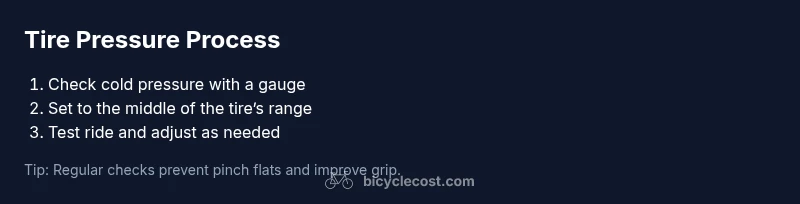
Begin with a cold check and a trusted gauge. Inflate to the middle of the tire’s labeled range, then go for a short test ride and assess how the tire feels. If you notice squirm or unusual vibrations, slightly deflate or inflate in small increments and re-test. Keep a simple log of pressures for each wheel, especially after weather shifts, tire wear, or seasonal changes. Use a quality pump with a pressure gauge that reads in the unit you prefer, and always verify that the valve stem and bead seating are sound. If you are unsure about tubeless setups or run into frequent flats, consult a local shop or the tire manufacturer’s guidelines. Regular maintenance—about once a week for casual riders or before long rides for commuters—helps you catch leaks and maintain the right firmness over time.
BicycleCost verdict
The BicycleCost team recommends a disciplined routine of checking tire pressures weekly and before long rides, staying within the tire’s labeled range, and adjusting for weight, terrain, and weather. Consistency here yields safer handling, better grip, and longer tire life.
Tools & Materials
- Tire pressure gauge(Digital or dial gauge; calibrate annually for accuracy)
- Portable air pump or CO2 inflator(Presta/Schrader compatible; bring extra cartridges if on the road)
- Spare inner tubes or tubeless repair kit(Useful for on-trail fixes or quick field adjustments)
- Owner’s tire specifications(Keep the sidewall label handy for the exact range)
- Notebook or digital log(Optional for tracking pressures over time)
Steps
Estimated time: 15-60 minutes
- 1
Check tires when cold
Remove the bike from immediate use and inspect both tires. Use a reliable gauge to measure pressure, recording the cold reading before riding. This baseline helps you avoid the impact of heat from a ride on the reading.
Tip: Carry a small note or app entry to log the cold reading for each ride. - 2
Set initial pressure to the middle of the range
Using the sidewall range, pick a middle-ground pressure that accommodates an average load. This gives you room to adjust up or down after a short test ride.
Tip: Start neutral; avoid jumping straight to the high or low ends. - 3
Test ride and evaluate feel
Take a short ride on typical pavement or trail. Pay attention to cornering stability, comfort over bumps, and any squirming in turns. If the tire feels too squishy or too rigid, note your perception for the next adjustment.
Tip: A 5–10 minute ride is enough to gauge initial feedback. - 4
Fine-tune in small increments
Adjust by small steps (1–2 psi) and re-test. Observe how grip, comfort, and rolling resistance change with each tweak.
Tip: Keep a consistent gauge to avoid over-correcting. - 5
Record and maintain pressure routine
Log the final pressure and note any seasonal changes or tire wear. Re-check pressures periodically and before long trips.
Tip: A simple weekly habit prevents drift and surprises.
People Also Ask
What is the ideal tire pressure for my bike?
There is no universal number. It depends on tire width, rider weight, and terrain. Start with the middle of the labeled range and adjust after a test ride.
Ideal pressure varies; start in the middle of the tire’s range and fine-tune after a quick test ride.
Does higher tire pressure improve speed?
Higher pressure can reduce rolling resistance on smooth surfaces but may decrease grip and comfort on rough terrain. Stay within the manufacturer’s range and adjust for conditions.
Higher pressure may help efficiency on smooth roads, but grip can suffer on rough surfaces; stay within the label.
Can underinflation cause pinch flats?
Yes. Underinflated tires deform more under load, increasing the chance of pinch flats when hitting sharp edges or potholes.
Underinflation raises the risk of pinch flats due to excess tire squish.
What about tubeless tires and sealant?
Tubeless setups often run lower pressures for grip, but you should follow the bead seating and sealant guidelines and recheck seal after long rides.
Tubeless tires can run lower pressures, but proper bead seating and sealant maintenance are essential.
Should I adjust pressure seasonally?
Yes. Temperature affects air density; in cooler weather, pressures can drop. Recheck and adjust as needed after weather changes.
Seasonal changes can alter pressure, so recheck after cold or hot weather.
How often should I check tire pressure?
Check at least weekly and before long rides. Carry a gauge and pump to verify readings on the go.
Check weekly and before long rides to stay within the proper range.
Watch Video
Quick Summary
- Check the tire sidewall range and stay within it.
- Inflate cold, then test and adjust after a ride.
- Maintain a pressure log to track changes over time.
- Seasonal temperatures require regular rechecks.
- Firmness affects grip, comfort, and pinch-flat risk.