Recommended PSI for Bicycle Tires: A Practical Guide
Learn how to choose the right tire pressure for road, gravel, and mountain bikes with practical steps, ranges, and expert tips from BicycleCost.


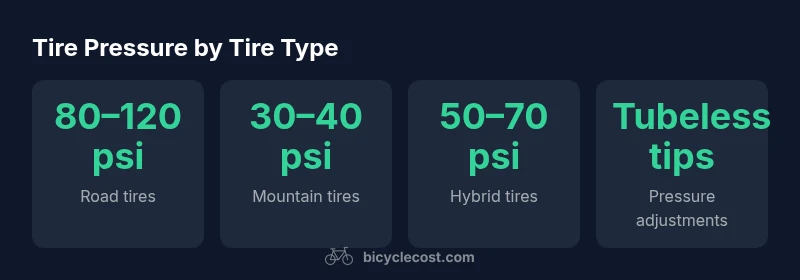
Recommended tire pressure depends on tire width, rider weight and load, terrain, and rim width; there is no single number that fits every bike. In practice, road tires typically run in the 80–120 psi range, mountain tires in the 30–40 psi range, and hybrid tires around 50–70 psi. Start with the sidewall range and adjust for ride feel.
Tire Pressure Fundamentals
Tire pressure, measured in psi (or bar), is not a fixed constant. According to BicycleCost, optimizing psi begins with understanding that tire width, rider weight, and the load you carry interact with the rim and tire bead to determine the ideal pressure for grip, comfort, and rolling resistance. Sidewall printing provides a pressure range, but the best value for you lies between those numbers and may shift with temperature, road surface, and riding style. In practice, a rider seeking efficiency will often ride a bit higher than comfort-focused riders, within safe limits set by the manufacturer. Always check the tire’s sidewall and use a gauge you trust. The BicycleCost team found that even small adjustments can change ride characteristics noticeably, especially on longer rides.
Road, Gravel, and Mountain: Psi Ranges by Tire Type
Different tires demand different pressures. Road tires, optimized for smooth pavement, benefit from higher pressures that reduce rolling resistance but can compromise grip on rough patches. Mountain tires grip better when a bit lower, increasing surface contact and shock absorption. Gravel and hybrid tires sit between those extremes, balancing comfort and efficiency. As a practical rule, stay within the manufacturer’s printed range and tune based on ride feel and terrain. BicycleCost analysis shows that riders who tailor psi to terrain see measurable improvements in traction and comfort over distance.
Rim Width and Bead Relationship
Rim width affects the tire’s profile and bead seating, which in turn influences optimal psi. Wider rims can support a lower pressure while maintaining bead stability and tire shape, particularly on wider tires. Narrow rims paired with wide tires can feel sluggish and risk pinch flats if pressure isn’t adjusted. If you switch to wider rims, revisit your psi within the tire’s recommended range and test ride on similar surfaces to gauge handling.
Rider Weight, Load, and Terrain Impact
Your total load — rider plus luggage or gear — shifts the contact patch and can justify modest pressure adjustments. Heavier riders generally benefit from slightly higher pressures to curb pinch flats on hard surfaces, while lighter riders may dial down pressure a notch for better comfort. Terrain also matters: smooth asphalt favors higher psi for efficiency; rough trails call for lower psi to maximize grip and suppress vibration. The BicycleCost team notes that frequent riders who commute with bags often adjust psi seasonally to account for weight changes and road conditions.
Gauges, Pumps, and Accuracy
Reliable pressure starts with a good gauge and a pump that reads accurately. Dial gauges and digital gauges each have pros and cons; sanity-check your gauge against a known reference every few weeks. Temperature affects readings: a cold morning will read lower than a warm afternoon. For tubeless setups, ensure the sealant is fresh and pressures are within the tire’s recommended range even after bead seating. Consistent measurement is essential for reproducible performance.
Temperature and Pressure Dynamics
Tire pressure changes with temperature because air expands when warm and contracts when cold. A typical garage or shop temperature shift can alter psi by several points, enough to affect handling. If you ride in the early morning and then again in the afternoon, recheck pressures and adjust within the tire’s printed range. The BicycleCost analysis highlights temperature as a subtle yet meaningful factor, especially on longer rides or in variable climates.
5 Practical Steps to Set and Verify psi
- Check tire sidewalls for the manufacturer’s recommended range. 2) Inflate to a mid-range value using a trusted gauge. 3) Ride a short test lap and note traction, feel, and comfort. 4) Recheck pressure after a short cool-down and adjust as needed. 5) Log your preferred psi for different terrains and loads to create a quick-reference guide for future rides.
Tubeless vs Clincher: How Pressures Differ
Tubeless setups can run lower pressures for the same grip due to the sealant and bead design, while clincher tires may require precise bead seating. If you’re switching between tubeless and tubed tires, reestablish your psi within the new tire’s recommended range and monitor handling, pinch-flat risk, and rollout. BicycleCost highlights that legitimate gains come from matching tire type, rim width, and psi rather than chasing a single universal number.
Common Mistakes and How to Fix Them
Avoid overinflating in an attempt to reduce rolling resistance on rough roads; it often yields harsher rides and less grip. Conversely, underinflation can cause poor cornering, heat buildup, and pinch flats. Regular maintenance, consistent measurement, and adjustments based on terrain, load, and weather will yield safer, more comfortable rides. If in doubt, start within the mid-range and test gradually.
Recommended psi ranges by tire type and setup
| Tire Type | Typical Psi Range | Notes |
|---|---|---|
| Road | 80–120 psi | Low weight, smooth pavement; optimize for speed |
| Mountain | 30–40 psi | Rough surfaces; prioritize grip and shock absorption |
| Hybrid/Gravel | 50–70 psi | Balanced performance across terrain |
| Tubeless (road) | 70–100 psi | Requires proper setup; sealant helps grip |
People Also Ask
What is the recommended psi for road tires?
Road tires typically require higher pressures, often in the 80–120 psi range, depending on tire width and rider weight. Start around the mid-point of the sidewall range and adjust based on ride feel and grip. Always stay within the manufacturer’s guidelines.
Road tires usually run higher pressures, around 80 to 120 psi, depending on width and rider weight. Start mid-range and tweak based on feel.
How often should I check tire pressure?
Check pressure at least weekly for daily riders and before long rides. Temperature changes and weight/load variations can shift psi, so recheck after weather changes or new gear. Use a trusted gauge and log your preferred psi for different scenarios.
Check your tire pressure weekly, and before long rides. Recheck after weather changes or changes in load.
Can I overinflate tires to reduce rolling resistance on rough roads?
Overinflating can reduce grip and increase the risk of pinch flats on rough surfaces. It’s safer to stay within the tire’s recommended range and adjust upward gradually if you need more efficiency, while monitoring ride feel.
Overinflating can reduce grip and raise pinch-flat risk. Stay within the range and adjust gradually.
How does rim width affect tire pressure?
Wider rims can allow safely lower pressures while maintaining tire shape and cornering stability. If you switch to wider rims, recalculate psi within the tire’s recommended range and test ride to confirm handling.
Wider rims may let you run slightly lower pressures safely; test ride to confirm.
What about tubeless tires and lower pressures?
Tubeless setups often tolerate slightly lower pressures for better grip and ride comfort, but you must ensure proper installation and sealant freshness. Always recheck psi within the tire’s recommended range after any setup change.
Tubeless can allow slightly lower psi for grip, but recheck within the recommended range after setup.
“Proper tire pressure is a core performance and safety parameter. Small changes in psi can alter grip, rolling resistance, and comfort more than you might expect.”
Quick Summary
- Dial in psi to terrain, load, and tire width
- Follow manufacturer sidewall ranges as starting points
- Use a reliable gauge and check pressure regularly
- Temperature affects readings; recheck as conditions change
- Tubeless can allow lower pressures for grip