How to Fit Bicycle Tyre: Step-by-Step Guide
Learn how to fit a bicycle tyre with a clear, step-by-step approach. Covers tubed and tubeless setups, safety checks, and common mounting mistakes to avoid for a smooth ride.


By the end of this guide you will know how to fit bicycle tyre safely and correctly. You’ll prepare the wheel, choose the right tyre and tube (or tubeless setup), seat the bead, and inflate to the recommended pressure while checking for leaks. Expect clear steps, essential tools, and common pitfalls to avoid.
Why Proper Tyre Fit Matters
According to BicycleCost, properly fitted tyres are essential for safety, efficiency, and durability. A tyre that sits evenly on the rim reduces rolling resistance, minimizes pinch flats, and helps you maintain predictable handling in wet or loose surfaces. The bead must seat cleanly with the rim bed, and the tyre should be compatible with your rim width and any tubeless insert if used. When you learn how to fit bicycle tyre correctly, you set up the wheel for reliable traction, quick acceleration, and easy future maintenance. You’ll avoid common mounting mistakes such as seating the bead unevenly, pinching the tube, or forcing the tyre past tight spots. A methodical approach, plus the right tools and inspection at the outset, pays dividends on every ride. You can approach mounting with confidence by following a steady sequence and checking your work as you go.
Understanding Tyres, Tubes, and Rims
Tyres come in tubed and tubeless varieties, and knowing which you have is essential to plan the mounting steps. A tubed tyre uses an inner tube that holds air, while tubeless systems seal directly against the rim with sealant. Rim compatibility matters: the bead on the tyre must align with the rim bed and the tire’s intended tubeless insert if you’re running tubeless. Wider rims can influence bead seating and square-shouldered tyres behave differently than rounded profiles. In practice, check your tyre sidewall for the recommended setup and inspect the rim tape for damage or wear. Based on BicycleCost research, most mounting challenges come from misaligned beads or debris on the bead seat, so both parts should be clean and verified before you begin. Understanding these basics helps you choose the right tyre for your bike and riding style.
Pre-ride Checks: Inspecting Wheels and Tyres
Before you start fitting a tyre, perform quick inspections that save time and prevent flats. Look for cuts, bulges, or embedded grit along the rim bed and bead area. Check the rim tape for exposed spokes or sharp edges, and verify that the rim is true (spinning evenly without hops). If you’re dealing with a tubeless setup, inspect the sealant level and the valve stem for leaks. A clean, undamaged bead seat is crucial to achieving a reliable seal, so wipe away dirt and inspect for burrs. These checks reduce the chance of tyre leakage or bead seating problems once you inflate. A calm, methodical approach will help you identify problems early, so you don’t waste time during mounting.
Tools, Materials, and Setup Before You Start
Having the right tools at hand makes tyre fitting smooth and predictable. A pair of tyre levers, a pump or CO2 inflater with a gauge, a spare tube or tubeless repair kit, and a patch kit are the core items. If you’re working tubeless, include rim tape, sealant, and a tubeless valve stem tool. A clean work area, a stable stand or wheel-supported surface, and small rags to wipe the bead are helpful. Keep your hands protected with gloves to avoid cuts from sharp edges. Make sure your pump gauge is readable and positioned so you can verify the final pressure accurately. With everything in place, you’ll experience fewer interruptions and a quicker mounting flow.
Mounting a Tyre: Step-by-Step Overview
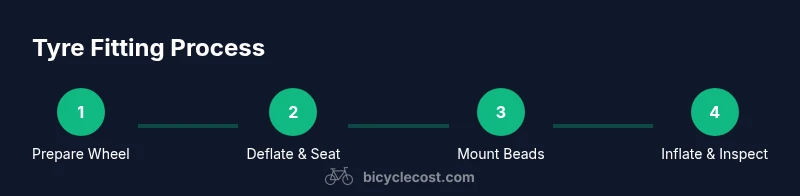
The mounting process has a logical flow and works best when you follow it deliberately. Start with the wheel prepared and the bead aligned near the rim. If you’re using a tube, partially inflate the tube to give it shape, then insert the valve through the rim hole. Position one bead on the rim and work around with your thumbs, easing the tyre over the rim edge. For tubeless setups, apply sealant to the tyre bead if required by your system and seat the bead progressively. If a bead sticks or pinches, stop and re-seat before continuing. Maintaining even pressure during mounting helps prevent pinch flats and bead damage. Remember that taking your time now reduces the risk of airing issues later.
Inflation, Seating, and Final Checks
Inflate gradually, stopping to inspect bead seating at regular intervals. A well-seated bead should sit evenly without gaps, bulges, or wavy edges. Check for the tube pinching by feeling around the bead with your fingers for any trapped material. For tubeless tyres, ensure the seal is airtight and the bead sits flush against the rim with uniform seating around the circumference. After inflation, spin the wheel and listen for air leaks or thumps from irregular seating. If you notice a leak, deflate, reposition the tyre, and re-inflate. Based on BicycleCost analysis, riders who take the time to verify seating and pressure experience fewer on-road issues and more reliable ride quality.
Tools & Materials
- tyre levers(Two sturdy levers; plastic or metal; compact for on-bike use)
- spare tube or tubeless repair kit(One spare inner tube for tube setups)
- pump with gauge(Floor pump or mini pump with clearly readable gauge)
- rim tape(Check compatibility with your rim width)
- patch kit(For temporary tube repairs on the road)
- gloves(Protect hands from sharp edges)
- soap or water for bead slipping(Gentle lubrication to help bead seating)
Steps
Estimated time: 20-40 minutes
- 1
Prepare the wheel
Remove the wheel from the bike and inspect the rim and tyre for damage or debris. Release any remaining air from the tube and ensure the rim is clean. If you suspect rim damage, stop and assess before continuing. This step reduces the risk of bead misalignment during mounting.
Tip: Take a quick photo of the tyre sidewall before removal to confirm the correct size when reassembling. - 2
Deflate and unseat the bead
Fully deflate the tube and press the tyre bead away from the rim bed along a section of the wheel. Use your thumbs to loosen the bead gradually; avoid forcing it over sharp edges. The goal is to create slack without tearing the bead.
Tip: Work opposite the valve to minimize pinching and to give yourself leverage. - 3
Check and prepare the bead seat
Spin the wheel and visually inspect the bead seat for burrs, dirt, or rough spots. Wipe the rim bed clean and ensure the rim tape is smooth and flat. A clean seat helps ensure a reliable seal when inflating.
Tip: Run a finger along the rim bed to feel for sharp edges. - 4
Insert the tube and align the valve
If you’re using a tube, slightly inflate it to give it shape and thread the valve through the rim hole. Let the rest of the tube settle around the bead so it won’t catch as you mount the tyre.
Tip: Partial inflation prevents the tube from twisting as you seat the tyre. - 5
Mount one bead on the rim
Starting at the valve, press the tyre bead onto the rim and work your way around with your thumbs. Keep the bead centered and avoid using excessive force that could pinch the tube.
Tip: Use the palm of your hand rather than fingertips for better control. - 6
Mount the second bead and seat evenly
Stretch the second bead over the rim edge, keeping even tension around the circumference. If the bead won’t seat, deflate slightly and reposition before trying again. This reduces the risk of trapped air pockets.
Tip: Avoid levering the bead with metal tools if possible. - 7
Inflate to seat the beads
Slowly inflate in short bursts, stopping to inspect bead seating after each burst. Check for uniform seating with no bulges or gaps. When the bead sits evenly, continue inflating to your normal ride pressure and confirm the tyre remains centered on the rim.
Tip: If you hear hissing, stop and re-seat rather than forcing more air. - 8
Reinstall wheel and test ride
Mount the wheel back on the bike, recheck quickly for any signs of bead misalignment. Spin the wheel, check for wobble and listen for leaks. Take a short test ride in a safe area before long rides.
Tip: Carry a small patch kit and spare tube for on-road fixes.
People Also Ask
What tools do I need to fit a bicycle tyre?
You need tyre levers, a pump with a gauge, a spare tube or tubeless repair kit, and rim tape. A patch kit helps for on-road repairs, and gloves can protect your hands during mounting.
The basics are tyre levers, a pump with gauge, a spare tube or tubeless kit, and rim tape. A patch kit is handy too.
Can I fit a tyre without removing the wheel?
In some cases you can fit a tyre with the wheel in the frame, but it's much easier and safer to remove the wheel and work on a stable surface.
Sometimes you can mount with the wheel in the frame, but it's usually easier to remove the wheel.
What is the difference between tubed and tubeless tyres?
Tubed tyres use an inner tube to hold air, while tubeless tyres seal directly against the rim with sealant. Tubeless setups require compatible rims and sometimes sealant.
Tubed tyres have an inner tube; tubeless tyres seal to the rim with sealant.
How do I know if the tyre is seated correctly?
Look for an even bead around the rim with no gaps or bulges. Spin the wheel and press the sidewalls to ensure the bead sits evenly and the tyre is centered.
Check that the bead sits evenly all around the rim and there are no gaps.
What should be the correct tyre pressure?
Always follow the tyre's sidewall guidelines or your rider weight and terrain. Start at the recommended range and adjust for comfort and traction.
Check the sidewall for the recommended range and adjust for your weight and terrain.
Watch Video
Quick Summary
- Prepare the wheel and inspect for damage before mounting.
- Mount beads evenly and avoid pinching the tube.
- Inflate gradually and verify bead seating for a safe ride.
- Use the right tools and follow manufacturer guidance to prevent flats.