How to Replace a Bicycle Tube: A Complete Guide
Learn how to replace a bicycle tube with a clear, step-by-step approach. This guide covers tools, safety, wheel removal, tire seating, puncture inspection, and testing to get you back on the road quickly.


You’ll replace a bicycle tube by removing the wheel, deflating and detaching the tire, inserting a new inner tube, reseating the bead, and inflating to proper pressure. Gather a spare tube, tire levers, a pump, and a patch kit for roadside repairs. This guide walks you through each step safely.
Tools and materials you’ll need
Before you start, assemble the essential gear to make the swap quick and clean. Gather a spare inner tube that matches your wheel size, tire levers, a pump with a gauge, and a patch kit for on-the-spot fixes. A set of Allen keys or a quick-release lever, depending on your bike’s setup, will help you remove the wheel. Optional items include rim tape, tire boots for sidewall cuts, gloves for grip, and a rag for cleanup. If you’re repairing on the road, a small container of water can help you locate slow leaks by watching for air bubbles.
Brand note: This guidance aligns with BicycleCost’s practical maintenance approach and is designed to minimize downtime when you’re away from home.
How inner tubes work and sizing
Inner tubes come in a range of sizes that correspond to tire width and rim diameter. The key is to choose a tube that matches both your tire width and the wheel’s bead seat diameter. In practice, you’ll need to know your tire marking (often something like 700x38c or 27x1 1/4) and the corresponding tube size. If you’re unsure, bring a spare tube that covers a broad size range or check the tire wall for the exact sizing. When installing, ensure the valve type (Presta or Schrader) matches your rim and pump. This ensures a secure seal and accurate inflation.
Safety and prep before you start
Set the bike on a stable surface, ideally a work stand or a flat, level ground. If your bike has rim brakes, release the brake to prevent the wheel from pinching your fingers during removal. If you’re on a multi-speed bike, shift to the smallest cog to ease wheel removal. Wear gloves or use a rag to avoid pinching your skin on sharp edges. Inspect the area around the tire for embedded debris that could cause another flat after you reassemble.
Step 1: Remove the wheel
First, loosen the axle or open the quick-release lever to detach the wheel from the frame. If you’re working with a rear wheel, disengage the chain from the smallest cog to free the wheel. For front wheels with disc brakes, ensure the brake rotor is not rubbing the caliper. If your bike uses a through-axle, use the appropriate tool to remove it. Keep the bike stable by leaning against a wall or using a stand, and avoid letting the bike tip over on you.
Tip: Take a note of how the brakes and derailleur are configured for easier reassembly later. A quick photo can prevent mix-ups.
Step 2: Deflate and remove the tire
Once the wheel is off, fully deflate the old tube. Use tire levers to pry the tire bead away from the rim on one side, then work the lever around the rim to lift the bead until you can pull the tire off. Do not pinch the tube while removing it. If you encounter stubborn beads, use a second lever and gently pry without forcing. Remove the punctured tube and inspect its exterior for the puncture site.
Step 3: Find the puncture and inspect the tire
Inflate the old tube slightly to locate the puncture, or submerge the tube in water to watch for escaping bubbles. Remove any debris from the tire cavity and inspect the tire’s inner surface for embedded glass, thorns, or sharp edges that could cause a quick repeat flat. If you find a sharp object still lodged in the tire, remove it carefully and re-check the tire interior before continuing. Consider applying a tire boot if the tube has a hole near the edge or there is minor tire damage.
Step 4: Install the new inner tube
Gently unfold the new tube and lightly inflate it just enough to give it shape. Insert the valve stem through the rim hole first, then tuck the tube into the tire cavity all the way around. Avoid pinching the tube between the tire bead and the rim—keep the tube centered. If you notice any twist, adjust before reseating the tire bead. This step reduces the likelihood of a pinch flat when you reinstall the tire.
Step 5: Re-seat the tire beads and inflate to pressure
With the tube inside, start bead seating at the valve and work your way around the rim. Use your hands to push the bead back onto the rim on both sides until the tire sits evenly. Inflate slowly, checking that the tire beads remain evenly seated and that the tube isn’t bulging between the bead and rim. Stop at the recommended pressure shown on the tire sidewall or as advised by your local cycling guidelines. Avoid over-inflation which can damage the tube or tire.
Step 6: Reinstall the wheel and do a quick test
Place the wheel back into the frame, secure the axle or quick-release, and re-engage any brakes. Spin the wheel to confirm true rotation and listen for any rubbing or odd noises. Check for leaks around the valve stem and the tire bead once the wheel is mounted. If everything looks good, take a short test ride on a safe surface to verify seating and pressure. If you hear hissing or feel a soft spot, stop and re-check the setup.
Tools & Materials
- Spare inner tube (size matched to wheel)(Choose the tube with the correct size range and valve type (Presta or Schrader))
- Tire levers(Two levers recommended for stubborn beads)
- Bike pump with gauge(Ensure you can read tire pressure)
- Patch kit (optional)(Useful for minor punctures on the road)
- Allen keys or pedal wrench(Needed if your wheel is not quick-release)
- Rag or gloves(Keeps hands clean and protects fingers)
- Rim tape (if needed)(Check if your rim requires it for tubeless setups)
- Tire boot or spare patch material(Use for minor sidewall damage)
Steps
Estimated time: 25-60 minutes
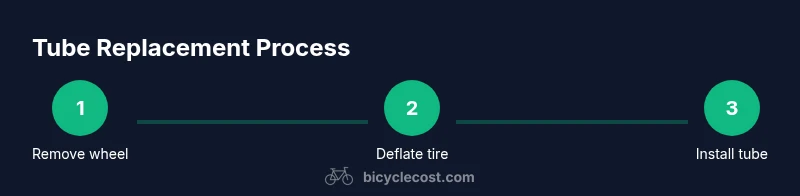
- 1
Remove the wheel
Loosen the axle or quick-release, detach the wheel, and set the bike on a stable surface. If rear, shift to the smallest cog and free the chain. Ensure brakes won’t pinch your fingers during removal.
Tip: Take a quick photo of brake/derailleur setup to ease reassembly. - 2
Deflate and remove the tire
Fully deflate the tire, then pry the bead away from the rim with tire levers. Work the lever around the rim until one side is off, then remove the tire completely.
Tip: Be gentle to avoid pinching the new tube during installation. - 3
Inspect the tire and locate the puncture
Remove the punctured tube and inspect the inside of the tire for sharp debris. If present, remove it and check for rim damage or protrusions that could cause another puncture.
Tip: If you locate a sharp object, remove it with tweezers or pliers before reinstalling. - 4
Install the new inner tube
Lightly inflate the new tube to give it shape, thread the valve through the rim, and insert the tube around the circumference without twisting.
Tip: Keep the tube centered and avoid pinching between bead and rim. - 5
Re-seat the tire beads and inflate
Seat the tire beads back onto the rim, starting at the valve and working both sides. Inflate gradually to the recommended pressure while checking for even seating.
Tip: Stop inflation if you notice any tube bulging or bead misalignment. - 6
Reinstall the wheel and test
Mount the wheel back onto the frame, secure the axle or quick-release, and re-engage brakes if needed. Spin the wheel to verify true rotation and check for leaks at the valve and bead.
Tip: Take a short test ride in a safe area before returning to traffic.
People Also Ask
Do I need to inflate the new tube before installing it?
Lightly inflate the new tube to give it shape, then install. This helps prevent pinching during insertion and makes seating easier.
Lightly inflate the tube to shape it, then install to reduce pinching during insertion.
What should I do if the puncture is in the sidewall?
Sidewall damage usually means the tire or tube should be replaced. Do not reuse; it compromises safety. Inspect the tire for embedded objects as well.
A sidewall puncture usually requires tire and tube replacement for safety.
Can I patch the tube after installing it on the wheel?
Patching on the wheel is possible but more difficult. It’s safer to patch a tube outside the wheel, after removal, for a reliable fix.
You can patch the tube off the wheel; it’s safer and more reliable than patching on the wheel.
What’s the difference between Presta and Schrader valves?
Presta valves are slimmer and require a different pump head; Schrader valves resemble car tires and are broadly compatible. Check your rim or pump to ensure compatibility.
Presta is slimmer and needs a compatible pump head; Schrader is like car tires and more common.
How can I prevent flats in the future?
Regularly inspect tires for embedded debris, replace worn tires, use appropriate tire pressure, and ensure tubes aren’t twisted during installation. A patch or boot can help minor tire damage.
Inspect for debris, maintain proper pressure, and ensure tubes aren’t twisted during installation.
If I don’t have a spare tube, can I ride home on one I just patched?
Riding on a patched tube is possible short-term but risky; patches can fail. Carry a patch kit while you source a spare tube and consider roadside assistance if the patch fails.
Riding on a patched tube is risky; patch it only if you must and replace it as soon as possible.
Watch Video
Quick Summary
- Gather tools before you start
- Inspect tire for debris to prevent repeats
- Install tube with Valve aligned and beads seated
- Inflate gradually and test thoroughly
- Recheck wheel alignment before riding