How to Clean a Bicycle Chain: A Step-by-Step Guide
Learn how to clean a bicycle chain thoroughly using safe degreasers, brushes, and proper lubrication. This BicycleCost guide covers tools, safety, and best practices to extend chain life and keep gears shifting smoothly.


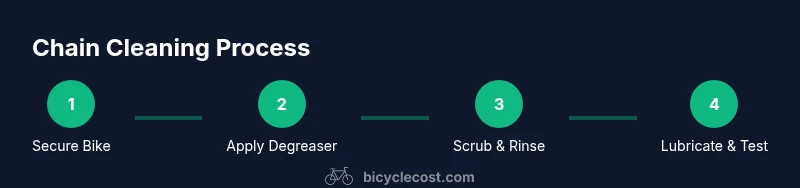
By following this guide, you will learn how to clean a bicycle chain thoroughly and safely, from degreasing to lubrication and reassembly. You’ll identify the right cleaners, brushes, and lubricants, and you’ll understand steps to prevent rust, prolong chain life, and shift smoothly across gears. The method works for most bikes, including single speeds and multi-gear setups. According to BicycleCost, dedicated maintenance habits save money over time and keep your drivetrain running quietly.
Why Cleaning a Bicycle Chain Matters
A clean chain shifts more smoothly, lasts longer, and reduces wear on the entire drivetrain. If you're wondering how to clean bicycle chain, you can't just wipe off visible grime and call it a day: dirt and old lubricant trap grit that acts like sandpaper on the chain pins and sprockets. Regular cleaning removes this grit, prevents rust, and helps the bike run quietly. For most riders, a simple routine after wet or dirty rides is enough to preserve efficiency and reduce the frequency of more costly repairs. In this guide, you'll see practical steps that apply to a wide range of bicycles, from entry-level commuter bikes to high-mileage road machines. The BicycleCost team emphasizes that consistent maintenance saves money in the long run and keeps your rides safer and more enjoyable.
Tools and Materials You’ll Need
Before you start, gather a few essentials so you don't interrupt the work. A basic degreaser designed for bicycle chains, a couple of stiff brushes, a rag or lint-free cloth, a chain lubricant suited to your riding conditions, and a clean workspace are the core kit. Optional but helpful items include a chain wear tool, a work stand, an old toothbrush for tight spots, and a bucket of warm water for rinsing. Using the right tools makes the job faster and safer, and it reduces the risk of slipping or slipping would be wrong? We'll ensure clarity: Use a bike stand if possible to keep the drivetrain accessible and stable. BicycleCost analysis notes that the right tools contribute to safer, cleaner maintenance sessions.
Preparing Your Bike for Cleaning
Set the bike upright and secure it in a stand or upside-down on the saddle and handlebars. If you ride in wet or muddy conditions, consider placing a liner or old towel under the bike to catch drips. Remove any loose debris around the chainring and cassette with a soft brush. This preparation helps you see grime more clearly and prevents it from splashing elsewhere on the bike. Always wear gloves to protect your skin from solvents and dirty gear, and work in a well-ventilated area. The approach is to create a controlled workspace so you can focus on the chain without distractions. A calm, organized process reduces the chance of dropping parts or losing small pieces.
Cleaning Fundamentals: Degreaser, Brushes, and Lubricants
Understanding the roles of each component keeps you on track. Degreaser loosens oil and dirt; brushes physically scrub away gunk; and lubricant creates a thin, protective film that resists water and wear. When selecting products, choose a dedicated bike chain degreaser and a light lubrication appropriate for your climate. Avoid using household solvents that can damage seals or skin. For best results, scrub the chain with a stiff brush while the chain is still attached to the crank, then move the pedals to expose all surfaces. After applying degreaser, rinse or wipe away the residue, leaving the chain nearly dry before lubrication. This reduces water intrusion and helps the lubricant bond properly, improving shifting and longevity.
Step 1: Secure the Bike and Prepare Workspace
Position the bike in a stable stand or lean it securely so the chain area is accessible. Lay down a tray or old towel to catch degreaser and grime. This keeps your workspace clean and minimizes cleanup time after the job. If you have a chain tool, keep it within reach. The aim of this step is to create a safe, efficient setup so you can execute the next steps without dropping the chain or injuring yourself. A compact workspace is fine, but do not rush through setup; a few minutes here saves effort later.
Step 2: Shift to the Smallest Gear and Prepare to Release
Shift the chain to the smallest chainring and the smallest rear cog to expose the longest, most accessible section of chain. If you’re removing the chain, use a master link tool or chain tool to separate the chain ends. If you’re not removing the chain, keep it taut but not under tension to avoid kinks. This setup helps the degreaser reach all links and makes scrubbing more uniform. Pro tip: Take photos before disassembly to ease reassembly later.
Step 3: Remove the Chain (Optional but Helpful)
If your chain tool allows, detach the chain for a thorough clean. This makes it easier to clean every link, and you can soak the chain in degreaser for better access to the inner plates. Keep track of spacers and orientation if you have a known master link. Reinstalling the chain correctly is crucial for smooth shifting, so take care not to crimp the chain or misalign it on the cassette and chainrings.
Step 4: Apply Degreaser and Let It Sit
Apply the degreaser liberally to the inner and outer plates of the chain. Let the chemical do the heavy lifting for a minute or two, following the product's instructions. While it sits, wipe nearby parts to prevent buildup and prepare a brush. The waiting period helps break down stubborn grease so that subsequent scrubbing is effective. Do not leave degreaser on painted surfaces for long, and avoid contact with skin.
Step 5: Scrub Thoroughly
Use a stiff brush or old toothbrush to scrub the chain front and back, including inner links and rollers. Rotate the pedals slowly to move the chain through the gears, ensuring every segment gets attention. Rinse or wipe away loosened grime, repeating as needed until the chain appears clean and dull rather than black with grease. If the chain is heavily contaminated, a second degreasing cycle may be appropriate. The result should be a clean chain with a smooth, unsticky feel.
Step 6: Rinse, Dry, and Inspect
Rinse off any remaining degreaser thoroughly with water or a wipe-down. Dry the chain completely with a clean cloth or allow it to air-dry to avoid moisture pockets. Inspect for rust, stiff links, or worn rollers. If you find issues, address them before lubricating. A dry chain reduces lubricant dilution and ensures better adhesion. This is also a good time to wipe the derailleur pulleys and cassette so they don’t contaminate the new lubrication.
Step 7: Lubricate Properly and Reassemble
Apply lubrication to the inner surfaces of the links as you slowly rotate the crank. Use only a thin, even coating and remove any excess after a few rotations. Choose a lubricant appropriate for your typical riding conditions; wet lube for rain and grime, dry lube for dusty environments. Reinstall the chain if you removed it, ensuring correct orientation and tension. Wipe away any excess near the brakes or rotors to prevent contamination and squealing.
Step 8: Test Ride and Confirm Shifting
Take a short test ride to confirm smooth shifting across all gears. If you feel hesitation or chain slipping, recheck alignment, tension, and lubrication. Wipe away any drips from brakes or rims. Keep an eye on the chain for a few rides to verify that the lubrication has settled in and that the drivetrain remains quiet. Establish a maintenance cadence to keep your chain in top condition.
Common Pitfalls and Maintenance Cadence
Common mistakes include over-lubricating, using the wrong degreaser, neglecting drying, and rushing reassembly. Create a simple cadence: after wet rides, clean and re-lubricate; after a long dry spell, inspect for wear and clean as needed. Keeping a small note of ride conditions can help you tailor products and timing. BicycleCost recommends building a routine that fits your riding frequency and local climate.
Tools & Materials
- Bike repair stand or secure workspace(Stable access to chain area)
- Bicycle chain degreaser(Choose a rester degreaser designed for chains)
- Stiff brushes and an old toothbrush(For inner and outer plates)
- Lint-free rag or paper towels(For wiping and drying)
- Chain lubricant suited to conditions(Wet lube for rain, dry lube for dust)
- Chain wear tool (optional)(For assessing chain stretch)
- Gloves( protects skin from solvents and grime)
- Bucket or tray for catching degreaser(Minimizes mess)
Steps
Estimated time: 30-45 minutes
- 1
Secure the bike and prepare workspace
Position the bike in a stand or secure on a solid surface. Lay down a tray or towel to catch drips. Ensure the chain is accessible and the area is well ventilated.
Tip: A sturdy stand reduces accidents and makes steps faster. - 2
Shift to smallest gear
Shift the drivetrain to the smallest chainring and the smallest sprocket to expose the longest chain run. This improves access for cleaning and inspection.
Tip: Take photos before disassembly to simplify reassembly. - 3
Remove the chain (optional)
If you have a master link tool, detach the chain ends for thorough cleaning. If not removing, ensure the chain stays taut but not under tension.
Tip: Keep track of any spacers or orientation markers. - 4
Apply degreaser
Liberally apply degreaser to the chain, allowing it to soak for 1–2 minutes. Avoid prolonged contact with painted parts.
Tip: Use a dedicated bike degreaser for best results. - 5
Scrub the chain
Scrub all sides of the chain with a stiff brush while rotating the crank to access every link.
Tip: Pay attention to inner plates and rollers for thorough cleaning. - 6
Rinse and dry
Rinse off residue and dry the chain completely with a clean rag or air dry.
Tip: Drying prevents dilution of lubricant and reduces rust risk. - 7
Lubricate
Apply a thin, even layer of lubricant on the inside of the chain as you slowly turn the cranks.
Tip: Wipe off excess to avoid attracting dirt. - 8
Reinstall and test
Reattach the chain (if removed) and test shift across all gears to ensure smooth operation.
Tip: Check for any rubbing or misalignment and adjust if needed.
People Also Ask
What degreaser is safest for bicycle chains?
Choose a degreaser designed for bike chains, preferably water-based and easy to rinse. Avoid household solvents that can damage seals or harm skin.
Opt for a bike-specific degreaser that is easy to rinse and safe for you and the bike.
Should I remove the chain to clean it?
Removing the chain makes thorough cleaning easier, especially for inner links. If you keep the chain on, ensure it moves freely and you can access all links.
You can clean with the chain on, but removing it improves access to every link.
How often should I clean my chain?
Clean after wet or dirty rides and inspect for wear regularly. If you ride in dry, dusty conditions, a lighter cleaning schedule suffices.
Clean after wet rides and check for wear on a regular basis.
Can I clean a chain without removing it and still hear a difference?
Yes, you can, but results may vary depending on access and drivetrain layout. Removing the chain yields the deepest clean and better inspection.
You can clean without removing the chain, though removing it gives a deeper clean.
How do I know if a chain needs replacing?
If the chain shows excessive wear or stretches beyond recommended limits, replace it to prevent gear wear. Use a wear tool to assess.
If the chain is stretched or worn, replace it to protect your gears.
Watch Video
Quick Summary
- Disassemble or expose the chain fully for best cleaning results.
- Use the right degreaser and lubricant to suit conditions.
- Dry thoroughly before lubrication to improve film adhesion.
- Regular maintenance extends chain life and improves shifting.