Can You Ride a Bike with a Rusty Chain? Fix Guide Now
Can you ride a bike with a rusty chain? Learn the risks, quick fixes, and a practical, step-by-step plan to clean, lubricate, or replace worn links for safe riding and drivetrain health. BicycleCost guides you through every step.


Yes, you can ride briefly, but it’s risky. Stop riding, clean the chain with a degreaser, lubricate, and replace worn links if you notice stretching or stiffness. For safety, don’t ride long distances until you’ve fully addressed chain wear and drivetrain health.
Can you ride a bike with a rusty chain?
Yes, you can ride a bike with a rusty chain in a pinch, but it’s not safe or wise to ride long-term. According to BicycleCost, rust on a chain is a warning sign that you should inspect wear and plan maintenance. A rusty chain can weaken links, cause stiff shifts, and even snap under stress. The quickest fix is to stop riding, clean with a degreaser, lubricate, and replace the chain if you notice stretching or stiff links. In addition, inspect the cassette and derailleur for rust transfer that can worsen shifting and contribute to chain skipping. If you ride with a rusty chain over long distances or steep grades, you risk chain failure, which can lead to a crash. The good news: most rust and wear are manageable with proper cleaning, lubrication, and, when necessary, a new chain. BicycleCost's guidance on routine inspection helps riders stay safe and extend drivetrain life.
What rust on a chain tells you about your bike's condition
Rust on the chain is more than cosmetic. It indicates moisture exposure, possible corrosion of metal surfaces, and insufficient lubrication. If rust covers multiple links, you may be facing accelerated wear that reduces chain strength, causes poor engagement with the cassette, and can lead to skipped gears. A rusty chain also roughs up the inside of the chainring and cassette, accelerating wear on those parts. Home riders often underestimate this issue, assuming a quick wipe-down will suffice. In reality, rust-thinned metal is weaker and more prone to snapping under load, especially when pedaling uphill or sprinting. Regular inspection—looking for flaky rust, stiff links, or a chain that measure longer than spec—helps you decide whether to clean and lubricate or replace. The BicycleCost team stresses that preventative care is cheaper and safer than emergency repairs on the roadside.
How rust forms: moisture, salt, heat, and not wearing lubrication
Rust starts where moisture sits on metal surfaces. Sweat, rain, and humidity accelerate oxidation, while salty roads and winter exposure compound the problem. Heat speeds rust once it starts, and neglecting lubrication creates friction that invites rust to cling to moving parts. A clean, well-lubricated chain resists rust better and stays quieter and smoother. Regular cleaning removes surface rust before it penetrates deeper links, and proper lubrication forms a protective film that slows future rusting. In humid climates or during winter riding, it’s especially important to wipe chains dry after rides and apply a thin, bicycle-specific lubricant.
Inspecting chain wear: when to ride or replace
Inspecting chain wear is a practical skill every rider should have. Start by visually inspecting for rust pitting, stiff links, and obvious elongation. If you notice the chain rubbing on the chainring or if shifts begin to slip or hesitate, this can indicate wear beyond safe limits. A wear gauge or chain checker helps quantify how much stretch has occurred; if the gauge indicates excessive wear, replacement is recommended. Don’t forget to inspect the cassette teeth for hooking or wear that coincides with a stretched chain. When in doubt, err on the side of safety: replacing a worn chain is cheaper and safer than risking a broken chain mid-ride or gear damage.
Cleaning and lubricating a rusty chain (safe, effective method)
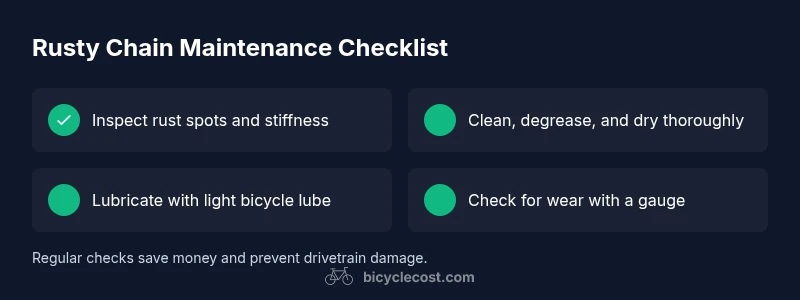
Begin by shifting to the smallest chainring and cog to expose the entire chain. Apply a degreaser and use a stiff brush or dedicated chain-cleaning tool to scrub away surface rust. Rinse with water if the degreaser instructions allow, then dry thoroughly with a clean cloth or air. Once dry, apply a light film of bicycle-specific lubricant to each link, wipe off any excess to prevent dirt buildup, and recheck that links move freely. If rust persists on many links or if shifting remains sticky after lubrication, it’s a strong sign the chain should be replaced. After cleaning, test ride slowly in a safe area to confirm smooth operation and no unusual noise.
Safety considerations and gear to use
Rust and its removal can be physically rough on hands and eyes. Wear gloves to protect your skin from sharp edges and use eye protection if spraying or splashing degreaser. Avoid loose clothing or jewelry that could get caught in the chain. Work in a well-ventilated area and keep ignition sources away from solvents. If you notice chain links that feel gritty or snag on derailleur parts, stop and reassess. If the chain breaks while riding, you risk injury or a fall. When in doubt, seek professional help from a local bike shop. Regular maintenance is safer and often cheaper in the long run.
Long-term prevention: maintenance schedule to keep chains rust-free
Prevention is the best cure. Create a simple maintenance routine: after each ride, wipe the chain dry, remove dirt with a brush, apply a thin layer of bike-grade lubricant, and wipe off excess. Clean the chain and drivetrain monthly, or more often in wet climates. Store the bike in a dry, covered space to minimize exposure to moisture. Periodically inspect the chain for rust spots and wear and replace viewed as necessary. Consistent maintenance reduces rust buildup, keeps shifts clean, and prolongs the life of the chain and drivetrain.
Quick actions you can take today
Scan for rusty spots on the chain while cleaning the bike after your last ride. If you see minor surface rust, a targeted scrub with degreaser and a light lubrication cycle can buy time. If you notice stiff links, excessive wear, or persistent rust, schedule a visit to a bike shop for a chain replacement and drivetrain check. The sooner you address rust, the longer your bike remains safe and efficient.
Steps
Estimated time: 60-90 minutes
- 1
Gather tools and safety gear
Collect a degreaser, stiff brush, rags, gloves, and a light lubricant. Put on gloves and eye protection. A clean workspace helps avoid losing small parts.
Tip: Set aside a dedicated area to avoid contaminating clean parts with dirt. - 2
Inspect the chain condition
Look for rust spots, stiff links, and overall elongation. If many links are stiff or you see lockups, plan for replacement.
Tip: If in doubt, bring a worn chain to a shop for a professional assessment. - 3
Remove the chain (optional)
If thorough cleaning is needed, remove the chain with a chain tool or quick-link tool. For in-place cleaning, you can proceed with the chain on the bike.
Tip: Keep track of any quick links or rivets; ensure proper reassembly. - 4
Degrease and scrub
Apply degreaser generously and scrub with a stiff brush to remove rust and grime. Rinse or wipe clean according to product instructions.
Tip: Avoid harsh scrubbing that can gouge metal; use controlled, firm strokes. - 5
Dry and re-lubricate
Dry thoroughly, then apply a light film of chain lubricant to all links. Wipe away excess to prevent dirt buildup.
Tip: Lubricate after every wet ride to maximize rust resistance. - 6
Reinstall and test
Reinstall the chain, ensure proper tension, and test shift in a safe area. Look for smooth engagement and absence of squeaks or stiffness.
Tip: If shifting remains rough, consider replacing the chain and checking the cassette.
Diagnosis: Chain shows visible rust, stiffness, or slipping gears
Possible Causes
- highRust buildup from moisture exposure
- mediumWorn or stretched chain
- lowContaminated lubricant or dirt
Fixes
- easyClean chain with degreaser; scrub rust from links; dry thoroughly
- easyApply fresh bicycle lubricant and check for smooth movement
- mediumInspect for chain wear with a wear gauge; replace chain if stretched or bent
- hardReplace chain and inspect cassette/chainrings if wear is severe or rust penetrates gear teeth
People Also Ask
Can I ride with a rusty chain?
Riding with a rusty chain is possible briefly, but risky. Rust weakens links and can cause sudden failure, so address it promptly with cleaning, lubrication, or replacement as needed.
Riding with a rusty chain is risky; fix it promptly by cleaning and lubricating, or replacing the chain if needed.
When should I replace my chain?
If the chain shows excessive wear or elongation beyond what your wear gauge allows, or if rust has penetrated multiple links, replacement is recommended to protect the drivetrain.
If wear is excessive or rust is widespread, replace the chain to protect the gears.
How often should I lubricate my chain?
Lubricate after cleaning or after rides in wet conditions. Use a light, bicycle-specific lube and wipe away excess to prevent dirt buildup.
Lubricate after cleaning or after wet rides and wipe off excess.
Is rust dangerous to the chainring or cassette?
Yes, rust can transfer to the teeth, cause uneven wear, and decrease engagement. Inspect the cassette and chainrings when rust appears on the chain.
Rust can wear the gears; check the chainring and cassette if you see rust on the chain.
Can rust be prevented?
Yes. Keep the bike dry, wipe the chain after rides, and lubricate regularly. Store the bike in a dry environment to minimize moisture exposure.
Keep it dry, wipe after rides, and lubricate to prevent rust.
Do I need professional help for a rusty chain?
If you’re unsure about the chain wear or cannot remove heavy rust safely, visit a local bike shop. They can assess chain wear, replace components, and check the drivetrain.
If in doubt, go to a bike shop for a professional assessment.
Watch Video
Quick Summary
- Inspect rust early to prevent drivetrain damage
- Clean, lubricate, and recheck the chain promptly
- Replace worn chains to protect cassette and rings
- Avoid riding with significant rust or wear
- Establish a regular maintenance routine