How to Properly Ride a Bike: A Practical Guide
Learn how to properly ride a bike with this comprehensive, step-by-step guide. From setup to braking and safety, build confidence and ride smarter with BicycleCost’s expert guidance.


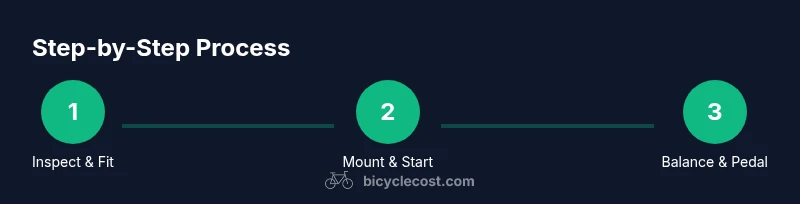
Mastering how to properly ride a bike unlocks safer, more confident cycling. This quick answer outlines the core steps, gear, and safety habits you’ll practice on the road, so you can ride with balance, control, and minimal risk from day one. Gather a helmet, a well-inflated bike, and a calm practice space, then follow the steps to build steady technique.
Why Proper Bike Technique Matters
Achieving proficiency in how to properly ride a bike is about building a reliable control framework that scales with speed, terrain, and traffic. According to BicycleCost, a clear, repeatable technique reduces rider fatigue, improves balance, and lowers the likelihood of common crashes. Whether you’re commuting, exercising, or just enjoying a weekend ride, correct form helps you exploit your bike’s geometry rather than fighting it. In practice, good technique translates to smoother pedaling, quicker recovery after bumps, and better anticipation of obstacles. As you learn, you’ll notice that small adjustments—like a relaxed grip, a neutral torso, and eyes scanning the path ahead—have outsized effects on stability and confidence. The goal is not to push hard but to establish rhythm: balanced weight, consistent cadence, and predictable movements that keep you in control at all times.
BicycleCost’s approach emphasizes safe progression and sustainable habits. Rather than chasing speed, you’ll focus on fundamentals first: fit, posture, balance, and braking. When these foundations are solid, more complex skills—shifting gears, cornering, and navigating hazards—feel natural rather than intimidating. In short, proper technique is the pathway to longer, more enjoyable rides with fewer interruptions for adjustments or injuries. Even experienced cyclists benefit from periodic technique checks to ensure form remains efficient and safe across different bikes and terrains.
Before You Ride: Setup & Equipment
Before you even mount, take a few minutes to prepare your bike and gear. A correct fit is essential for how to properly ride a bike, because even small seat or handlebar misalignments can cause knee pain, back strain, or balance issues. Start with a helmet that fits snugly and sits level on the forehead; look for a chin strap that sits comfortably about two finger-widths from the chin. Check your tires: tread should be intact with the recommended pressure, and there should be even wear across both tires. Inspect brakes for responsiveness and ensure cables are taut. Shift through the gears to confirm smooth transitions. Finally, verify that your pedals, crank, and chain are clean and oiled; a well-lubricated drivetrain reduces effort and improves efficiency. If you’re riding a road bike, a lightweight, responsive setup makes it easier to learn proper technique without fighting the bike’s geometry.
The setup phase also includes personal gear: a pair of closed-toe shoes with secure straps, lightweight gloves to absorb vibrations, and a water bottle. Practice areas should be flat, smooth, and free of traffic, ideally a quiet parking lot or empty street with ample space. Keep a basic repair kit handy—tire levers, a spare tube, a multi-tool, and a pump with a gauge—so you can handle minor issues without derailing practice. Over time, you’ll develop a quick pre-ride checklist that ensures consistency across rides and seasons.
Posture and Bike Fit
Good posture and a proper fit are foundational to how to properly ride a bike. Start with the seat height so that your leg bends slightly at the bottom of the pedal stroke; this reduces knee strain and maximizes power transfer. Your reach should feel comfortable without locking your elbows; a slight bend in the elbows helps absorb bumps and maintain control. Hand position should be relaxed, with the wrists aligned with the forearms rather than bent. Your back angle should be neutral—not overly rounded or overly upright—to balance aerodynamics with control. Your eyes should scan ahead about 10–15 meters, not down at the front wheel. A well-fitted bike allows you to maintain a natural riding posture for extended periods, which reduces fatigue and improves balance when you encounter uneven pavement or unexpected obstacles. Remember that small adjustments can dramatically affect comfort and handling, so revisit fit after any ride length or terrain change.
If you’re unsure about fit, seek a local bike shop or experienced rider to help you measure inseam, saddle height, and reach. A precise fit reduces knee and hip strain, improves steering responsiveness, and makes longer rides more enjoyable. As you gain experience, your ability to notice when something feels off will grow, enabling quick, confidence-boosting corrections.
Balancing Basics: Stance, Grip, and Sight
Balancing is the core skill behind how to properly ride a bike. Start with a relaxed stance: distribute weight evenly between the pedals and the handlebars, with a light, steady grip that doesn’t lock the wrists. Your elbows should be slightly bent to absorb shocks, and your shoulders should be loose and level. The position of your head and eyes plays a critical role in balance; look where you want to go, not at the front wheel. Your knees should hover over the pedals rather than collide with the frame, which helps maintain a smooth pedal stroke and prevents knee pain. When you start moving, focus on a steady cadence and a consistent breathing pattern. Practice micro-adjustments: micro-tilt your pelvis, micro-rotate your hips, and micro-adjust your line of sight to improve stability in cornering or when encountering small obstacles.
A good exercise is to practice coasting with one hand on the bar then the other, to improve edge control and body awareness. As you become more comfortable, you’ll notice the bike tracks where you look, so maintaining a forward gaze helps you anticipate changes in surface or traffic with minimal abrupt corrections. This section sets the framework for smoother acceleration and braking later on.
Starting from a Stop: Safe Launch
Getting rolling smoothly from a standstill is a foundational skill in how to properly ride a bike. Begin with both feet on the ground and the bike upright. Place one foot on a pedal at its 2 o’clock position for an easier push-off, then gently push off the ground with the opposite foot while lifting your hips onto the saddle. As you gain momentum, smoothly push the second pedal into position and begin to ride with a light, even cadence. Your hands should stay relaxed on the handlebars, and you should keep your eyes forward, not down at the front wheel. Avoid sudden jerks or heavy pulls on the brakes during the launch. A controlled start helps you maintain balance and reduces the chance of a stall or wobble, especially on uneven surfaces or with a tailwind pushing you forward. Practicing this skill in a flat, quiet area builds confidence and coordination for steeper starts later on.
If you feel wobbly at first, try holding the handlebars with a light touch and increase practice distance gradually. With time, your start will become automatic and stable, setting a reliable tone for the rest of your ride.
Pedaling Mechanics and Efficiency
Efficient pedaling is essential to how to properly ride a bike, particularly as you encounter longer rides or variable terrain. Aim for a smooth circular motion rather than a deep, hard push on the downstroke; slight resistance with a coordinated push and pull of the legs reduces fatigue and improves power transfer. Maintain a consistent cadence that feels comfortable, avoiding long periods of coasting or forced sprints. Allow your knees to track in line with your feet to protect the joints, and keep vibrations manageable by engaging your core and maintaining a light upper-body posture. A well-aligned knee stroke reduces stress on the hips and ankles and makes it easier to apply power safely when climbing hills or accelerating on flat sections.
Push and pull should be balanced; avoid fighting the bike with overly rigid shoulders or an unnecessarily high cadence that tires your legs quickly. Practicing on varied terrain helps you learn to adapt your pedal stroke to conditions, whether the road is smooth or rough. If you ride a geared bike, shifting to an easier gear before you need it keeps a consistent cadence and reduces last-minute gear changes that disrupt rhythm. A steady cadence also improves control when approaching corners or traffic signals, giving you time to react calmly.
Braking, Stopping, and Safety Margins
Braking is a critical skill in how to properly ride a bike. Start with both brakes engaged evenly to avoid skidding, then slightly modulate pressure as you slow. Learn to brake progressively rather than abruptly, which helps you maintain balance and stability in a straight line. Practicing controlled stops at line markers or visual cues—like a stop sign or a painted line—teaches you where the bike will stop and how much space you need. In wet or gravelly conditions, reduce speed and increase braking distance, riding in a lower gear to help you control the bike with gentler inputs. Keep your weight centered over the bike, and avoid leaning forward or backward excessively when stopping. If you feel the rear wheel sliding, ease off the brakes slightly and re-center your weight to restore traction.
To build confidence, practice stopping from different speeds in a safe, open area. As you improve, you’ll develop a consistent stopping routine that you can apply in traffic, at crosswalks, or when approaching turn decisions. This section lays the groundwork for safer riding in varied environments and helps you avoid skids and tip-overs.
Turning, Cornering, and Obstacle Navigation
Turning and cornering are where many beginners struggle, but with proper technique they become comfortable and predictable. Approach corners gradually by reducing speed ahead of the turn and choosing a safe line through it. Look through the bend to where you want to go, then steer smoothly with your hands, allowing your hips and shoulders to follow the bike’s path. Keep your weight balanced over the pedals and avoid leaning excessively toward the inside of the turn, which can cause loss of traction. If you encounter an obstacle, scan well ahead to identify the best line and slow early; use gentle braking and adjust your body position to maintain control. Practice cornering on low-stakes routes before moving to busy streets. In all cases, maintain clear communication with other road users—you’re safer when your intentions are predictable.
A useful drill is to practice gentle figure-eights in a calm area, keeping your eyes up and your weight centered. This helps your brain coordinate the bike’s physics and improves confidence for more challenging environments, like busy bike lanes or shaded streets where visibility may be reduced.
Riding in Different Environments and Maintenance Quick Start
Riding in different environments—urban streets, rural roads, or park trails—requires adaptability in technique and gear. Urban riding calls for heightened awareness, smooth lane positioning, and anticipating door openings or pedestrians. Rural roads demand a steady cadence and the ability to adjust for surface irregularities. Trail riding emphasizes balance, controlled speed, and careful line choice to avoid roots or rocks. Regardless of environment, always perform a quick safety check before each ride: tires, brakes, gears, and lights if you ride in low visibility. Regular maintenance reduces unexpected issues. Clean the drivetrain occasionally, check chain tension, and lubricate moving parts to maintain efficiency and extend bike life. Periodic professional checkups are valuable, especially if you ride frequently or on diverse terrains.
Develop a simple post-ride routine to inspect for wear and tear, especially on the brakes and tires. Keeping notes about your riding conditions helps you adjust technique and gear choices for future rides. With consistent practice, your ability to adapt to new environments will improve, making every ride safer and more enjoyable.
Tools & Materials
- helmet (certified safety standard)(CPSC or equivalent; snug fit, strapped securely)
- bicycle(Proper frame size for rider height; check brakes and tires)
- padded cycling gloves(Optional for comfort and grip)
- closed-toe shoes with secure straps(Stable footing and pedaling power)
- flat or compact repair kit(Tire levers, patch kit, and spare tube)
- multi-tool with Allen keys(For on-the-spot adjustments)
- pump with gauge(Maintain correct tire pressure)
- water bottle and cage(Hydration on longer rides)
- dedicated practice space(Flat, smooth surface free of traffic)
- belt or ankle guards (optional for kids)(Extra protection for new riders)
Steps
Estimated time: varies by rider; plan on a dedicated practice block of at least an hour
- 1
Inspect bike and gear
Check tires, brakes, gears, and chain. Ensure helmet fits and straps correctly. Confirm there’s no loose parts and the saddle height allows a slight knee bend at the bottom of the pedal stroke. This saves time later by preventing interruptions from mechanical issues.
Tip: Do a quick pre-ride shake-down to catch issues before you mount. - 2
Set fit and adjust controls
Adjust saddle height so you have a slight knee bend. Align handlebars with the front wheel and ensure comfortable reach. Confirm grip width and bar height are natural for your posture to reduce upper body tension.
Tip: Test ride in a small loop to confirm comfort before longer rides. - 3
Mount and position yourself
Stand beside the bike, place the dominant foot on a top-positioned pedal, and swing your other leg over the saddle. Sit with a light grip and relaxed shoulders. Keep your weight centered to prevent tipping.
Tip: Avoid hopping onto the bike; smooth, controlled mounting builds balance. - 4
Find your starting stance
Place both feet on the pedals with light pressure, one pedal at 2 o’clock. Push off with the rear foot, then bring the other foot to the opposite pedal as momentum builds. Keep eyes forward and hands relaxed on the bars.
Tip: Practice in a flat, empty space to build initial momentum. - 5
Begin pedaling with balance
Continue gentle pedaling as you settle into a straight line. Maintain a neutral torso and a soft grip. Focus on a smooth cadence rather than speed. Keep your gaze ahead to anticipate changes in the surface or traffic.
Tip: Keep shoulders loose and elbows slightly bent for shock absorption. - 6
Practice smooth braking
Apply both brakes evenly to decelerate gradually. Avoid abrupt stops; practice modulating pressure to prevent skidding. Brake earlier on descents and in wet conditions to keep control.
Tip: Predict stops with at least one orderly marker in your path. - 7
Turn with control
Slow before entering a turn, look through the corner to where you want to go, and steer smoothly with your hands. Shift weight slightly toward the outside of the turn and keep your cadence steady.
Tip: Practice figure-eights in a safe area to improve steering and balance. - 8
Handle obstacles and hazards
Scan far ahead for hazards like potholes or gravel. Choose a safe line or slow down to navigate around them. Keep weight centered and avoid sudden swerves.
Tip: Maintain a predictable line so others can anticipate your path. - 9
Environment adaptation
Adjust your posture and cadence for different surfaces and lighting. In rain or leaf-covered roads, ease inputs to prevent slips. After each ride, inspect tires and brakes for wear and re-tighten components if needed.
Tip: Keep a quick rider log for tuning your technique over time. - 10
Post-ride wrap-up
Return tools, clean the drivetrain, and store the bike properly. Hydrate and stretch lightly to reduce muscle stiffness. Note any persistent discomfort and seek professional advice if needed.
Tip: A short cool-down ride helps consolidate new skills.
People Also Ask
What is the first thing I should learn when riding a bike?
Begin with balance, mounting, and the ability to move in a straight line. Once you can ride for short distances without wobbling, you can add braking and turning gradually.
Start with balance and mounting, then practice straight riding before adding brakes and turns.
Do I need training wheels to learn?
Training wheels are common for very young riders, but most beginners progress faster with a bike that fits and a safe practice space. A balance bike or a regular bike with proper training wheels can work for some learners, depending on age and confidence.
Training wheels can help some beginners, but a proper fit and safety space often works well too.
What if my bike is too big or small for me?
An incorrect fit makes learning harder and can cause injury. Check saddle height, reach, and handlebar position; a professional bike fitting can help tailor the setup to your body measurements.
If the bike doesn’t fit, get a professional fitting or adjust components to fit you before learning further.
Is it unsafe to ride without a helmet?
Wearing a helmet is strongly recommended for all riders. It significantly reduces the risk of head injury in falls or collisions and is a standard safety practice in cycling.
Always wear a helmet; it’s essential for safety on every ride.
How long does it take to learn to ride well?
Learning varies by person, but most beginners gain comfort after several practice sessions. Consistency and practicing on different surfaces accelerate progress. Seek feedback or a quick lesson if you stall on certain skills.
Progress comes with practice—keep at it and vary routines to build skills.
What maintenance checks should I perform after learning?
Inspect tires for wear, ensure brakes respond, and lubricate the chain as needed. A simple, quick post-ride check helps prevent performance issues and improves safety over time.
Regular checks keep your bike safe and reliable as you ride more.
Watch Video
Quick Summary
- Start with a safe fit and gear to prevent injuries.
- Master balance and posture before speed and turns.
- Practice consistent cadence, smooth braking, and predictable lines.
- Adapt technique to surface and environment for safer rides.