How to Get Bike Started: A Practical Guide
Learn practical steps to start riding confidently. This BicycleCost guide covers safety checks, starting methods for different bikes, cadence, gear selection, and a progressive practice plan.


Start riding quickly by applying a few proven methods suitable for most bikes: classic pedal-start on a level surface, push-off with momentum, or using a wall-assisted method for balance. Before starting, ensure brakes work, tires are inflated, and you’re wearing a helmet. See the full guide for safety tips and variations.
Understanding how to get the bike moving from a stop
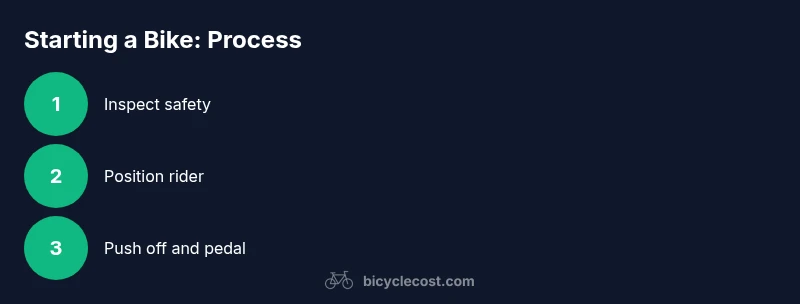
Getting a bike started is a blend of balance, focus, and safe preparation. If you’re wondering how to get bike started, the most reliable approach is a repeatable sequence: perform a quick safety check, position your body for control, and execute a controlled push-off into a smooth pedal stroke. This guide covers common starting methods for road, hybrid, and mountain bikes, plus practical tips to adapt as you gain confidence. According to BicycleCost, starting with a concise safety check and selecting the right method significantly reduces early-stopping mistakes. With consistent practice, you’ll build balance, cadence, and the muscle memory needed to handle gentle inclines and varied surfaces. Use this as your go-to playbook for safe, confident starts on any non-motorized bicycle.
Safety checks before you start
A safe start rests on prevention. Before any attempt to move, inspect your bike visually and touch-test critical components: brakes should respond promptly when squeezed, tires must be inflated to the recommended pressure, and the chain should be free of excessive rust or stiffness. Check the seat and handlebar tightness, ensure the quick-release or bolts are secure, and clear the area of obstacles. Wear a helmet and gloves, and choose a wide, open space free of traffic. BicycleCost recommends a quick brake test and tire-pressure check as a foundational step to reduce common starting mishaps. If you ride an e-bike, confirm the battery is charged and that the power mode is ready to engage. In short: safety first, then start.
Starting methods across bike types
There isn’t a single button to press for every bike. On a traditional derailleur bike, most starts begin with one foot on a pedal at the 2–3 o’clock position, with the other foot on the ground for a push-off. If you’re practicing on a mountain or hybrid bike, a light push-off while keeping the back straight helps you maintain balance as you begin to pedal. For beginners using clipless pedals, practice with the shoes clipped in on a stable surface or in a training area to avoid sudden detachment. For electric bikes, switch on the assist mode and pedal lightly to engage power as you roll. The key is to choose an approach that keeps you in control while you gain momentum.
Cadence, gearing, and balance
A smooth start comes from managing cadence (pedal speed) and gearing. Start in an easy gear so you can push with steady effort without stalling. Keep your upper body relaxed, elbows soft, and eyes up to anticipate any changes in terrain. Practice short, controlled accelerations to train your sense of balance; as you gain momentum, bring your other foot onto the pedal and continue pedaling. Cadence tends to be the most forgiving way to build confidence, especially when you’re learning to balance at low speeds.
Troubleshooting common issues
If your bike doesn’t move after a push-off, recheck your brakes—they may still be engaged or too tight. Confirm you’re in an appropriate gear for starting; a high gear makes it hard to move, while a very low gear may stall if you aren’t comfortable with a push-off. Check the tires for adequate inflation—soft tires sap momentum and can cause slip on slick surfaces. If you feel wobbly, slow down and reset your stance, then try a shorter push-off with more gradual pedaling. Remember that early practice on a flat, non-traffic space builds a foundation for tackling gentle slopes later on.
Practice plan to build balance and momentum
Learning to start takes time, so structure your practice sessions with progressive goals. Begin with 5- to 10-minute sessions on a flat surface, focusing on a consistent push-off, a smooth shift to the pedal, and maintaining balance for 10–15 seconds at a time. Increase the duration as you become more confident, then introduce slight uphill or uneven surfaces once you can ride comfortably on flat ground. A well-paced practice plan reduces fear and speeds up skill acquisition. As you progress, mix in stalls and controlled starts from different sides of a parked bike to simulate real-world scenarios.
Tools & Materials
- Stable, flat surface or bike stand(A flat, level area is safest for your first starts.)
- Helmet and gloves(Personal safety gear for protection.)
- Properly inflated tires(Check tire pressure before starting; use the recommended psi on the sidewall.)
- Basic bike maintenance tools (optional)(A small multitool and a pump can help with quick adjustments after starting practice.)
- Clear open space free of traffic(Safety is improved when there are no cars, pedestrians, or obstacles nearby.)
Steps
Estimated time: 25-40 minutes
- 1
Inspect the bike for safety
Walk around the bike and check brakes, tires, chain, and drivetrain. Ensure nothing is loose and the area is clear of hazards before you begin. If anything seems off, address it or postpone the start until it’s fixed.
Tip: Take 2 minutes for a quick safety check; it pays off in smoother starts. - 2
Position yourself and secure grip
Stand beside the bike, place one foot on a pedal at roughly the 2–3 o’clock position, and position the other foot on the ground to push off. Sit into the saddle once you feel stable, keeping your back straight and shoulders relaxed.
Tip: Keep your hips square and look ahead to where you want to go. - 3
Engage brakes and select gear
Gently squeeze the brakes to ensure they are responsive, then shift to an easy gear if your bike has gears. You want low resistance so you can push off smoothly without stalling.
Tip: Low gear reduces effort and increases control during the start. - 4
Push off and start pedaling
Push off with your grounded foot while lifting the other foot onto a pedal, then begin pedaling smoothly. Maintain a light grip on the handlebars and look forward to steady your balance.
Tip: Start with small, controlled pushes and build momentum gradually. - 5
Find balance and increase cadence
As momentum increases, bring the second foot onto the pedal and begin a steady cadence. Relax your upper body, bend your elbows slightly, and keep your gaze forward to maintain balance.
Tip: Aim for a smooth, continuous pedal stroke rather than short, choppy kicks. - 6
Stop safely and reset
When you’re ready to stop, apply brakes evenly and place both feet on the ground. Step away if necessary and re-check your position or adjust for another try.
Tip: Practice controlled stops so you can restart without losing confidence.
People Also Ask
Should I start on a flat surface or can I practice on a gentle slope?
Starting on a flat surface is safest for beginners because it provides consistent balance and momentum. A gentle slope can be introduced once you’re comfortable and confident, but always test with care and on a familiar grade. The key is controlled progress and safety.
Start on a flat surface to learn control, then gradually introduce gentle slopes as your balance improves.
Can I start with clip-in pedals?
Clip-in pedals can offer quicker power transfer but require extra balance. If you’re new, practice with non-clip pedals or stabilize on a stationary surface before clipping in. Once comfortable, clip in gradually to avoid stalls.
Clip-ins can help once you’re confident; start without clipping in if you’re new.
What gear should I use when starting from a stop?
Use an easy gear (low resistance) so you can push off smoothly and accelerate without stalling. Shift to a higher gear after you’ve gained momentum if you’re comfortable, but keep starts simple at first.
Keep it in an easy gear at first, then shift as you accelerate.
What should I do if the bike won’t move after I push off?
First, check brakes are not engaged and the pedals aren’t stuck. Reassess your gear selection and push-off strength. If problems persist, stop and inspect the bike for mechanical issues before trying again.
If it won’t move, check brakes and gears, then try again slowly after adjustments.
Is starting on an electric bike different from a standard bicycle?
E-bikes often provide pedal-assist; ensure the battery is charged and power mode is selected before starting. Start like a regular bike, but be aware the assist can change your cadence and momentum. Practice in a safe area before riding in traffic.
E-bikes may feel different due to assist; start in a safe space and get familiar with pedal-assist.
Should I practice starts regularly to improve?
Yes. Regular, short practice sessions on flat ground build balance, cadence, and confidence. Gradually introduce mild slopes and uneven surfaces as your comfort grows, always prioritizing safety and calm, controlled movements.
Regular practice on flat ground builds balance and confidence; gradually add challenges.
Watch Video
Quick Summary
- Check safety gear and brakes before starting.
- Practice on flat ground to build balance.
- Use a controlled push-off to build momentum.
- Shift to an easy gear for smooth starts.
- Keep eyes up and look ahead to anticipate terrain.
- Progress practice gradually to handle varied terrain.