How to Ride a Bike Without Knowing Cycle: Step-by-Step for Beginners
Learn to ride a bike from scratch with practical, safe steps. This beginner guide covers safety gear, balance, braking, and basic maneuvers to help you roll confidently.


Learn to ride a bike from scratch even if you’ve never cycled before. This guide walks you through balance, basic controls, safety gear, and a simple practice plan. You’ll be able to start, stop, and ride short distances with confidence after following these steps. By the end, you’ll move from hesitant pushes to smooth riding with steady balance.
How to Approach Learning to Ride a Bike from Scratch
According to BicycleCost, learning to ride a bike from scratch is accessible with the right approach, especially when safety and fundamentals are prioritized. This section helps you set realistic goals, choose a safe practice area, and prepare your gear. You’ll learn to break the process into small moves: balance, steering, pedaling, and braking. By starting with controlled exercises and building confidence in a calm environment, you can progress quickly and reduce fear. The goal is to move from hesitant pushes to stable riding in short sessions, with attention to body position, bike fit, and environmental awareness. The BicycleCost team emphasizes patient, progressive practice as the foundation for lasting skill development. Remember, every rider starts somewhere, and safety is the first step toward independence on the bike.
To get started, dedicate a few sessions to foundational skills rather than rushing into distance. Choose a quiet, flat space such as an empty parking lot or closed park path. Wear a properly fitted helmet and athletic shoes. Keep your expectations realistic: small wins build momentum and prevent frustration.
As you practice, track your progress over days rather than minutes. Small improvements compound, and consistent, focused practice is more effective than long, sporadic sessions. This approach aligns with BicycleCost’s ethos of practical, incremental learning.
Tools & Materials
- Bike suitable for beginners (adjusted to your height)(Seat height so you can touch the ground with the balls of both feet when seated)
- Helmet(ANSI or safety-certified; snug fit with straps secured)
- Closed-toe shoes(Flat soles; laces secured to avoid tangling)
- Gloves (optional)(Adds grip and comfort on handlebars)
- Water bottle(Stay hydrated during practice)
- Phone or buddy for safety (optional)(Have a means to call for help if needed)
Steps
Estimated time: 60-90 minutes
- 1
Inspect and prepare the bike
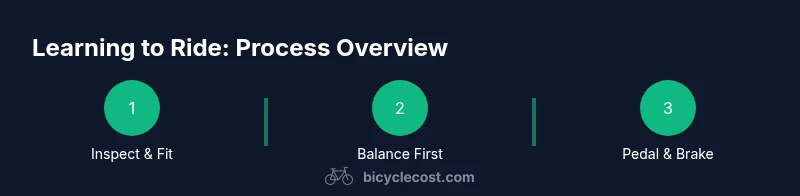
Check tire pressure visually, ensure brakes work, and confirm the seat and handlebars are secure. Adjust the seat height so you can touch the ground with the balls of both feet while seated. This step reduces the risk of tipping and builds a stable base for starting. Tip: looseness in the seat or handlebars can throw off balance, so tighten if anything feels loose.
Tip: Take 2 minutes to perform a quick safety check before every practice session. - 2
Mount safely and find a comfortable stance
Stand beside the bike, place one foot on the pedal at the 2 o’clock position, and lift your body onto the saddle. Keep your back straight, shoulders relaxed, and elbows slightly bent. Place the other foot on the ground to balance as you sit. Tip: your knee should be slightly bent when the pedal is at the top of the stroke to absorb shocks.
Tip: Use a wall or friend for light support if balance feels unfamiliar at first. - 3
Establish balance with a gentle gait
Push off briefly with the foot on the ground and glide with the bicycle’s momentum while keeping eyes forward. Let the bike roll slowly and focus on light steering with the handlebars. Do not worry about pedaling yet—balance is the first skill. Tip: practice on a flat, smooth surface to minimize unexpected bumps.
Tip: If you wobble, reset and recheck your stance before trying again. - 4
Introduce pedaling gradually
When you feel balanced, place your other foot on a pedal and begin to pedal slowly. Keep a light touch on the handlebars and look ahead to where you want to go. Build confidence by pedaling for short stretches, then gliding to recover balance. Tip: start with short, controlled pedaling intervals rather than long pushes.
Tip: Maintain a relaxed grip to reduce tension and improve control. - 5
Coordinate steering and looking ahead
As you pedal, gently steer with small inputs. Your gaze should stay forward, not at the front wheel. Turning gradually helps you maintain balance and plan your path. Tip: practice turning in a wide arc first before attempting sharper corners.
Tip: Practice steering without crossing feet into the pedals. - 6
Brake safely and smoothly
Familiarize yourself with both brakes and how they respond. Apply gradual pressure to slow down, then come to a complete stop. Practice stopping in a straight line at first. Tip: use both brakes evenly to avoid skidding and maintain control.
Tip: Learn to modulate braking pressure rather than slamming the brakes. - 7
Mount, dismount, and re-anchor
After stopping, calmly place a foot on the ground, straighten up, and prepare to remount. Reaching a routine for mounting and dismounting helps you maintain balance and confidence for the next attempt. Tip: keep the bicycle upright during dismount and avoid sudden movements.
Tip: Rehearse mounting and dismounting in short sessions to build muscle memory. - 8
Progression: increase distance and confidence
Gradually extend ride distances in small increments as balance improves. Once comfortable on flat ground, introduce gentle slopes or light turning drills. Always prioritize safety and avoid busy roads until you’re consistently in control. Tip: set small, measurable goals for each practice session.
Tip: Celebrate each small improvement to stay motivated. - 9
Cool down and reflect on progress
End sessions with light cycling or a slow coast, then reflect on what worked and what needs adjustment. Note any recurring balance or braking issues and plan focused practice on those areas. Tip: journaling your practice helps identify patterns and track progress.
Tip: Finish with a short stretch for your legs and hips to prevent stiffness.
People Also Ask
Do I need to know how to cycle before learning to ride a bike?
No. This guide is designed for complete beginners and teaches the basics from ground zero, including balance, braking, and safe practice.
No. This guide starts from zero and covers balance, braking, and safe practice for beginners.
What gear is essential for first rides?
A properly fitted helmet, closed-toe shoes, and comfortable clothing are the essentials. A reflexive focus on safety gear helps prevent injuries during early attempts.
Helmet and suitable footwear are the essentials for your first rides.
How long does it typically take to learn to ride?
Learning varies by individual, but consistent practice over a few sessions typically leads to noticeable improvement in balance and control.
It varies, but with regular practice you’ll see steady gains in balance and control.
Can I learn on any bike?
A small-to-mid-sized bike that fits you well and lets you touch the ground with your toes is ideal for beginners. Proper fit reduces fatigue and improves balance.
Choose a bike that fits you well so you can touch the ground and balance easily.
What if I can’t balance at all?
Start with balance-focused exercises, perhaps using a wall or a balance board. A balance bike or practice with support can help rebuild confidence.
If balance is tough, practice with support or use a balance bike to rebuild confidence.
Is it safe to ride in traffic after learning basics?
Only after you can balance, steer smoothly, and brake reliably. Start in low-traffic areas and follow local rules before venturing into traffic.
Only after you’re confident with balance, steering, and braking should you ride in traffic.
Watch Video
Quick Summary
- Start with safety gear and bike fit before riding.
- Balance is the foundational skill; master it before pedaling.
- Progress gradually with short practice sessions and clear goals.
- Learn smooth braking and steering early to build confidence.