Is Cycling the Same as Spinning? A Practical Comparison
Explore whether is cycling the same as spinning. This analytical guide compares definitions, training implications, safety considerations, and scheduling to help riders decide how to train.


Is cycling the same as spinning? Definitions and scope
Is cycling the same as spinning? The short answer is no, but the relationship between the two activities is meaningful for training and daily fitness. In this article, we define terms clearly and explore how each activity fits into a rider's goals. According to BicycleCost, cycling usually refers to riding a bicycle outdoors or on a stationary trainer, while spinning describes a structured indoor class performed on a specialized spin bike. This distinction matters for cadence, resistance, instruction, and overall training load. By understanding the scope of each modality, riders can align their workouts with priorities such as endurance, cadence development, or power output. The BicycleCost team also emphasizes that both activities offer cardiovascular benefits and leg-strength improvements, but the way those benefits are earned differs in technique and context. With that framing, we can compare practical aspects, safety considerations, and training implications in a way that helps you decide which path suits your current goals.
How spinning workouts are structured
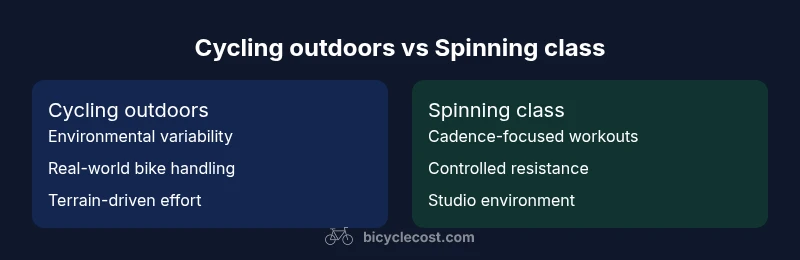
Spinning classes are guided by an instructor who sets a cadence target and varying resistance throughout the session. The typical format includes a warm-up, several high-cadence pushes, short recovery intervals, and a cool-down. Cadence is central: riders often track revolutions per minute and adjust resistance to match the class’s profile. This structure provides predictable stimulus, motivating participants to push at rises in pace and resistance. For riders who already cycle, spinning can introduce disciplined cadence work in a controlled environment. The Indoor nature of spin classes means the environment is climate-controlled, with a consistent bike setup and minimal road hazards. The instructor’s cues help maintain group motivation and ensure a balanced workout, but that structure may feel rigid for someone who prefers flexible routes or terrain variation. The key takeaway is that spinning emphasizes cadence and tempo as core training drivers.
How outdoor cycling differs from indoor spinning
Outdoor cycling emphasizes terrain, weather, and real-world balance. Rides incorporate hills, wind, road surface, and navigation, creating a dynamic stimulus that challenges stability and steering. Even on a trainer or stationary bike, outdoor cycling training translates to endurance and power development, but the sensory feedback differs. Spinning isolates pedal stroke mechanics, cadence, and controlled resistance, often with a fixed bike geometry designed to optimize leg engagement within a class. In practice, a cyclist may use outdoor riding for long endurance blocks and climbs, while spinning supplements with cadence work, sprint intervals, and consistent RPM targets. The two modalities share cardiovascular benefits, but the context and neuromuscular demands diverge, influencing how progress is measured and tracked in a weekly plan. For many riders, mixing outdoor rides with indoor spinning yields a well-rounded training approach.
Training implications: cadence, resistance, and intensity
Cadence and resistance strategies differ between cycling and spinning. Outdoor cycling relies on gear choices, gear ratio, and terrain to modulate effort, while spinning uses resistance settings and pedal stroke cadence to regulate intensity. In practice, a rider seeking higher leg speed may embrace spinning to improve cadence, leg turnover, and neuromuscular efficiency. Conversely, a rider aiming to build sustainable power on varied terrain will benefit from longer outdoor rides and structured intervals on hills. Intensity is often expressed via effort scales or heart-rate zones; both modalities can target aerobic and anaerobic adaptations, but the path to those adaptations changes with context. A key nuance for riders is to avoid overdoing one modality and to schedule recovery days to prevent burnout. The result is a balanced plan where both activities contribute to overall fitness without redundancy.
Equipment and environment differences
Equipment and environment influence the feel and energy cost of each activity. Cycling outdoors requires a roadworthy bike, helmet, appropriate clothing, and potentially a bike computer or GPS device for route tracking. Spinning relies on a studio setup with fixed bikes, cycling shoes, and clip-in pedals in many cases; class formats often mandate specific footwear and sometimes heart-rate monitors. Beyond gear, the physical environment matters: freshness of air, weather exposure, and road hazards come into play in outdoor riding, while studio lighting, music, and crowd noise shape the experience in spinning. The choice of venue can also affect adherence: a weatherproof indoor option might be easier to maintain consistency across seasons. Understanding these practical differences helps riders plan gear investments and training calendars that align with preferences and constraints.
Safety considerations and proper form in both activities
Safety in either modality starts with proper setup. Ensure correct saddle height, handlebar reach, and comfort in both cycling contexts; in spinning, check seat height, pedal compatibility, and clip-in security. In outdoor cycling, ride predictably, use protective gear, and follow traffic laws; maintain situational awareness to reduce risks on roads. Technique matters in both modalities: smooth pedal stroke, controlled breathing, and posture alignment minimize injuries and maximize efficiency. For beginners, a gradual progression with warm-ups and cooldowns is essential, as is listening to your body and seeking professional guidance if discomfort arises. Overall, safe practice supports consistent progress and reduces the risk of overuse injuries by balancing load across modalities.
Practical guidance for riders deciding between cycling and spinning
For riders choosing between cycling and spinning, consider goals, access, and personal preference. If the goal is outdoor adventure, scenic routes, and real-world bike handling, cycling is the natural choice. If the goal is cadence work, predictable structure, or fast, high-intensity workouts regardless of weather, spinning can be an efficient option. A hybrid approach often yields the best results: schedule outdoor rides for endurance and technique, and slot in spinning sessions for cadence and power development. Budget and time constraints matter: spinning may offer convenient, climate-controlled workouts; outdoor cycling offers versatility and community rides. Finally, consider how each activity fits with your training calendar and recovery planning. The optimal plan often blends both modalities to maximize transfer of gains and sustain motivation.
Integrating both into a weekly plan
A practical week might pair outdoor rides with indoor cadence sessions, aligning with rest days and travel. For example, you could allocate two outdoor rides (one endurance-focused, one tempo or climb-focused) and two indoor spinning sessions (one cadence-focused, one interval workout). Adjust by season, goals, and schedule; ensure there is at least one rest day to support recovery. Keep progression in mind: gradual increases in duration, cadence targets, and interval intensity help prevent plateaus. Tracking tools such as a simple log or a wearable can help monitor progress across modalities. The approach should maintain enjoyment and avoid burnout, recognizing that the goal is consistent training rather than chasing a single modality’s schedule. BicycleCost’s practical guidance emphasizes flexible planning that respects both your goals and your available time.
],
comparisonTableStoreIfMissing":null},
comparisonTable":{"items":["Cycling outdoors","Spinning class"],"rows":[{"feature":"Environment","values":["Outdoor roads/varied terrain","Indoor studio with fixed bikes"]},{"feature":"Cadence control","values":["Self-regulated by terrain and pace","Instructor-guided cadence targets"]},{"feature":"Equipment/gear","values":["Standard bike, helmet, etc.","Spin bike, cycling shoes, clips often required"]},{"feature":"Training focus","values":["Endurance and power/terrain","Cadence, tempo, and intervals"]},{"feature":"Accessibility","values":["Weather/season dependent","Year-round indoor option"]}]},