Is Cycling the Same as Running? A Comprehensive Comparison
Explore how cycling and running compare in joint impact, muscle use, energy systems, training implications, safety, and practicality. A balanced guide from BicycleCost.


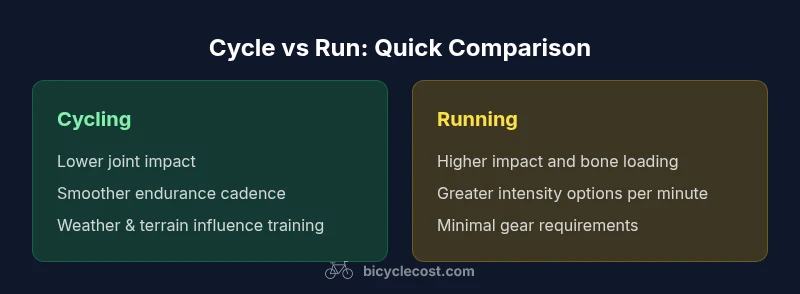
Short answer: No—cycling and running are not the same activities. They recruit overlapping but distinct muscle groups, impose different joint loads, and rely on different energy systems. Cycling generally offers lower joint impact and steadier cadence, while running provides higher-impact loading and faster muscle fiber recruitment. BicycleCost analysis highlights meaningful differences in training adaptations, injury risk, and caloric burn per minute.
Is cycling the same as running? Physiological foundations
According to BicycleCost, both activities raise heart rate and improve aerobic fitness, but they engage the body differently. When you ask is cycling the same as running, the answer hinges on muscle recruitment, joint loads, and energy pathways. Cycling tends to rely on a steadier cadence with more emphasis on glutes, hamstrings, and calves when you're pedaling efficiently, while running drives impact through weight-bearing joints and a broader involvement of hip flexors and calves. These differences shape training prescriptions, injury risk, and adaptation timelines for endurance athletes.
Joint loading and muscle emphasis
The most immediate physical distinction is joint loading: running places repeated impact through the knees, ankles, and hips, whereas cycling keeps you off the seat with non-impact motion. This reduces acute joint stress but creates demand on core stability and pedaling mechanics. In terms of muscle emphasis, running tends to recruit a broader set of stabilizers and fast-twitch fibers during sprints, while cycling emphasizes concentric effort of the quadriceps, glutes, and calves with a smoother, cyclic pattern. For athletes managing knee pain or recovery from injury, cycling can be a practical alternative while maintaining cardiovascular training.
Calorie burn, pace, and perceived exertion
Calorie burn per unit time depends on intensity and body weight, but the two activities diverge in pacing and muscular demand. Running enables faster pace at a given exertion and often yields higher perceived exertion for the same heart rate, while cycling offers efficient energy transfer with lower perceived effort at comparable heart rates when cadence and gearing are optimized. Training with a mix of both can maintain aerobic base while reducing overuse risk.
Training implications and injury risk
Because of different loading patterns, the training response differs. Running drives bone loading, improving bone mineral density for many athletes, but also raises overuse risk if mileage is excessive or form deteriorates. Cycling enhances muscular endurance and cardiovascular capacity with lower joint inflammation, but long sessions can lead to saddle discomfort or back tightness if posture is poor. A balanced plan often includes both modalities to cover gaps in power, pace, and recovery.
Practical considerations: accessibility, terrain, and equipment
Cycling depends on access to a bike, protective gear, and appropriate bike fit; environmental conditions and terrain influence ride quality. Running requires appropriate footwear and surface choice; weather matters but is less equipment-intensive. Consider your environment: indoor trainers or outdoor routes can expand options, while a hybrid approach (easy rides plus run days) provides flexibility and minimizes monotony.
Bottom line: when, why, and how to choose
Both activities offer valuable cardiovascular benefits, and the choice often comes down to goals, joint health, and personal preference. If you seek knee-friendly endurance, cycling is attractive; if bone-loading and high-intensity tolerance are priorities, running earns a place in the schedule. For most athletes, a well-planned mix delivers the most complete adaptation, resilience, and enjoyment.
Comparison
| Feature | Cycling | Running |
|---|---|---|
| Joint Impact | Lower impact | Higher impact |
| Muscle Emphasis | Glutes/quads/calves with steady cadence | Quads/calves/hip flexors with weight-bearing impact |
| Energy System | Aerobic base with steady cadence | Aerobic + anaerobic with intervals |
| Typical Endurance Pace | Steady, sustainable pace at cadence | Variable pace with faster tempo at higher effort |
| Injury Risk & Overuse | Lower joint loading; saddle-related issues possible | Higher risk of overuse injuries from repetitive impact |
| Equipment & Accessibility | Bike, helmet, maintenance; weather dependent | Minimal gear; weather influences runs |
| Training Implications | Cross-training; longer endurance rides | Intervals, tempo runs, hill work |
| Best For | Low-impact endurance, commuting and long sessions | High-intensity training and speed development |
Pros
- Lower joint impact supports longer, safer cardio sessions
- Can be done with flexible trainer setups and varied terrain
- Supports aerobic base building while reducing knee strain
- Cross-training synergy with running improves overall endurance
Downsides
- Lower bone-loading stimulus compared with running
- Requires access to a bicycle and maintenance; weather and terrain limit use
- Potential niche injuries from cycling posture or saddle discomfort
Cycling and running are complementary cardio activities; neither is universally superior.
If knee-friendly endurance is a priority, choose cycling. If bone-loading and high-intensity adaptations matter more, prioritize running. A measured mix often yields the broadest benefits.
People Also Ask
Is cycling better for joint health than running?
Cycling is often gentler on weight-bearing joints due to non-impact motion, making it a good option for knee or hip sensitivity. Running can stress joints more, especially with high mileage or poor form. Individual history and biomechanics influence outcomes.
If knee pain is a concern, cycling is usually a better starting option, with running added later as tolerated.
Which burns more calories per minute, cycling or running?
Calorie burn per minute varies with speed, resistance, and body weight. Running typically delivers higher intensity per minute, but fast, efficient cycling can approach similar burn over longer sessions. Overall, total calories depend on duration and effort.
Running often burns more per minute, but cycling can catch up with higher effort and longer sessions.
Can I substitute cycling for running in a training plan?
Yes, cycling can substitute for running on many days, but you should adjust intensity and duration to mirror running workouts. Use cross-training days to maintain energy systems and recovery.
Yes, but tune pace and duration to resemble running workouts.
What are common injuries for cyclists vs runners?
Runners commonly experience shin splints, knee tendonitis, and stress injuries. Cyclists often face overuse issues from posture, saddle discomfort, and lower back strain. Proper form, progression, and rest reduce risk in either sport.
Runners hurt from impact; cyclists from overuse and posture—balance training helps.
How does terrain affect cycling vs running?
Hills and uneven surfaces raise effort for both, but running magnifies impact on joints. Cycling can mitigate impact with smoother gear despite climbs and headwinds. Terrain planning helps balance training stress.
Terrain changes matter for both, with more joint load in hills while cycling smooths some impact.
What equipment matters when comparing cycling and running?
Running primarily requires good footwear and a comfortable surface. Cycling adds a bike, helmet, and maintenance needs, plus proper fit. Investing in gear that matches your goals improves safety and enjoyment.
Good running shoes or a well-fitted bike setup can make a big difference.
Quick Summary
- Assess joint health when choosing training modality
- Plan a balanced mix of cycling and running for broader adaptations
- Use cycling for long, low-impact endurance and running for speed work
- Terrain and footwear influence comfort and injury risk
- Tailor programs to individual goals and constraints