How to Use a Bicycle Machine at the Gym: A Practical Guide
Learn to safely operate a gym stationary bike, set up seating and resistance, monitor cadence, and finish with a proper cool-down for effective indoor cycling.


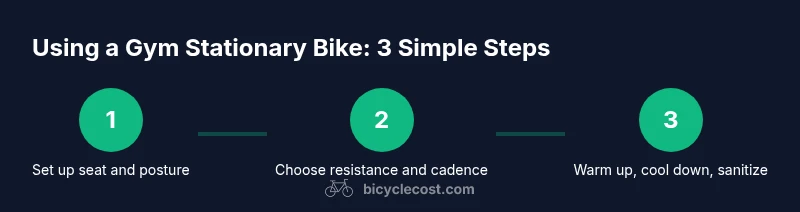
You’ll learn how to safely operate a gym stationary bike, including proper setup, posture, resistance, cadence, and a complete warm-up and cool-down. This guide covers choosing programs or manual mode, maintaining safe form, and avoiding common mistakes for an efficient indoor cycling workout.
Why gym bikes vary and what to expect
Gym stationary bikes come in several configurations, including upright, recumbent, and spin-style models. Consoles range from simple two-button interfaces to full-color touchscreens with built-in workouts. Before you ride, take note of the bike type, adjustability, and available programs. Understanding these differences helps you set a safe, comfortable baseline and prevents knee or back strain during longer sessions. In addition, most gym bikes require you to strap your shoes or wear appropriate athletic footwear; check local gym rules about bike usage and towel or mat requirements. By recognizing the variety, you’ll be better prepared to tailor your approach to each ride and maximize your workout quality, regardless of the model.
Before you start: essential setup
Begin with a quick check of the bike and your gear. Stand beside the saddle and adjust the seat height so that your knee is nearly straight with a slight bend at the bottom of the pedal stroke when the foot is at the 6 o’clock position. The same principle applies to the fore-and-aft position: your knee should align above the pedal axle when the foot is at the 3 o’clock position. Set the handlebars to a comfortable reach that keeps your back straight and shoulders relaxed. If your gym uses clip-in shoes, ensure the pedals are compatible and your straps are snug but not tunnel-tight. Have a water bottle within easy reach and a small towel on hand to wipe sweat. These steps reduce the risk of knee pain and improve pedal efficiency during the workout.
Correct posture and alignment
Keep your back neutral and your core engaged to stabilize the spine during the ride. Your elbows should be slightly bent, and your wrists in a natural, relaxed position. Relax your shoulders and avoid hunching forward. Your gaze should be forward, not down at the console, with your neck aligned with your spine. A stable torso promotes efficient force transfer through the pedals and reduces fatigue in the neck and upper back. If you notice pain in your lower back, revisit seat height and reach to ensure your pelvis isn’t tilting and your hips aren’t rocking during the stroke.
Resistance, gear, and cadence: reading the console
Resistance on a gym bike is the primary way to increase effort without moving faster. Start with a light resistance that allows you to maintain a smooth pedal stroke for 2–3 minutes during warm-up. A common target cadence for steady rides sits in the 60–90 revolutions per minute (rpm) range, depending on fitness level and bike type. The console often displays rpm, distance, time, and calories. Use these metrics to gauge effort: if you can’t hold a steady cadence for more than 30 seconds, reduce resistance; if you can sustain a smooth pedal stroke for several minutes, you can gradually increase resistance in small increments. Always listen to your body and avoid forcing a high cadence with excessive resistance, which can strain joints.
Programs vs manual mode: which to choose
Many gym bikes offer presets or programs (e.g., hill climb, interval, or fat-burning programs). Programs provide structured intervals, target zones, and progressive loading, which can be great for beginners and those training for specific goals. Manual mode gives you full control over resistance, pace, and duration, enabling a tailored workout. If you’re new, start with a basic warm-up in manual mode or a low-impact program to learn the bike’s feel. As you gain confidence, mix in intervals or a guided program to diversify training and track progress.
Warm-up, cadence, and efficient pedaling
Begin each session with a 5-minute warm-up at light resistance and a comfortable cadence. Focus on a smooth pedal stroke—push down and pull up evenly if the bike allows, and avoid bouncing in the saddle. After warm-up, gradually increase resistance while maintaining a steady cadence. During workouts, practice consistent breathing: exhale through effort and inhale on easier segments. A good cadence helps protect knees and hips while maximizing cardiovascular benefits. Finish with a cool-down that gradually lowers resistance and pace, followed by light stretches to maintain flexibility and reduce soreness.
Cool-down, stretches, and gym etiquette
A proper cool-down helps prevent dizziness and muscle stiffness. Gradually reduce resistance and drop the cadence to a comfortable level, then pedal at a slow rate for 2–3 minutes before stopping. After dismounting, stretch major muscle groups used during cycling—calves, quadriceps, hamstrings, hip flexors, and lower back. Wipe down the console and seat area with a gym-provided disinfectant to maintain hygiene for others, and re-stack any towels or personal items so aisles remain clear. If you feel lightheaded or dizzy at any point, stop, sit down, and hydrate before attempting to resume.
Safety and etiquette in a crowded gym
In a busy gym, be mindful of others around you. Keep your area clean and dry, avoid blocking access to machines, and wipe sweat promptly. Use headphones if allowed to minimize noise fatigue for nearby gym-goers. If you need to adjust the bike mid-workout, do so calmly and communicate your intention to nearby users. Finally, know your limits and seek staff assistance if you have any medical concerns or injuries that could affect cycling performance.
Troubleshooting common issues
If you experience knee or hip discomfort, reassess seat height and fore-aft position, reduce resistance, and check your pedal stroke for smoothness. If the console is hard to read or the display lags, try resetting the bike or asking gym staff for help. A squeak or loose pedal is usually addressed by tightening the pedal or consulting maintenance staff. If you feel faint or nauseous, stop and rest; hydration and gradual re-entry into activity are essential.
Tools & Materials
- Water bottle(Keep hydrated; place within easy reach on the bike or nearby)
- Towel(Small towel to wipe sweat; avoid drips on console)
- Proper athletic shoes(Non-slip sole; secure laces; avoid bulky footwear)
- Heart rate monitor (optional)(Chest strap or wrist HR monitor for effort tracking)
- Personal mat or floor clearance(Ensure space around bike is clear to avoid trips)
Steps
Estimated time: 20-30 minutes
- 1
Inspect and prepare the bike
Next to the bike, perform a quick check: ensure pedals rotate smoothly, the seat and handlebars move without excessive play, and the console is readable. If something seems loose, notify gym staff before riding. This upfront check reduces the risk of equipment failure mid-workout.
Tip: If you notice creaks, stop and report it; continued use could worsen damage. - 2
Set seat height and fore-aft position
Stand beside the bike and adjust the seat so your knee has a slight bend at the bottom of the pedal stroke. Align your knee with the pedal axle when the pedal is at 3 o’clock. Fine-tune the fore-aft position so your hips stay level as you pedal.
Tip: A too-high seat can cause knee strain; a seat that's too far forward may tilt your pelvis. - 3
Position hands and posture
Grip the handlebars with relaxed shoulders. Keep your back straight, chest open, and core engaged to stabilize your spine. Avoid locking the elbows; keep a gentle bend to reduce tension in the wrists and forearms.
Tip: Relax the neck and look forward rather than down at the display. - 4
Choose mode and set initial resistance
If you’re new, start on manual mode with light resistance to learn the feel of the bike. For a structured workout, pick a pre-programmed ride that matches your goals. Record your starting metrics (time, distance) to track progress.
Tip: Don’t jump into high resistance; build load gradually across several minutes. - 5
Establish cadence and form
Aim for a steady cadence in the 60–90 rpm range depending on training level and bike type. Maintain a smooth pedal stroke, avoid bouncing in the seat, and breathe evenly. Periodically check your posture in a mirror or by feel to ensure consistency.
Tip: If your cadence drops, either ease resistance or take a brief rest to reset. - 6
Warm up and begin the main portion
Spend 5 minutes warming up with light resistance, then progress to your planned effort. Alternate steady-state segments with brief higher-intensity intervals if your program allows. Keep movements controlled and focused on the lower body rather than pulling with your arms.
Tip: Hydrate steadily; don’t wait until the end of the workout to drink. - 7
Cool down and stretch
Decrease resistance gradually and ride at a comfortable pace for 2–3 minutes. After stopping, perform static stretches for calves, quads, hamstrings, hips, and lower back to improve flexibility and alleviate stiffness.
Tip: Hold stretches for 15–30 seconds and breathe deeply to maximize relaxation. - 8
Clean up and exit politely
Wipe down the handlebars and seat with gym-provided wipes, return towels to the bin, and move away from the bike to avoid crowding. If you encountered a malfunction, report it to staff to help keep the equipment safe for others.
Tip: Leave the area as you found it; good gym etiquette supports everyone’s workouts.
People Also Ask
What is the correct seat height on a gym stationary bike?
Aim for a slight bend in the knee at the bottom of the pedal stroke with the ball of the foot on the pedal. If your hips rock or your knee collapses inward, recheck seat height and fore-aft position.
Set the seat so there’s a small knee bend at the bottom of the stroke, and keep your hips level while you pedal.
Program vs manual mode—which should I choose?
Programs provide guided structure and intervals, which are helpful for beginners or if you’re following a plan. Manual mode gives you full control over resistance and pace for a customized workout.
Choose a program for structure, or manual mode for total control over resistance and tempo.
Is wearing cycling shoes necessary?
Not always. Athletic sneakers work on most gym bikes. If your bike supports cleats and you have compatible shoes, cycling-specific footwear can improve efficiency.
Regular athletic shoes are fine for most gym bikes, but cycling shoes with compatible pedals can improve efficiency if available.
How can I prevent knee pain while using the bike?
Ensure proper seat height and fore-aft alignment, use moderate resistance, and avoid excessive pedaling with locked joints. If pain persists, scale back intensity and consult staff or a clinician.
Check your seat height, keep a moderate resistance, and avoid locking your knees during each pedal stroke.
What should I do if I feel dizzy or faint during a ride?
Stop riding, sit or stand with support, and hydrate. If symptoms persist, seek staff assistance and rest before attempting another session.
If you feel dizzy, stop, rest, and hydrate; tell gym staff if symptoms don’t improve.
Watch Video
Quick Summary
- Adjust bike setup for comfort and safety
- Maintain proper posture and cadence
- Use programs or manual mode to suit your goals
- Warm up and cool down to prevent injury