How to Bike for Exercise: A Practical Safety Guide
Learn how to bike for exercise with a structured plan, proper gear, and safe techniques. This BicycleCost guide covers gear, training, safety, and progress tracking for sustainable fitness gains.


You can achieve meaningful fitness by learning how to bike for exercise: choose a comfortable bike, fit it correctly, start with easy rides, and progress gradually. The key requirements are a helmet, water, and a realistic plan. Consistency and safe technique drive results.
Benefits of cycling for exercise
Cycling is a versatile, low-impact activity that can improve cardiovascular health, muscular endurance, and mental well-being. If you’re wondering how to bike for exercise, start by understanding what makes cycling effective: it’s scalable for all fitness levels, it protects joints compared with high-impact activities, and it can be integrated into daily routines as commute, leisure, or structured workouts. According to BicycleCost, consistent cycling helps lower resting heart rate, boosts mitochondrial efficiency, and supports long-term weight management without requiring expensive gym memberships. The BicycleCost team found that even moderate rides several times per week deliver cumulative health benefits, and those benefits compound when the effort advances gradually. When you commit to a plan, you build a sustainable habit that aligns with most people’s busy schedules. For beginners, the goal is to cultivate a comfortable routine that emphasizes consistent effort over maximal performance. How to bike for exercise starts with modest rides, steady cadence, and a focus on form rather than intensity. As you grow more confident, introduce simple progressions—longer rides, varied terrain, and controlled intervals—to maximize adaptation while reducing injury risk.
Beyond raw fitness, cycling supports mental health by releasing endorphins and reducing perceived exertion during daily tasks. Regular riders often report better mood, sharper focus, and increased energy for work, school, and family. To set yourself up for success, pair physical activity with sleep hygiene and balanced nutrition, which enhances recovery and performance. In this guide you’ll find step-by-step methods to translate these benefits into a practical schedule, with emphasis on safety and gradual progression. The BicycleCost approach emphasizes accessible strategies that work in real life, not extreme training plans. If you’re new to exercise or returning after a break, focus on consistency, enjoyability, and clear milestones that keep you motivated. As you’ll see, small, regular rides accumulate into significant health gains over weeks and months, turning how to bike for exercise into a durable habit.
notePlantingContextFormatForSEOContent_trueOnlyIfNeeded":"This block uses the keyword naturally and aligns with the target audience seeking practical maintenance and safety guidance."
templateContextForMentionsPlaceholder":null},{
Gear, bike fit, and the basics of riding safely
Choosing the right gear is the first step in learning how to bike for exercise. A well-fitting bike and a properly fitted helmet dramatically reduce discomfort and injury risk, enabling longer, more productive workouts. For beginners, the priority is comfort, safety, and reliability. Start with a reliable cruiser, hybrid, or entry-level road bike in good mechanical order, ensuring the frame size matches your height and leg length. A properly fitted bike keeps your knees aligned with the pedals, shoulders relaxed, and wrists neutral, which minimizes fatigue during longer sessions. The Helmet should be certified, snug, and level, not tilted, and you should be able to place two fingers between the strap and your chin. Hydration is essential; carry a water bottle and rehydrate during ride breaks. The BicycleCost team emphasizes a lightweight, breathable kit and shoes that secure your feet without cramping motion. For most beginners, basic cycling shorts or padded liners improve comfort on longer rides, though these are optional for very short sessions.
Before you ride, perform a quick safety check: tires—are they inflated to a comfortable pressure? Brakes—do they function smoothly? Chains—are they clean and lubricated? If any component feels off, address it before continuing. Learning how to bike for exercise with confidence begins with a simple, repeatable pre-ride routine. Practice mounting, dismounting, and stopping in a quiet area, then transition to a short loop that gradually introduces gentle hills or varied surfaces. A well-fitted bike reduces knee, hip, and lower back strain, which means more consistent training without disruption. As you accumulate minutes on the saddle, you’ll notice improved posture and more efficient pedal strokes, which are essential for sustainable progress. For those riding outdoors, consider weather-appropriate layers and bright visibility gear. If you’re uncertain about fit or safety, schedule a quick bike-fit session or consult a trusted shop; small adjustments here yield big gains in comfort and performance. The goal is to make each ride enjoyable while you learn the biomechanics of a smooth pedal stroke and balanced weight distribution. To ensure safety, always wear a certified helmet and obey traffic laws, and begin with short, comfortable rides that you can complete without excessive fatigue, gradually increasing duration and intensity as your body adapts.
notePlantingContextFormatForSEOContent_trueOnlyIfNeeded":"This block expands on gear and bike fit, reinforcing safety without introducing disallowed specifics."
templateContextForMentionsPlaceholder":null},{
Designing a beginner-friendly training plan for gradual adaptations
A well-constructed plan for how to bike for exercise blends consistency with progressive overload, so you don’t plateau or lose motivation. Start with 2–3 rides per week, emphasizing easy endurance and technique rather than peak power. The aim is to establish a routine that fits your life and leaves room for recovery. Each session should include a warm-up, steady work, and a cool-down to support gradual adaptations and reduce soreness. Your first month should focus on time rather than distance, allowing your body to adapt to the new movement pattern and impact. As you progress, introduce light intervals or cadence-focused segments to improve efficiency without overloading joints. The BicycleCost approach stresses sustainable habits: pick realistic targets, schedule rides on the calendar, and track progress with a simple log. For example, you might plan 20–30 minutes of riding at a conversational pace for the first two weeks, then gradually extend to 40–60 minutes by weeks four and five. If you feel fatigued or sore after sessions, dial back the duration or intensity, and incorporate passive recovery days such as light stretching or an easy walk. A core principle for how to bike for exercise is to use perceptual effort as a guide, especially if you don’t have a heart-rate monitor yet. Treat your body as a feedback system: if something hurts beyond normal training fatigue, stop and reassess technique or load. The progression should feel manageable, not overwhelming, and you should see small, tangible improvements in time, distance, or perceived effort week by week. To maximize adherence, pair workouts with a meaningful goal—such as completing a local charity ride or simply enjoying longer weekend routes with family. Your weekly structure might resemble: two easy rides, one moderate ride, and one long ride that gradually increases every fortnight. This tempo sequence supports consistent gains while minimizing risk of overuse injuries. How to bike for exercise becomes a habit when your routine is clear, your body feels good, and your motivation remains high.
tip":"Set specific, weekly goals and log each ride to visualize progress."
notePlantingContextFormatForSEOContent_trueOnlyIfNeeded":null}],
stepByStep
stepsAttackPlaceholder
Tools & Materials
- Bicycle (road, hybrid, or mountain)(Ensure proper size and safe operating condition; have brakes, tires, and gears checked before first ride.)
- Helmet(Certified safety standard; strap snug under chin with two fingers of clearance.)
- Water bottle(Hydration during rides; carry enough for ride length.)
- Cycling shorts or padded liner(Optional for comfort on longer rides; helps reduce chafing.)
- Bike lock(Useful for urban rides; secure bike when leaving it unattended.)
- Heart rate monitor or fitness tracker(Helpful for staying in desired effort zones and tracking progress.)
Steps
Estimated time: Total time: 60-90 minutes (initial setup and first week); ongoing sessions vary by plan.
- 1
Assess goals and current fitness
Identify your primary objective (weight loss, endurance, or general health) and your available days for riding. This baseline will shape your first month and prevent overtraining. Start with a conservative time budget so you can complete rides without excessive fatigue.
Tip: Document your baseline ride time and perceived effort to measure progress later. - 2
Select a bike and confirm fit
Choose a bike type aligned with your goals and body measurements; test ride if possible. A correct fit reduces knee and back strain and makes pedaling comfortable across longer sessions.
Tip: Ask a shop to help you set saddle height so your knee is slightly bent at the bottom of the pedal stroke. - 3
Warm up before every ride
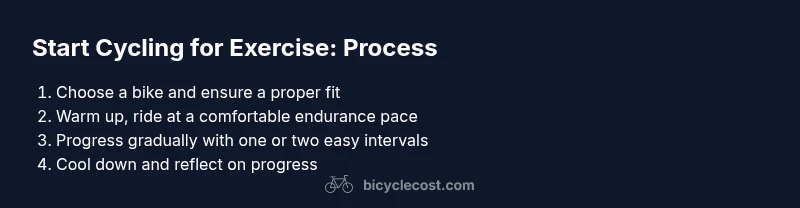
Spend 5–10 minutes on easy pedaling, followed by mobility movements for hips, ankles, and shoulders. A proper warm-up primes muscles and joints, reducing injury risk and improving performance.
Tip: Keep the warm-up simple; no heavy resistance—just loosen up. - 4
Set target effort using perceived exertion
In the early weeks, ride at a pace where you can hold a conversation. This steady effort trains the cardio system without overloading joints and muscles.
Tip: If talking becomes too difficult, ease off; if you’re speaking in full sentences, you’re likely at a good endurance pace. - 5
Plan easy, progressive rides
Structure two easy rides, one moderate ride, and one longer ride per week to build endurance and consistency. As weeks progress, gradually increase duration or distance.
Tip: Incremental increases minimize injury risk and support sustainable improvements. - 6
Cool down and stretch after rides
Finish with a 5–10 minute slow spin and gentle stretching for hips, hamstrings, and calves. Cooling aids recovery and reduces stiffness the next day.
Tip: Hold stretches gently without bouncing; breathe slowly to promote relaxation. - 7
Track progress and adjust as needed
Review weekly logs to identify patterns, plateau points, and recovery needs. Adjust ride length, frequency, and intensity to match progress and life constraints.
Tip: Use a simple log or app to flag days when you felt unusually fatigued.
People Also Ask
How long should my first cycling session be?
Begin with 15-20 minutes at a comfortable pace, focusing on form and safety. Gradually extend as confidence and fitness improve.
Start with a short, easy ride of 15 to 20 minutes and build up gradually.
Is indoor cycling enough for exercise goals?
Indoor cycling can be effective if you incorporate intervals and maintain steady effort. Outdoor rides add variation and terrain challenges that support broader fitness gains.
Indoor cycling can work, especially with intervals; outdoor rides offer extra benefits too.
What cadence or pace should a beginner aim for?
Focus on a smooth, steady pedal stroke and comfortable effort. Avoid grinding gears or forcing speed early on.
Keep a steady, smooth pedal rhythm and don’t push too hard too soon.
How often should I cycle each week?
Aim for 2-4 rides per week based on your schedule and recovery. Increase gradually as your body adapts.
Two to four rides per week is a solid starting point; listen to your body as you progress.
Do I need specialized gear to start?
A basic bicycle, a certified helmet, and water are enough to begin. Add gear as you progress and refine your goals.
A good bike, helmet, and water are the essentials to start cycling safely.
Watch Video
Quick Summary
- Commit to a sustainable schedule
- Get a proper bike fit before heavy training
- Start with easy rides and gradual progressions
- Use a basic log to track progress
- Prioritize safety and recovery to sustain long-term gains