How to Bike Without Hands: A Safe Hands-Free Riding Guide
Learn a safe, progressive approach to hands-free riding with gear, space, and step-by-step practice. BicycleCost provides practical guidance for balance, braking, and safety.


You will learn how to bike without hands safely by progressing from basic balance to hands-free riding. According to BicycleCost, this guide covers essential safety gear, a safe practice space, and a gradual, step-by-step plan to build control, posture, and braking awareness. Follow only in calm, traffic-free areas. It emphasizes gradual practice and listening to your body's signals.
Why Hands-Free Riding Appeals and Risks
Hands-free riding can be appealing for fun, balance development, and a deeper understanding of your bike’s dynamics. It also tests core strength, posture, and timing in a way that active riding does not. However, it comes with clear risks: loss of steering, sudden speed changes, and potential injuries if you encounter obstacles, gusts of wind, or uneven surfaces. This section outlines why you might pursue hands-free riding and how to frame practice safely. BicycleCost emphasizes safety as the foundation of any hands-free progression.
- Benefits include improved balance awareness, a better sense of center of gravity, and greater control when you reintroduce hands.
- Risks include falls, reduced braking reaction time, and legal restrictions in busy areas.
Approach this goal with realistic expectations, a solid bike setup, and a patient, gradual plan. The BicycleCost team recommends starting in controlled spaces and listening to your body signals at every stage, adjusting as needed to stay safe.
Safety Gear and Legal Considerations
Safety gear is non-negotiable when attempting hands-free riding. A certified helmet that fits correctly, gloves with good grip, and knee and elbow pads reduce injury risk during inevitable slips. Closed-toe shoes with flat soles help maintain stable foot placement when shifting weight. Ensure your bike is in sound condition: brakes, tires, and gears should be checked before any practice session. On the legal side, hands-free riding may be restricted in traffic or on public roads in some regions. Always check local laws and practice in designated bike paths or quiet neighborhoods away from traffic. BicycleCost notes that building skills in low-risk environments reduces the likelihood of legal or safety issues as you progress.
Safe Practice Space and Setup
Choose a flat, smooth surface free of traffic, pedestrians, and abrupt obstacles. Start near a wall, fence, or parked car you can gently support yourself against if needed. Inflate tires to the recommended pressure and verify brakes grip firmly. Position your body so you can easily reach the brakes with your remaining hand(s) and keep your core engaged. Plan for wind conditions and surface imperfections that could challenge balance. The goal is to create consistent, repeatable conditions for practice, allowing you to focus on balance without fear of losing control.
Progressive, Step-by-Step Training Plan
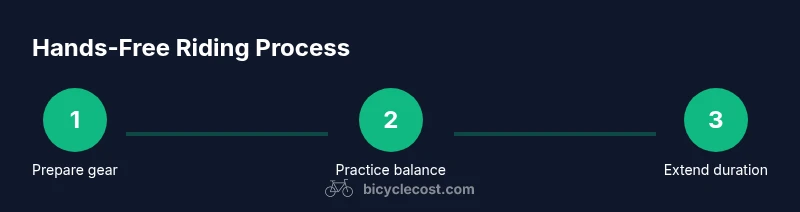
This section outlines a cautious, progressive plan to develop hands-free riding skills. Begin with posture, balance, and gliding in a safe space, then gradually shift to one-handed riding, and finally hands-free. Each stage builds on the last, with an emphasis on core engagement, smooth steering corrections, and timely braking. Practice sessions should be short, frequent, and always in controlled environments to prevent overconfidence from turning into unsafe behavior. Remember, progress may be nonlinear; celebrate small gains and revert to supported practice if balance wavers.
Common Mistakes and How to Avoid Them
Common errors include attempting hands-free in traffic, overestimating balance, or lifting hips instead of engaging the core. Failing to check brakes and tires before practice is another frequent pitfall. To avoid these mistakes, perform a quick bike check, choose a safe area, start with short durations, and keep a clear bailout plan (regrasp the bars or place a hand back on the brake). Consistency beats intensity when learning hands-free riding.
Ongoing Maintenance and Self-Assessment
Long-term hands-free riding requires attentive bike maintenance and self-checks. After each session, inspect tires for wear, test brakes, and assess your comfort level. If balance feels wobbly or you notice instability, scale back to a supported drill, reassess posture, and ensure you’re not fatigued. Regular practice, paired with proactive gear checks and supportive environments, helps sustain safe hands-free riding progress.
Tools & Materials
- Helmet(EN 1078 certified or equivalent; adjust for a snug, level fit)
- Grippy gloves(Padded or textured palm for secure grip on bars)
- Closed-toe shoes(Flat-soled footwear with good grip)
- Knee and elbow pads(Helpful for beginners or if practicing on harder surfaces)
- Bike in safe condition(Brakes, tires, gears checked; no loose bolts)
- Flat, open practice area(Quiet space away from traffic; ideally with a wall for support)
- Water and a basic first-aid kit(Stay hydrated; treat minor scrapes promptly)
Steps
Estimated time: 30-60 minutes
- 1
Assess and prepare the space
Inspect the bike and gear, choose a flat, traffic-free area, and set up a nearby support if needed. Ensure brakes work and tires are properly inflated. Establish a safe boundary and a clear bailout plan if balance is uncertain.
Tip: Do a quick brakes-and-tyre check before you start; a minor issue compounds quickly when hands are off the bars. - 2
Mount safely and find neutral posture
Sit on the saddle with hands on the bars. Find a relaxed, tall posture with elbows slightly bent. Keep your gaze forward and your core engaged to stabilize the torso.
Tip: Keep shoulders loose; tension can triple the effort needed to balance. - 3
Bridge to light one-handed riding
Slowly lift one hand off the bar for a count of five, returning promptly if balance shifts. Alternate hands to distribute the challenge and monitor balance without losing control.
Tip: Practice near support and avoid accelerating; balance is your primary objective here. - 4
Extend duration on each hand
Increase the time your hands are off the bars to 10–15 seconds while maintaining a steady path and consistent pedal cadence. Keep your head up and eyes forward to anticipate obstacles.
Tip: If you wobble or drift, re-establish grip and retry after a short pause. - 5
Introduce short hands-free intervals
Gradually ride hands-free for 5–15 seconds at low speed, with a wall or barrier nearby to steady yourself if needed. Maintain gentle braking readiness with a light touch on the brake levers.
Tip: Always keep a backup plan in mind: return hands to the bars instantly if balance falters. - 6
Incorporate proper braking
Practice emergency stops while both hands are on the bars first, then only the non-dominant hand, and finally both hands re-engaged as needed. Learn to dip the hips slightly and shift weight to the rear to track stability.
Tip: Brake slowly to avoid skidding or sudden loss of balance. - 7
Progress to longer hands-free sessions
Extend hands-free riding windows gradually in straight lines, avoiding turns. If balance becomes unstable, revert to a supported drill and repeat.
Tip: Never push beyond comfort; patience builds safer long-term skill. - 8
Cool down and re-evaluate
Finish with a gentle ride holding the bars for control, then check the bike and your comfort level. Reflect on what felt solid and where to improve next session.
Tip: Document progress and adjust future sessions to target specific balance cues.
People Also Ask
Is hands-free biking legal where I ride?
Local laws vary; many places restrict hands-free riding in traffic. Check your area’s rules and practice in designated paths or quiet areas before attempting hands-free riding.
Local laws vary; check your area’s rules and practice in designated paths before trying hands-free riding.
What age or skill level is required?
A solid base of balance, braking, and bike handling is recommended. Start with stationary balance drills and progress slowly in safe spaces.
Build on your balance and control gradually in a safe space before attempting hands-free riding.
Can I do this on any bike?
Stable bikes with reliable brakes and upright geometry are best for hands-free progression. Mountain and city bikes usually offer safer handling for beginners.
A stable bike with reliable brakes helps a lot when learning hands-free riding.
What should I do if I lose balance?
Immediately regrip the handlebars, slow down, and revert to a supported drill or stop safely. Do not push through a wobble.
If you wobble, grab the bars, slow down, and return to a safer drill.
What safety gear is essential?
Always wear a helmet, use gloves, and consider knee and elbow pads for protection, especially during early attempts.
Wear a helmet and protective gear whenever practicing hands-free riding.
Watch Video
Quick Summary
- Build balance through progressive drills
- Practice only in safe, traffic-free spaces
- Always have a bailout plan and re-engage hands if unsure
- Use protective gear and bike maintenance checks
- Increase duration gradually with controlled, calm practice