Beginner Bicycle Workout: A Complete Starter Plan
A practical, step-by-step guide to starting a safe and effective bicycle workout for beginners. Learn warmups, intervals, progression, recovery, and safety with actionable tips from BicycleCost.


By the end of this guide, you will be able to start a safe, effective bicycle workout for beginners. You’ll learn a simple warmup, a progressive interval plan, and a cooldown with stretches. Essential gear includes a comfortable bike, a helmet, a timer, and a flat route or trainer. Follow the step-by-step plan to build base fitness safely.
Getting Started: Safety and Setup
Starting a beginner bicycle workout begins with safety and fit. A well-fitted helmet that meets safety standards, a bike that fits your height and leg length, and properly inflated tires reduce the risk of injuries and mechanical issues. Before your first session, perform a quick bike check: brakes work smoothly, wheels spin true, and the chain runs cleanly with minimal resistance. Choose a flat, low-traffic route or a stable indoor trainer to reduce surprises during your first rides. Establish a realistic goal—two to three rides per week is a solid beginning—and plan recovery days between sessions. According to BicycleCost, prioritizing safety and proper bike setup helps you ride longer and reduces the likelihood of dropped motivation. Keep a simple training log noting ride length, feel, and any discomfort to guide gradual progression. As you grow comfortable, add a water bottle, light rain gear if needed, and comfortable cycling apparel for longer sessions. The BicycleCost team also recommends having a small first-aid kit and basic bike tools ready for quick fixes on the road or trainer.
What you’ll need to start safely:
- A bike that fits you (correct saddle height and reach)
- A certified helmet
- Gloves, glasses, and appropriate clothing
- Water bottle and cage
- A timer or bike computer for pacing
- A safe route or trainer
- Basic tools for minor adjustments
Warm-Up: Prepare Your Muscles for Cycling
A proper warm-up primes your muscles, primes your nervous system, and reduces the risk of strains. Start with 5–10 minutes of easy spinning at a comfortable cadence, then add dynamic leg swings, ankle circles, and light mobility moves for the hips and ankles. Keep the effort low enough that you can carry on a conversation. The goal is to raise body temperature gradually, lubricate joints, and wake up the cardiovascular system without fatiguing too soon. BicycleCost analysis emphasizes that a well-structured warm-up improves cadence control and endurance over the workout, especially for new riders who are still dialing in bike fit and riding position. After warming, perform 2–3 short accelerations (25–40 seconds) at a brisk but sustainable pace to wake up speed and power without stressing form. Hydration matters too—sip water before and during the ride as needed.
Sample warm-up sequence:
- 5–10 minutes easy spin
- 2–3 dynamic stretches for hips, calves, and hamstrings
- 2 short accelerations with 60–90 seconds easy spin between
Core Workout Structure for Beginners
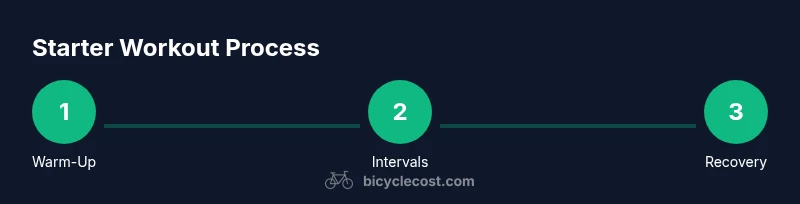
The core of a beginner program is simple, sustainable, and scalable. Start with a basic structure: warm-up, three cycles of moderate effort, and a cooldown. Each cycle lasts about 3 minutes at a steady, conversational pace where you can speak in full sentences, followed by 2 minutes of easy recovery. If 3 minutes feels too long, begin with 2 minutes and gradually extend as your endurance improves. Focus on smooth pedaling, consistent cadence, and even breathing rather than chasing speed. Over the weeks, you’ll extend the work periods slightly while maintaining form. The goal is to complete the workout with good technique and minimal discomfort. Based on BicycleCost analysis, consistency beats occasional high-intensity efforts for beginners, building a reliable base fitness that translates to longer rides and better performance over time. Keep a forward-leaning posture with relaxed shoulders and a neutral spine.
Example session:
- 5–10 min warm-up
- 3 x 3 min effort at steady but challenging pace
- 2–3 min easy spin between efforts
- 5–10 min cooldown and light stretching
Progressive Plan: Increasing Difficulty Over Time
Progression is the key to continued gains without overloading a new rider. After the first 2–3 weeks, increase total ride time by about 10–20% or add one additional interval per workout, while keeping cadence and form clean. Move from 3 x 3 minutes to 4 x 3 minutes, or extend each work interval by 1–2 minutes as comfortable. The progression should be gradual—if you notice rising fatigue, revert to the previous week’s load and maintain consistency for another week. A simple rule is: if you can complete the interval and maintain good form with a sustainable conversation pace, you’re ready to progress. The BicycleCost team recommends tracking perceived exertion and comfort rather than chasing arbitrary numbers early on. Prioritize sleep, nutrition, and hydration to support recovery between sessions.
Weekly progression ideas:
- Week 1–2: 3 x 3 minutes
- Week 3–4: 4 x 3 minutes or 3 x 4 minutes
- Week 5+: extend duration or add hill-friendly cadence work
Training Variations to Keep It Interesting
Variety helps you stay engaged and targets different energy systems. Mix in tempo efforts at a controlled but steady pace, hill climbs (if safe), and cadence drills that encourage smooth, high-cadence pedaling. For indoor sessions, simulate hills by gradually increasing resistance on a trainer while maintaining good posture. To make off-bike days productive, add light mobility and core stability work—planks, bridges, and hip hinges—to support cycling form. Interspersing short, fun rides with longer, steady efforts can prevent boredom and help you build confidence on different terrains. The BicycleCost team notes that variety, paired with a stable routine, improves long-term adherence and reduces the risk of burnout.
Routine ideas:
- 1 day: interval-focused ride (3 x 3 minutes)
- 1 day: endurance ride (30–45 minutes at a comfortable pace)
- 1 day: cadence cha-cha (short bursts of high cadence with controlled resistance)
Recovery and Nutrition After Cycling
Recovery is where adaptation happens. Post-ride, take 5–10 minutes to cool down gradually, then perform static stretches for the calves, hamstrings, quads, hips, and lower back. Rehydrate with water or an electrolyte drink, and have a small protein-rich snack within 45–60 minutes of finishing. Sleep quality greatly influences recovery; aim for 7–9 hours per night. Keep protein intake consistent across meals to support muscle repair, especially after longer sessions or higher-intensity days. Following these practices will help you bounce back faster and prepare for the next workout. BicycleCost emphasizes that good recovery habits reliably translate into improved next-session performance and enjoyment of cycling.
Stretching focus:
- Calves: wall stretch 20–30 seconds per side
- Hamstrings: seated toe touches 20–30 seconds
- Quads: standing quad stretch 20–30 seconds per leg
- Hips: pigeon pose or hip flexor stretch 20–30 seconds per side
Common Mistakes and Fixes
New riders often make a few avoidable errors. Common mistakes include skipping warm-ups, riding too hard too soon, and neglecting bike-fit adjustments. Another frequent issue is insufficient recovery, leading to fatigue and loss of motivation. Fixes are straightforward: commit to a warm-up, keep work intervals at a conversational pace, and track how your body feels across sessions. If you experience knee or hip pain, reassess saddle height and handlebar reach and consider a professional bike fit. The BicycleCost team recommends gradual progression and listening to your body to prevent overuse injuries and keep training sustainable. Emphasize consistency over intensity to build a lasting habit.
Key fixes:
- Recheck bike fit after any discomfort
- Decrease interval length if form suffers
- Prioritize hydration and nutrition
- Plan rest days between hard sessions
Tools & Materials
- Road or mountain bike (sized correctly)(Ensure saddle height allows ~25-30 degree knee bend at bottom of pedal stroke)
- Certified cycling helmet(Proper strap fit and belt retention)
- Comfortable apparel and cycling shorts(Padded shorts optional but helpful for longer sessions)
- Water bottle and cage(Hydration during and after rides)
- Timer or cycling computer(Track duration, work intervals, and recovery)
- Flat route or indoor trainer(Safe environment with predictable surface)
- Basic bike tools (multitool, tire levers)(For minor on-road adjustments)
- Heart rate monitor (optional)(Helps pace training if available)
Steps
Estimated time: 30-45 minutes
- 1
Assess and set up equipment
Verify your bike fits correctly: saddle height, reach, and handlebar position. Inspect brakes, tires, and drivetrain. Gather essentials (helmet, water, timer) and prepare a safe riding space or trainer. Take a few slow pedal revolutions to ensure smooth operation before you begin.
Tip: If something feels off, stop and adjust rather than forcing a ride. - 2
Start with a warm-up
Begin with 5–10 minutes of easy spinning to raise body temperature and loosen joints. Include 2–3 dynamic moves for hips, ankles, and calves. Keep effort light enough to hold a light conversation.
Tip: A good warm-up reduces muscle stiffness and improves cadence control. - 3
Complete the first interval block
Ride three intervals of 3 minutes at a steady, moderate pace with 2 minutes easy spinning between. Focus on smooth pedal stroke and consistent cadence. Stop if your form deteriorates, and shorten intervals if needed.
Tip: Quality over quantity—maintain cadence and posture rather than chasing speed. - 4
Cool down and stretch
Finish with 5–10 minutes of easy spinning, followed by light stretches for calves, hamstrings, and hips. Hydrate and consider a small protein snack within 45–60 minutes of finishing.
Tip: Cooling reduces muscle soreness and speeds recovery. - 5
Progress gradually
After 2–3 weeks, add a minute or two to each interval or an extra interval if you feel comfortable. Maintain form and avoid pushing to exhaustion.
Tip: Progression should be slow and controllable to prevent injuries. - 6
Track progress and adjust
Record ride duration, perceived effort, and any discomfort. Use this data to tweak frequency, intensity, and duration for the next sessions.
Tip: A simple log helps you stay motivated and consistent.
People Also Ask
How often should a beginner cycle per week?
Begin with 2–3 rides per week, spacing sessions to allow recovery. As endurance improves, you can add one more short ride or extend an existing session.
Start with two to three rides weekly, with rest days between sessions.
What heart rate zone should beginners target?
Keep effort at a conversational pace where speaking in full sentences is comfortable. Avoid sustained high-intensity efforts until you have a solid base.
Ride at a pace where you can talk comfortably.
Is a trainer useful for beginners?
An indoor trainer can help with pace control and progression, but is not required if you have a safe outdoor route and good weather.
A trainer helps with control and progression, but is optional.
How long should a typical beginner workout last?
Aim for 30–45 minutes per session, including warm-up and cooldown. As you advance, gradually extend ride time.
Most beginner sessions run about 30 to 45 minutes.
What should I eat before cycling?
Have a light, easily digestible carb source 30–60 minutes before riding, plus water. Post-ride, include a protein-rich snack to aid recovery.
Eat a light carb snack and drink water before riding.
Should I stretch after cycling?
Yes—gentle stretches for calves, hamstrings, hips, and lower back help maintain flexibility and reduce soreness.
Yes, stretch after riding to aid recovery.
Watch Video
Quick Summary
- Start with a proper warm-up and safe setup
- Use 3 x 3 minute intervals as a beginner benchmark
- Progress gradually to avoid overuse injuries
- Prioritize consistency over occasional intensity
- Recovery and nutrition support performance