Bicycle Training Plan: A Complete How-To for Cyclists
Learn to build a safe, progressive bicycle training plan that boosts endurance, speed, and recovery. This educational guide walks you through goals, weekly structure, workouts, and tracking for lasting results in 2026.


A bicycle training plan helps you build endurance, strength, and cadence through a structured, progressive schedule. It guides you to balance easy rides, tempo efforts, and recovery days, with clear weekly targets. The plan reduces guesswork, keeps you motivated, and minimizes overtraining. With a proper bicycle training plan, you’ll ride farther, faster, and more consistently over weeks or months.
Why a Bicycle Training Plan is Worth It
A bicycle training plan helps you move from spontaneous rides to purposeful progress. With a plan, you can balance endurance, strength, and recovery so you ride longer, faster, and with less fatigue. For beginners, a plan provides a clear path and reduces the guesswork in what to do on a given day. For seasoned riders, a plan ensures continued gains and guards against plateaus.
According to BicycleCost, a structured approach translates to steadier improvements and fewer detours caused by busy weeks. The BicycleCost team found that riders who follow a plan are more likely to log workouts consistently and track performance over time. A training plan also makes it easier to manage workload: you can spread high-effort sessions, tempo efforts, and easy rides across the week so you stay fresh for the next workout. This balance matters because cycling performance is driven as much by consistency and recovery as by intensity. The main idea is not to crush every session but to build a reliable rhythm that aligns with your life.
As you begin, be mindful of your current lifestyle and athletic background. A bicycle training plan should fit your schedule, not the other way around. The plan should feel challenging but sustainable. Early on, focus on building a basic consistency that you can sustain week after week, with small, measurable indicators of progress (e.g., longer rides without fatigue, better cadence, or smoother climbs). With patience, your fitness compounds and your confidence grows, turning each ride into a meaningful step toward your goals. Remember: consistency beats intensity in the long run, and a thoughtful plan makes that consistency possible.
note':null},
Tools & Materials
- Bicycle(Well-maintained, properly fitted for your height and seat position)
- Helmet(CE-rated and properly fastened for every ride)
- Water bottle(Hydration on every ride; consider adding an electrolyte option for longer sessions)
- Bike computer or smartphone with GPS(To track distance, pace, and cadence; sync with a log)
- Heart rate monitor(Optional but valuable for targeting effort zones)
- Bike trainer (indoor) or access to safe outdoor routes(Indoor setup enables consistent winter training; outdoor routes require safe traffic conditions)
- Spare inner tube and patch kit(Carry a pump and basic tools for on-road repairs)
- Pump(Pre-ride tire pressure check)
- Repair kit and multitool(Basic bike tools for quick fixes)
- Training log (journal or app)(Record workouts, feelings, and perceived effort)
Steps
Estimated time: 8 weeks
- 1
Set baseline and goals
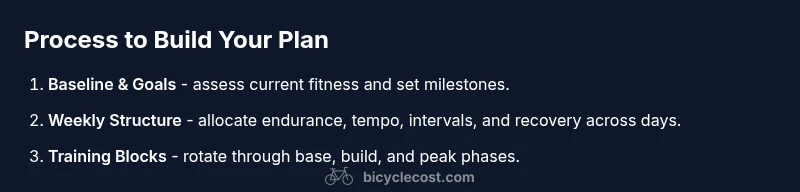
Begin by assessing current fitness and defining clear goals for your cycling journey. Use a simple ride to gauge comfort, cadence, and recovery. Write down objective targets (e.g., how long you can ride comfortably, average cadence, and how you felt after workouts).
Tip: Be honest about your current fitness to avoid overreaching later. - 2
Choose your weekly structure
Plan a balanced week with a mix of easy rides, a tempo session, a longer endurance ride, and a recovery day. Include one optional cross-training activity if your schedule allows. Ensure there is at least one full rest day for recovery.
Tip: Keep a consistent rhythm; consistency beats occasional hard efforts. - 3
Schedule endurance rides
Arrange long, steady rides that you can complete without excessive fatigue. Focus on maintaining a conversational pace and steady breathing. Endurance rides build the aerobic base that supports all other workouts.
Tip: Aim for gradual duration growth rather than speed in early weeks. - 4
Add tempo effort sessions
Incorporate tempo rides where you ride at a comfortably hard pace for extended periods. These sessions improve your body’s ability to sustain power and improve lactate threshold. Keep effort controlled and consistent.
Tip: Keep tempo blocks smooth; avoid sudden surges that spike fatigue. - 5
Introduce interval workouts
Introduce short, controlled intervals of higher intensity followed by easy recovery. Start with modest effort and short duration, gradually increasing as you adapt. Intervals boost leg strength and sprint capability.
Tip: Prioritize proper form and recovery between hard efforts. - 6
Incorporate recovery and mobility
Schedule easy spins, light stretching, and mobility work on recovery days. Recovery is where the body repairs and grows stronger, so avoid heavy riding on these days.
Tip: Hydration and sleep quality amplify recovery gains. - 7
Track progress and adjust
Review weekly workout data and subjective feelings. If progress stalls, adjust volume, intensity, or the balance of workout types. Small, thoughtful tweaks outperform big, abrupt changes.
Tip: Use objective metrics plus how you feel to guide changes. - 8
Prepare for progression and events
As you near the end of the base phase, plan the next block—whether building endurance, introducing more specific speed work, or preparing for a target event. Schedule a readiness check before advancing.
Tip: Test performance after a stable base to inform the next phase.
People Also Ask
What is a bicycle training plan?
A bicycle training plan is a structured schedule of cycling workouts designed to improve endurance, power, and recovery over several weeks. It guides how much and what type of riding you do, helping you progress safely.
A bicycle training plan is a structured schedule of cycling workouts to improve endurance and power over several weeks.
How long should a plan last?
Plans typically span several weeks with progressive loading and built-in recovery. The exact length should fit your goals and schedule, not rigidly fixed.
Plans usually cover several weeks with progressive loading and built-in recovery.
Do I need to be a regular rider to start?
No. A plan can help casual riders build consistency and gradually increase intensity without overdoing it. Adjust the pace to your current level.
Not at all—casual riders can start with a focus on consistency and gradual progression.
What equipment is required?
Essential gear includes a bicycle, a helmet, water, and a way to monitor effort. Optional items like a heart rate monitor or power meter can enhance training accuracy.
You’ll need a bike, helmet, water, and a way to measure effort; optional devices can help fine-tune intensity.
How should I adjust the plan if I get sick or injured?
If illness or injury occurs, ease the load, swap in easy rides, and consult a professional if pain persists. Return gradually once symptoms improve.
If you’re sick or injured, ease back and gradually return when ready.
Watch Video
Quick Summary
- Follow a structured plan, not random rides
- Balance endurance, tempo, and recovery for sustainable progress
- Log workouts and adjust based on feedback
- Prioritize rest and nutrition for better adaptation
- Adapt the plan to fit life constraints and goals