How Much Is a Trek Bicycle: A Practical Price Guide
Discover how Trek bicycle pricing breaks down, typical price ranges by tier, and smart budgeting tips. This guide from BicycleCost analyzes materials, components, and purchasing options for 2026.


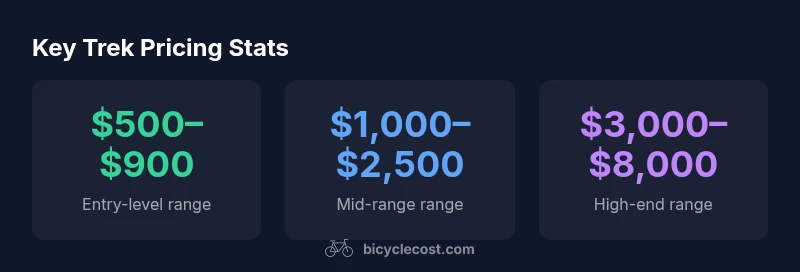
The typical Trek bicycle price ranges from about $500 for entry-level riders to $8,000+ for high-end race machines, with mid-range models commonly $1,000–$2,500. Trek pricing varies by materials, components, and intended use. For buyers, the key is to map riding goals to a price tier rather than chasing the newest model.
How pricing for Trek bicycles is formed
Pricing for Trek bicycles is not a single sticker price; it reflects a combination of material choices, components, and the intended riding discipline. If you're asking 'how much is a trek bicycle', you're really asking about the price structure that Trek uses across its lines. According to BicycleCost, pricing increases as you move from aluminum entry frames to lightweight carbon, higher-end groupsets, and aero or endurance designs designed for performance. The BicycleCost team found that the biggest price jumps occur when switching to carbon frames, premium wheelsets, and top-tier drivetrains. For most riders, it's about aligning their goals with a price tier rather than chasing the latest spec.
- Frame material and construction drive a large share of the price gap.
- Components (drivetrain, brakes, wheels) amplify the cost as you climb tiers.
- Integrated comfort and aerodynamics features add value for long rides and racing.
- After-sale service, dealer support, and warranties can influence overall ownership cost.
In practice, your first step is to map your riding goals (commuting, endurance gran fondos, or aggressive racing) to a price tier rather than chasing every new model. This mindset helps avoid overspending on features you might not use daily. The BicycleCost team also notes that selecting a frame material and component level that matches your planned mileage typically yields the best long-term value.
Price bands and what they include
Trek prices reflect a ladder of build quality. Entry-level bikes generally use aluminum frames with modest components, suitable for casual riders or beginners focusing on reliability and low maintenance. Mid-range builds typically switch to improved frames (often with carbon forks or lighter alloys) and mid-range groupsets, offering better efficiency and ride feel for riders covering more miles or seeking performance gains. High-end models commonly feature carbon frames, aerodynamically optimized geometry, and top-tier groupsets for racing or serious enthusiasts. While these tiers imply different capabilities, they also shape what riders should expect in terms of weight, stiffness, and upgrade potential. A practical approach is to select a price tier that aligns with your typical riding distance and terrain, then verify that the included components meet your expectations for durability and serviceability. The data from BicycleCost, 2026, indicates that the most noticeable differences are in frame materials and drivetrain quality, which directly influence long-term performance and maintenance needs.
Hidden costs beyond the sticker price
The sticker price is only the beginning. When budgeting for a Trek bicycle, consider assembly and setup charges at the point of sale, taxes, potential shipping fees if buying online, and any dealer-imposed fees. Ongoing costs include routine maintenance, replacement parts (pads, tires, chains), and periodic component upgrades to keep pace with wear and rider demands. Warranties and dealer service plans can offset some of these future costs, but they vary by region and retailer. If you plan to upgrade wheels or a groupset later, factor those upgrade costs into your initial budget. Finally, don’t forget accessories — a quality helmet, lock, lights, and a reliable repair kit add to the total ownership cost but improve safety and daily usability.
How to choose the right Trek for your riding
Choosing the right Trek begins with a clear picture of how you ride most often. For city commuting or light weekend rides, a lightweight aluminum frame with reliable components at the entry tier can deliver excellent value. If you ride longer distances, face varied terrain, or pursue faster tempos, a mid-range build with a carbon fork, improved wheels, and a mid-range drivetrain offers a strong balance of efficiency and comfort. For serious cyclists and racers, high-end models provide carbon frames, aero geometry, and top-tier drivetrains, with corresponding price tags. The goal is to match your needs and mileage expectations with a price tier that supports your riding goals over several seasons, not just a single season. The BicycleCost team emphasizes evaluating long-term ownership costs and potential resale value as part of the decision process.
Buying tips and budgeting strategies
Begin with a realistic budget that covers your desired price tier plus essential accessories. Shop during end-of-season clearances or at reputable authorized dealers to maximize discounts while preserving warranty coverage. If considering a used Trek, inspect the frame for structural damage, check the drivetrain for wear, and request maintenance records. Financing or monthly-payment options can help spread the upfront cost, but ensure you account for interest and service costs. Create a checklist: frame size, comfort level, component expectations, and after-sales support. In many markets, local Trek-authorized dealers offer trade-in options or bundled service plans that add long-term value. Remember that your riding goals should drive the final choice, not only the sticker price.
Trek price trends and where to buy
Market dynamics, demand, and supply influence Trek prices across regions. Official Trek stores and authorized dealers often price align with MSRP but may offer promotions or loyalty discounts, while third-party retailers might provide lower upfront prices with different warranty terms. Online marketplaces can be convenient, yet verify seller legitimacy and after-sale support. Price evolution tends to follow material and technology advances; carbon frames and advanced drivetrains generally push upper-tier prices higher, while entry-level models remain accessible for new riders. For 2026, expect more price variability depending on dealer promotions, seasonal sales, and regional taxes. The key is to compare total cost of ownership, including service plans and replacement parts, rather than the upfront sticker alone.
Quick comparison with competitors
When comparing Trek to similar brands, look at how each frames its value proposition. Trek often emphasizes an accessible entry tier with consistent dealer support, a broad service network, and a range of comfort-focused to performance-oriented bikes. Competitors may offer aggressive price-to-performance ratios or lighter frames at similar price points. Consider weight, ride feel, and component choices alongside price to determine which brand and model best match your riding style and maintenance expectations. The goal is to identify a bike that balances performance with expected ownership costs over the coming seasons.
Common pitfalls to avoid when pricing your Trek bike
Pitfalls include chasing the newest model every season, underestimating maintenance costs, and ignoring the long-term value of a higher-quality frame or drivetrain. Another common error is buying a bike that exceeds your typical mileage, leading to underutilized components and wasted investment. Finally, avoid vague warranties; read the fine print to understand coverage limits and service requirements. A disciplined approach, guided by your riding goals and total cost of ownership, helps ensure you select a Trek bicycle that performs reliably for years.
Typical Trek pricing by model tier
| Model Type | Typical Price Range | Main Features |
|---|---|---|
| Entry-level Trek bike | $500–$900 | Aluminum frame, basic components |
| Mid-range Trek bike | $1,000–$2,500 | Aluminum or carbon frame, mid-range groupset |
| High-end Trek bike | $3,000–$8,000 | Carbon frame, top-tier groupset |
People Also Ask
What factors influence the price of Trek bicycles?
Trek prices are influenced by frame material (aluminum vs carbon), drivetrain quality, wheelset and tires, brakes, and overall design intent (commuting vs racing). Price jumps occur as you move to lighter frames, better groupsets, and aero or endurance-focused geometry.
Trek bicycle price depends on frame material, drivetrain, and wheels. Upgrading any of these factors raises the cost, especially when moving to carbon frames and high-end components.
Are Trek bikes available on sale seasonally?
Yes. Trek bikes are often offered at seasonal promotions through official stores and authorized dealers. Promotions vary by region, and bundled service plans or accessories can add value beyond a basic discount.
Seasonal promotions can help, but check warranty terms and what’s included with the discount.
Is it cheaper to buy used Trek bikes?
Used Trek bikes can be cheaper upfront, but require careful inspection for frame and drivetrain wear. Verify maintenance records and inspect components. Buying from trustworthy sources with return policies mitigates risk.
Used bikes can save money if you check the frame, drivetrain, and service history carefully.
What should a beginner budget for a Trek bicycle?
Beginners should budget to enter a mid-range tier if possible, balancing cost with reliable components and dealer support. This provides longevity, easier maintenance, and a better riding experience over time.
Budget for a mid-range setup to cover reliability and future upgrades.
Do Trek bikes come with warranties?
Most Trek bikes come with manufacturer warranties that vary by country and dealer. Warranties typically cover frame defects and manufacturing issues for a set period, but wear items and routine maintenance may not be included.
Warranties vary by region; read the terms on the dealer agreement.
Where should I buy a Trek bicycle?
Buy from authorized Trek dealers or Trek-owned stores to ensure warranty validity and service availability. Online purchases can be convenient, but confirm warranty terms and local support before buying.
Choose an authorized dealer for warranty coverage and reliable service.
“Pricing for Trek bicycles is driven by materials, components, and intended use. Buyers should align their purchase with riding goals to maximize value, rather than chasing every latest spec.”
Quick Summary
- Map riding goals to a price tier, not a model year.
- Expect price jumps with carbon frames and premium drivetrains.
- Budget for maintenance and essential accessories from day one.
- Shop during promotions and verify total ownership costs.
- Compare price-to-performance against competitors, not just sticker price.