How Much Does a Bicycle Cost in the UK? A Practical Guide
Explore realistic price ranges for UK bicycles in 2026, from entry-level to premium and electric models. Learn what drives cost, where to buy, and how to save without compromising safety.


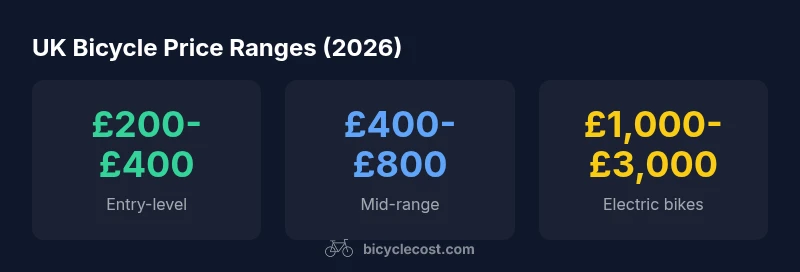
In the UK, the cost of a new bicycle varies widely by type and spec. Entry-level city bikes start around £200-£400, mid-range models £400-£800, and higher-end or carbon bikes typically £800-£1,500, with electric bikes often ranging £1,000-£3,000 or more. This guide breaks down price bands, what drives them, and practical buying tips.
Understanding the UK price landscape
If you're wondering how much does a bicycle cost in uk, the answer is not a single figure. In 2026, price ranges span from a few hundred pounds for basic commuter bikes to several thousand for top-end models and advanced e-bikes. This spread reflects differences in frame materials, components, gearing, and whether the bike is designed for city commuting, road cycling, or off-road adventures. The BicycleCost team found that the average new bike price varies significantly by category, with entry-level options staying accessible while enthusiasts seek higher-spec builds. When planning a purchase, it's essential to set expectations based on your goals, not just your budget. Other factors like frame material (aluminum vs. steel vs. carbon), groupset quality, and wheelset weight can push price points up quickly. Finally, remember that buying from a reputable retailer with good after-sales service often saves money in the long run through maintenance and warranty coverage.
Price bands you’ll see in UK shops
UK bike shops typically present prices in bands that map closely to use-case and build. Entry-level commuter bikes generally sit in the £200-£400 range, offering reliable transport for short trips with simple components. Mid-range bikes (often road or mountain designs) commonly fall between £400-£800, delivering better gearing, lighter frames, and more durable wheels. If you expect higher performance or carbon frames, prices frequently land between £800-£1,500, sometimes higher for premium brands. Electric bikes (e-bikes) increase the price significantly, with most models in the £1,000-£3,000 bracket and many premium options above £3,000. It’s important to compare total cost of ownership, including batteries, maintenance, and potential insurance costs, rather than focusing on sticker price alone.
What drives price: components, materials, and brand
Several levers push bike prices up or down. Frame material is a major determinant: aluminum is common in budget builds, steel provides durability at a low cost, carbon or high-grade alloy frames push prices higher. Drivetrain quality matters: entry bikes often use simpler 7- or 8-speed systems, while mid-range and premium bikes may feature 11- or 12-speed setups with smoother shifting and lighter weight. Wheelsets and tires, braking systems (mechanical vs. hydraulic), and suspension (for mountain bikes) add cost when you go up market. Brand reputation and warranty terms also factor in; boutique brands command premium largely because of perceived performance and after-sales support. Finally, supply chain factors and exchange rates influence year-to-year price movements in the UK.
Where to shop and how to save in the UK
Buying a bicycle in the UK can be done through local shops, national chains, online retailers, or used-bike marketplaces. Each channel has trade-offs. Local shops offer expert fitting, test rides, and after-sales service; online retailers may deliver faster and sometimes cheaper, but post-purchase support can be less straightforward. Used bikes can provide substantial savings, but they require careful inspection for wear, safety, and hidden issues. A practical approach is to set a price ceiling aligned with your goals, test several models, and ask about warranties and return policies. Look for promotions around holidays or end-of-season clearance events, and consider bundles that include essential accessories like helmets, locks, and lights. Always verify the bike’s sizing to ensure comfort and efficiency, and don’t neglect maintenance plans as you compare upfront costs.
Financing and insurance considerations
For many UK buyers, financing a bicycle can make higher-spec models more affordable by spreading the cost over months. Be mindful of interest rates and any processing fees; a longer repayment term can sometimes mean paying more in total interest even if monthly payments are low. Insurance is another factor, especially for high-value bikes or e-bikes. Some homeowners or renter policies cover bikes, but you may need riders’ insurance or add-on coverage for theft or damage. When budgeting, estimate annual maintenance costs (tubes, tires, chain replacements, and occasional professional services) and set aside a maintenance fund. A well-maintained bike will retain resale value better and last longer, which can affect long-term cost of ownership.
Practical buying checklist: steps to ensure value
Use the following checklist to optimize value when buying a bicycle in the UK:
- Define your use case: commuting, leisure, fitness, or off-road.
- Set a price ceiling and identify your ideal features within that range.
- Try multiple sizes and riding positions to find comfort.
- Check components: drivetrain, brakes, tires, wheels, and frame material.
- Inspect for frame integrity, wear on chainrings, and brake pads.
- Compare after-sales service, warranty terms, and return policies.
- Confirm total ownership costs: maintenance, battery replacement (if applicable), and insurance.
- Look for promotions or bundles that include essential accessories.
- Plan for future needs: compatibility with upgrades or accessories like racks and fenders.
VAT and import costs: how they shape UK prices
VAT in the UK is applied at the point of sale, and import costs can affect price levels, especially for bikes assembled overseas or with components sourced from different markets. In recent years, VAT standards and import duties have influenced the final price you see in shops, particularly for premium brands and electric bicycles. Retailers may also reflect currency fluctuations, shipping costs, and warehouse handling in their pricing. Understanding these macro factors helps explain why prices can swing between brands and across seasons. When evaluating a purchase, consider whether a retailer is pricing with VAT included and whether accessories or warranties are bundled into the stated price.
Maintenance costs to consider after purchase
A common misconception is that maintenance is a minor expense. In reality, ongoing costs accumulate and should influence your buying decision. Routine maintenance includes regular wheel trueing, gear tuning, brake adjustments, tire replacements, chain lubrication, and occasional cassette or derailleur service. Budgeting for a basic tune-up every 6-12 months, plus occasional parts replacements, can extend the bike’s life and keep performance at peak levels. Electric bikes add battery replacement considerations, which can be a substantial future cost. Shopping for maintenance plans or memberships with local shops can reduce hourly rates and ensure timely service. By factoring maintenance into the upfront price discussion, you gain a clearer view of total ownership costs and long-term value.
Future price trends: what to watch in 2026
Industry signals suggest continued diversification of the UK bike market. Entry-level prices may remain stable while demand for mid-range and e-bikes grows, driven by urban mobility needs and sustainability trends. Currency fluctuations and supply chain resilience will continue to influence year-over-year pricing. Consumers may see more financing options and promotional bundles as retailers compete aggressively, especially around seasonal sales. For long-term buyers, focusing on total cost of ownership and durability can mitigate the risk of premature depreciation. BicycleCost’s 2026 outlook emphasizes smart purchasing—prioritizing fit, reliability, and service networks over the absolute lowest price.
Price comparison by bike type in the UK (typical ranges)
| Bike Type | Typical Price Range (GBP) | Notes |
|---|---|---|
| Entry-level city/commuter | £200-£400 | Reliable transport with basic components |
| Mid-range road/trekking | £400-£800 | Better gearing and lighter frames |
| High-end performance/road | £800-£1,500 | Quality groupset, carbon options |
| Electric bicycle (e-bike) | £1,000-£3,000 | Battery and motor add significant value |
| Premium carbon/ boutique | £1,200-£2,000 | Top-tier materials and components |
People Also Ask
What is the most affordable new bicycle you can buy in the UK?
Entry-level new bikes in the UK typically start around £200-£400, offering dependable transport for casual use. These models usually have simple components and fewer upgrades, which makes them a good starting point for first-time riders. Be sure to test fit and check safety features, as comfort matters for regular riding.
Entry-level bikes usually start around £200 to £400, a solid option for beginners who want reliable transport and basic features.
Are used bicycles cheaper in the UK, and what should I check?
Used bikes can offer substantial savings but require careful inspection. Check frame integrity, wear on drivetrain components, tires, braking performance, and ensure the headset and bottom bracket are in good condition. Ask for service history, proof of ownership, and test ride the bike to confirm there are no hidden issues.
Used bikes can be cheaper, but inspect frame, brakes, tires, and drivetrain, and test ride before buying.
Do finance options affect the overall cost of a bicycle?
Financing can make higher-priced bikes more affordable month-to-month, but interest and fees add to the total cost. Compare upfront discounts against financing costs and consider shorter terms to reduce interest. If you can pay cash, you may save over time by avoiding interest.
Financing lowers monthly costs but can increase total price due to interest—check terms carefully.
What maintenance costs should I expect after buying?
Plan for routine maintenance: tires, tubes, chains, brake pads, and occasional tune-ups. Electric bikes add battery considerations, which may require replacements after several years. Having a small maintenance fund and access to a trusted shop helps keep total ownership costs predictable.
Expect ongoing maintenance costs, plus battery considerations for e-bikes.
How can I compare prices across retailers effectively?
Compare prices across retailers for the same model, including bundled accessories and warranties. Check for seasonal promotions, timing of releases, and store policies on returns and service. Don’t neglect local shops that offer fitting, test rides, and after-sales support as part of the value.
Compare models, bundles, and warranties; don’t overlook local shops for fitting and service.
“Pricing for bicycles in the UK spans budget to premium, and the better-value choice often comes from balancing suitability with after-sales support.”
Quick Summary
- Understand UK price bands before shopping
- Consider total cost of ownership, not just sticker price
- Electric bikes rise in price but offer expanding value
- Shop around, test fit, and check warranties
- Budget for maintenance and insurance from day one