What to Look for in a Bicycle
Learn what to look for in a bicycle—from frame size and geometry to components and safety. Practical checks, test-ride tips, and budget guidance for reliable, comfortable riding.


By the end of this guide you’ll know how to evaluate a bicycle’s frame size, geometry, components, fit, and value. Start with your riding goals and budget, then test ride multiple models. Key checks include frame material, brake type, drivetrain, wheel size, and comfort at the saddle and handlebars. This quick answer sets up the deeper steps you’ll find below.
what to look for in a bicycle: fit, purpose, and build
Choosing a bicycle starts with clarity about how you ride. The phrase what to look for in a bicycle signals a balance between fit, frame geometry, and the components that support your goals. According to BicycleCost, the most important starting point is to align the bike with your riding goals and fit. Whether you want a fast road bike, a comfortable commuter, or a playful trail bike, your choice will hinge on a few core factors: size, stance, and the reliability of the basics. In this section, we’ll outline a practical framework to evaluate any bike you consider, explain why each factor matters, and show how to test them during a real ride. This approach helps avoid buying a bike that looks good but doesn’t feel right on the trail or the daily commute. By the end, you’ll be ready to compare models with confidence and avoid common buyer mistakes.
Tools & Materials
- Measuring tape or ruler(use to check standover height and wheel size)
- Flat, safe testing area(space to ride and perform quick tests)
- Owner’s manual or manufacturer specs(reference for size charts)
- Sizing chart or sizing app(compare frames across brands)
- Allen keys or basic tool kit(minor adjustments during a test ride)
Steps
Estimated time: 60-90 minutes
- 1
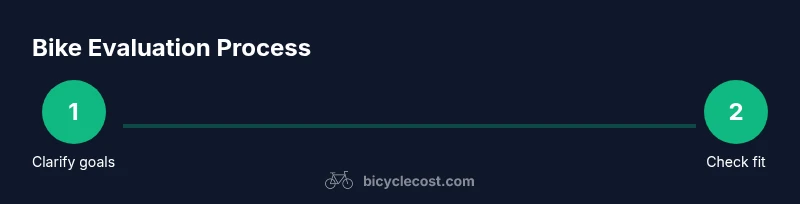
Clarify riding goals and budget
Define where you ride most, how quickly you want to ride, and how much you’re willing to invest. Clear goals reduce confusion when comparing models.
Tip: Write down top 3 riding scenarios (commuting, weekend rides, mixed terrain) to guide your choices. - 2
Check frame size and reach during fit
Measure standover height and estimate reach to handlebars. A bike should feel comfortable with a slight knee bend and a neutral back posture. Understanding what to look for in a bicycle starts with frame sizing.
Tip: Ask a shop to assist with a proper bike size chart and adjust the saddle to knee height. - 3
Inspect frame and components for wear
Look for cracks, dents, corrosion, and overly tight bearings. Worn chainrings, gears, and cables increase maintenance costs and reduce performance.
Tip: Spin wheels and ensure wheels run true with no lateral wobble. - 4
Assess drivetrain and braking performance
Check the number of gears you’ll realistically use, ensure smooth shifting, and test both brakes in safe conditions. Brakes should feel firm and modulate predictably.
Tip: If disc brakes squeal or rub, factor in potential maintenance costs. - 5
Evaluate wheels and tires for the mission
Inspect rim and spoke condition; tires should have enough tread for your riding surface and be appropriate width for comfort and efficiency.
Tip: Consider tubeless tires to reduce pinch flats and lower air pressure for grip. - 6
Perform a controlled test ride
Ride on flat and gentle incline to assess comfort, shifting, braking, and geometry. Pay attention to cockpit reach and saddle comfort.
Tip: Bring a friend or staff member to observe and offer feedback. - 7
Compare models and value
Stack models side by side: frame size, components, weight, warranty, and service support. Value comes from durable parts and easy maintenance.
Tip: Don’t discount after-sale service when evaluating price. - 8
Make a decision and plan maintenance
Choose the model that best matches your goals and budget. Schedule a basic tune-up and set up a maintenance calendar.
Tip: Record serial numbers and keep manuals for warranty and future service.
People Also Ask
How do I know what bike size fits me?
Size is determined by frame geometry, standover height, and reach. Most shops offer a fitting session and size charts to help you choose.
Start with your inseam and height, then test ride several sizes or consult a professional fitter.
What should I check during a test ride?
Evaluate comfort, shift and brake feel, and how the cockpit supports your posture. A ride up a gentle incline reveals geometry fit.
Focus on comfort, control, and how easily you can reach brakes and levers.
Is a carbon frame worth the cost?
Carbon frames are light and stiff but costly and less durable in crashes. Consider your riding style and budget.
If you ride aggressively or value lightness, a carbon frame may be worth it; otherwise, aluminum can offer good value.
What’s the difference between road and mountain bikes?
Road bikes prioritize speed and efficiency on paved roads; mountain bikes focus on stability and control on rough terrain.
Choose based on terrain and riding goals.
How much should I budget for a quality bike?
Quality bikes span a wide range; plan for the frame, drivetrain, brakes, and wheels. Expect to invest more for component longevity.
Set aside funds for the bike plus initial tune-up and future maintenance.
What maintenance is essential after purchase?
Keep the chain lubed, tires inflated, brakes aligned, and annual drivetrain check. Regular maintenance extends lifespan.
A simple routine keeps performance steady and prevents surprises.
Watch Video
Quick Summary
- Define your riding goals before shopping.
- Fit and geometry drive long-term comfort.
- Budget should reflect expected maintenance costs.
- Test ride with consistency across models.
- Prioritize after-sales service and warranty.