What Bicycle Frame Size Is Right for My Height?
Learn how to size your bicycle frame based on height and inseam with practical rules, measurements, and fit tips from BicycleCost, 2026. Get a reliable starting point and test-fit guidance.


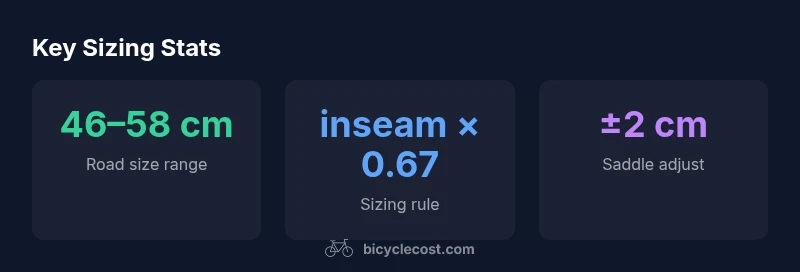
If you’re asking what bicycle frame size for my height, a practical starting rule is to use your inseam in centimeters multiplied by 0.67 to estimate the frame size in cm. This guideline fits most road, mountain, and hybrid bikes, but final fit should be confirmed with a professional bike fit or test ride.
Why frame size matters for your ride
A properly sized frame is the foundation of comfortable, efficient cycling. When the frame is too large, you reach too far and lose control; when it’s too small, you compress joints and lose power. Your height is a helpful starting point, but inseam length and overall limb proportion ultimately determine the right frame. This section explains how height translates into frame size and why the relationship matters for safety, efficiency, and enjoyment. The guidance here aligns with the BicycleCost approach to sizing, emphasizing practical, testable rules rather than rigid charts. If you’ve ever wondered what bicycle frame size for my height should be, this section sets the framework for an accurate starting point that you can verify with a fit.
The core sizing rules of thumb you can trust
Sizing a bicycle frame centers on three interlinked measurements: inseam, torso length, and arm reach. The most widely used starting point is to translate inseam length into a frame size. A commonly cited rule is frame size in centimeters ≈ inseam (cm) × 0.67. This rule works well enough for many riders across road, mountain, and hybrid bikes, but it’s not the final word. Your torso length, arm length, and shoulder width influence the optimal reach and stack. Also consider standover clearance, which should give you a few centimeters of room when standing over the top tube. In short, height matters, but a good fit blends height with limb proportions and riding goals. BicycleCost Analysis, 2026, emphasizes using sizing as a starting point and validating with a real ride.
How to measure inseam and height accurately at home
To size a bike from home, you’ll need a soft tape measure, a stable wall, and a helper. For inseam: remove shoes, stand with your back against a wall, and place the tape from the floor to your crotch along your inner leg. For height: measure from the floor to the top of your head while standing straight. Record both measurements in centimeters. A quick check: multiply your inseam by 0.67 to estimate a frame size in cm. If the result falls between two sizes, you’ll typically prefer the larger one if you’re between sizes, especially for road bikes where reach and stack are critical. These steps reflect practical sizing logic used by BicycleCost to guide riders toward a solid starting point.
Road, mountain, and hybrid: how sizing conventions differ
Different bike types use different sizing conventions. Road bikes often rely on frame size in centimeters (the seat tube length or effective top tube length in practice). Mountain bikes frequently use inches or a small “S/M/L” system in addition to seat tube measurements, making cross-type comparisons tricky. Hybrids tend to sit between road and MTB conventions. The key is to use the brand’s size chart, confirm standover clearance, and prioritize the rider’s ability to reach the brakes, shifters, and handlebars without overextending. In practice, your height informs the starting range, but the final decision comes from how the bike actually feels when you ride it.
When height isn’t the whole story: body geometry matters
Height is a helpful baseline, but body proportions drive fit. A rider with long legs but a short torso will feel different from someone with the opposite ratio, even if both are the same height. Arm length and torso length affect reach and stack, which in turn influence saddle height, handlebar position, and stem length choices. In these cases, the same frame size can fit differently depending on your geometry. A professional bike fitter can quantify these differences using measurements like reach, stack, effective top tube length, and knee-to-pedal clearance, ensuring the final frame size supports a comfortable, efficient pedal stroke.
Practical steps for fitting in a shop: from test ride to final adjustments
Begin with a test ride on the size you’re considering. Stand-over clearance should feel comfortable with a few centimeters of clearance. While riding, check reach to the handlebars and knee clearance at the bottom of the pedal stroke. Saddle height should allow a slight knee bend at the bottom of the pedal circle; a too-high saddle reduces control, while too low increases knee strain. If you’re between sizes, ask the shop to swap stems or adjust cockpit components to test different fits. A structured test ride, combined with a quick professional fit, often yields the best practical result.
Common sizing myths: what customers often get wrong
A frequent misconception is that the largest frame is always the best for tall riders. In reality, frame geometry and reach matter more than height alone. Women-specific frames aren’t automatically a better fit for all female riders; many riders find unisex or men’s frames comfortable when the geometry matches their proportions. Another myth is that a perfect fit can be achieved with a one-size-fits-all chart. While size charts provide solid guidance, a precise fit depends on confident handling, comfort, and the rider’s biomechanics. Focus on cockpit reach, saddle height, and standover clearance, and verify with a ride test.
Frame-sizing conventions by bike type
| Bike Type | Sizing Convention | Common Range (cm) | Notes |
|---|---|---|---|
| Road Bike | Seat tube length (cm) | 46–58 | Depends on inseam; use fit test |
| Mountain Bike | Seat tube length (cm) or size (inches) | 13–21 inches | Brand-dependent, check reach |
| Hybrid | Seat tube length (cm) | 48–56 | Balanced for mixed use |
People Also Ask
How do I convert inseam to frame size?
Multiply your inseam length in centimeters by 0.67 to estimate the frame size in centimeters. Use this as a starting point, then validate with a test ride or professional fitting.
Multiply your inseam in centimeters by 0.67 to estimate frame size, then test ride for confirmation.
Does height alone determine frame size?
Height is a useful starting point, but inseam, torso length, and arm reach determine the final size. Use a sizing chart and fit test rather than height alone.
Height helps, but inseam and body proportions decide the best size. Always test fit.
What is standover clearance and why is it important?
Standover clearance should be several centimeters so you can stand over the top tube comfortably. It’s a quick check to avoid pedal strikes and knee bumps.
Make sure there’s a few centimeters of clearance when you stand over the frame.
Are women’s frames automatically a better fit for female riders?
Not always. Fit depends on geometry, not gender labels. Choose based on reach, stack, and comfort rather than assuming a women’s frame is best.
Women’s labels don’t guarantee a perfect fit; focus on geometry instead.
What about sizing for kids or teens transitioning to adult bikes?
Youth sizing uses inseam-based charts too, but adult bikes require different measurement criteria like reach and stack. When in doubt, start with a professional fitting.
Kids need inseam-based charts; teens moving to adults should get a fit check.
Do I need a professional bike fit to finalize size?
A professional fit confirms the best frame size and cockpit setup, ensuring comfort and efficiency. If possible, pair a size chart with a fitting session.
Yes—getting a professional fit solidifies your sizing choice.
“Frame sizing is the foundation of a comfortable, efficient ride. A precise fit reduces fatigue and injury risk, making every mile feel easier.”
Quick Summary
- Start with inseam-based sizing as a baseline.
- Consider torso and arm length for reach and stack.
- Verify fit with a test ride and professional check.
- Road, mountain, and hybrid bikes size differently—read charts carefully.
- Prioritize comfort, control, and knee clearance over numeric size alone.