How to Properly Fit a Bike: A Practical Guide
Master how to properly fit a bike at home—saddle height, fore-aft setback, and cockpit reach—with practical steps, safety tips, and BicycleCost insights for comfort, efficiency, and injury prevention.


By the end of this guide you’ll know how to properly fit a bike—saddle height, fore-aft setback, and cockpit reach—for comfort, efficiency, and injury prevention. You’ll need a tape measure, an Allen wrench, a stable stand, and a flat surface. The BicycleCost team provides a practical at-home method suitable for most riders across disciplines.
Why proper bike fit matters
A correct bike fit is the foundation of comfortable, efficient riding and can help prevent overuse injuries and joint pain. When the saddle, pedals, and handlebars align with your body, you’ll pedal with less wasted energy and enjoy better control on climbs, descents, and sprints. According to BicycleCost, a well-fitted bike also reduces fatigue and supports long-term cycling enjoyment. The goal is a balance among comfort, power, and responsiveness that matches your riding style, flexibility, and injury history. This is not a one-size-fits-all setup; it’s a personalized process that adapts to your body and your goals—whether you’re after endurance, speed, or casual commuting.
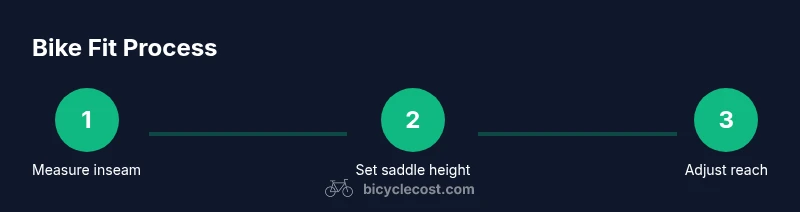
In practice, you’ll work from three pillars: saddle height, saddle fore-aft position, and cockpit reach. Small adjustments can have big effects on knee angle, hip openness, shoulder alignment, and even plantar pressure in the feet. Before you begin, ensure the bike is on a stable stand or supported so you can move the components freely without risking a fall. Safety first means no rushing and no forcing parts into awkward angles.
Core measurements and fitting foundations
Understanding the core measurements helps you translate your body dimensions into bike geometry. The saddle height should allow a slight knee bend at the bottom of the pedal stroke, while the fore-aft position should keep the knee roughly over the pedal axle during pedaling. The cockpit reach—how far you are from the saddle to the handlebars—affects your back angle and comfort during longer rides. Frame size matters, but it’s only a starting point; actual fit depends on crank length, stem height, riser or drop handlebars, and saddle shape. For most riders, a neutral spine position with a relaxed neck and a light grip on the bars indicates a good starting point. Remember that flexibility, riding style, and any prior injuries influence these choices, so treat fit as a dynamic, adjustable process. When in doubt, document each change and test ride on different terrains to evaluate comfort and control.
How to measure seat height precisely
Precise saddle height is easier to achieve with a repeatable method. Start with the rider barefoot or wearing thin-soled cycling shoes. Sit on the saddle and place the heel on the pedal at the lowest point of the rotation. If the leg remains straight, you may have too much height; if you can’t reach the pedal with the knee extended slightly, you may have too little. Instead, use a standard test: with the ball of the foot on the pedal at the 3 o’clock position, your knee should be slightly flexed when the pedal is at the bottom. Use a measuring tape from the center of the pedal axis to the top of the saddle, and adjust incrementally. This process balances knee angle with hip stability, enabling powerful pedaling while preserving comfort across miles. Keep notes of each notch and re-check after changes.
Saddle tilt and fore-aft position
The saddle should be level or slightly nose-down to maintain pelvic stability and reduce perineal pressure. Too much nose-up or nose-down tilting can lead to discomfort and incorrect knee or hip alignment. Fore-aft position matters for knee tracking over the pedal; a forward setback can shorten your hip flexor range, while a backward setback can increase reach and shoulder strain. A common method is to align a plumb line from the pubic bone down through the knee cap, ensuring the knee sits near the pedal axle as you pedal. If you feel a slipping sensation under your sit bones or excessive knee bend, adjust forward or backward in small increments and test ride.
Handlebar height and reach basics
Handlebar height influences your back angle, neck comfort, and shoulder load. A higher handlebar provides a more upright posture that reduces strain on the lower back, while a lower handlebar increases aerodynamics and engagement of the core. Reach—the horizontal distance from saddle to handlebar—affects how hard you must pull to control the bike. Start with a neutral setup, then raise or lower the bar in small steps to achieve a neutral spine angle and relaxed shoulders. If you ride on mixed terrain, consider a slightly higher bar for comfort on rough sections. Remember to account for stem length and potential spacers when adjusting reach.
If you use bar-end shifters or integrated brakes, verify that any added stem components don’t interfere with hand position or lever operation. A secure, comfortable grip is essential for precise steering and power transfer.
Pedal position and cleat alignment
Foot position at the pedal affects power transfer and knee tracking. The ball of the foot should align over the pedal axle when the crank is horizontal, not the toe or heel, which can shift knee load unnaturally. If you use clipless pedals or cleats, ensure the cleats are aligned to let your knee track straight ahead through the pedal stroke. In cycling shoes, you’ll want a slight outward toe angle to accommodate natural foot pronation, but avoid aggressive toe-out that causes ankle strain. If you wear insoles or custom footbeds, recheck cleat position to preserve the ankle pivot and pedaling efficiency.
Quick fit checks you can do at home
After making initial adjustments, take a short ride on a flat route to evaluate comfort and ergonomics. Check for knee pain, numbness, or excessive saddle pressure, and observe your hip and shoulder alignment from a mirror or friend’s observation. While riding, ensure you can fully extend and retract your legs without hyperextension, and that your wrists aren’t bent awkwardly when gripping the bars. If you notice consistent discomfort, revisit saddle height or handlebar position and adjust in small increments. A few test rides across different terrains helps confirm the fit works in real-world conditions.
Common mistakes and how to fix them
Riders often over-tighten the saddle tilt, ignore fore-aft alignment, or set handlebars too low or too far away. Small misalignments can accumulate into fatigue and pain over long rides. If you feel numbness in the hands, wrists, or saddle area, revisit the cockpit height and reach and verify the knee-over-pedal alignment. If your knees track inward or outward excessively, recheck foot position and cleat alignment. Professional fit can correct complex interactions between frame geometry, mobility, and riding style. The aim is a natural, comfortable position that minimizes fatigue while maximizing control and efficiency.
Tools & Materials
- Tape measure(Rigid or flexible; use for inseam and saddle height references)
- Allen wrenches set(Common sizes: 4mm, 5mm, 6mm; used to adjust seat clamp and stem)
- Bike stand or stable work surface(Keeps bike steady during adjustments)
- Marker or chalk(Mark reference points on the saddle or frame for repeat adjustments)
- Notebook and pen(Record measurements and settings for future reference)
Steps
Estimated time: 60-90 minutes
- 1
Prepare bike and baseline
Place the bike on a stable stand or trainer. Confirm you have the tools ready and a rider with typical riding shoes. Establish a baseline by noting current saddle height and cockpit setup before making changes.
Tip: Take a photo of the current setup to compare changes later. - 2
Measure inseam and translate to saddle height
Measure the rider’s inseam and use a consistent method to translate this to saddle height. Use the heel method or a recognized at-home protocol to set an initial height. Record the measurement for reference when adjusting later.
Tip: If you’re between sizes, start with the higher measurement and refine gradually. - 3
Set saddle height
Adjust the seat clamp or seatpost to achieve a slight knee bend at the bottom of the pedal stroke when wearing cycling shoes. Ensure both legs feel balanced when pedaling from the top to bottom of the stroke.
Tip: Avoid excessive knee flexion; you should feel a comfortable muscle engagement rather than joint strain. - 4
Adjust fore-aft position
Move the saddle forward or backward so the knee tracks over the pedal axle during pedaling. The knee-over-pedal test helps align your total hip-knee-ankle chain with the pedal path.
Tip: Make small adjustments and test ride for feedback; big shifts can cause knee or hip pain. - 5
Level and align saddle tilt
Check saddle tilt with a level or smartphone app and adjust to a neutral position, maybe with a very slight nose-down tilt if comfortable. Ensure pelvic stability and even weight distribution.
Tip: If you feel pressure on soft tissue, re-check tilt and shift slightly forward or backward. - 6
Tune handlebar height and reach
Adjust stem height by adding or removing spacers and modify reach via stem length or angle. Aim for a neutral spine with relaxed shoulders and a comfortable head position.
Tip: Small changes are better; ride for a short distance after each tweak to assess feel. - 7
Check pedal position and cleat alignment
Ensure the ball of the foot aligns with the pedal axle in the bottom position. If you use cleats, align cleats to minimize knee twist and promote a straight knee path.
Tip: Test walking in cycling shoes to confirm no pressure points at the forefoot. - 8
Test ride and refine
Take a light ride on varied terrain to observe comfort, breathing, and control. Return to adjust saddle height, fore-aft, and cockpit if discomfort arises.
Tip: Keep notes of what helps or hurts so you can replicate ideal settings later.
People Also Ask
What is the first step to fitting a bike?
Begin with establishing a baseline saddle height and cockpit setup. This provides a reference point for subsequent adjustments and helps you gauge comfort as you progress.
Start with a baseline saddle height and cockpit setup when you fit a bike at home.
How do I know if saddle height is correct?
If your knee has a slight bend at the bottom of the pedal stroke and you can pedal smoothly without knee pain, the saddle height is within a good range. Fine-tune with a test ride.
Knee should have a slight bend at the pedal’s bottom; adjust as needed after a test ride.
Can I fit a bike by myself at home?
Yes, most riders can achieve a solid fit at home using standard tools and careful measurements. For complex needs or persistent discomfort, a professional fit is advised.
You can do it at home, but consider a professional fit if discomfort persists.
Should I adjust fit for different riding styles?
Yes. Endurance, mountain, and sprint setups require subtle variations in saddle height, tilt, and cockpit reach to optimize power and comfort for each activity.
Different riding styles may require small fit tweaks for comfort and performance.
How often should I re-check bike fit?
Re-check your fit after big changes in gear, if you notice new discomfort, or after a fall. Regular checks are wise for long-term comfort.
Check your fit after gear changes or if discomfort appears, and after a crash.
Watch Video
Quick Summary
- Baseline measurements guide initial fit.
- Small, incremental tweaks yield the best comfort.
- Test rides validate setup across terrains.
- Prioritize safety and stability in every adjustment.
- Consider a professional fit for complex or high-performance needs.