How to Check Bicycle Wheel Size: A Practical Guide
Learn how to accurately check your bicycle wheel size using tire markings, rim measurements, and standard ISO/ETRTO codes. Ideal for road, mountain, and kids bikes, with step-by-step methods and real-world tips.


By the end, you will know how to check bicycle wheel size accurately using tire sidewall markings (ISO/ETRTO), rim diameter measurements, and frame labeling. You’ll learn common wheel size standards (inches and metric), how to interpret matching components, and how to avoid buying the wrong wheel or tire for your road, mountain, or kids bike.
Why wheel size matters
Bicycle wheel size is more than a number on a parts catalog. The correct size impacts handling, gearing, ride comfort, braking performance, and overall safety. Using wheels or tires that don’t fit can cause rubbing, poor braking, or clearance issues that become evident only after you ride. Knowing how to check bicycle wheel size empowers you to replace worn parts, upgrade wheels, and shop for tires with confidence. This guide covers reliable methods to identify the size from markings, verify it with measurements, and interpret the standards used by road, mountain, and kids bikes. As you become precise, you’ll enjoy better performance and fewer compatibility surprises on long rides. BicycleCost’s approach emphasizes accuracy and practical steps you can apply to any bike you own.
Understanding size standards: inches, mm, ISO/ETRTO
Wheel size is described using several systems that map to the same physical dimensions. Road bikes commonly use the 700C designation, which corresponds to an ISO bead seat diameter (BSD) of 622 mm. Mountain bikes most often use 29" wheels (also BSD 622 in modern rims) or the slightly smaller 27.5" wheels (650B, BSD 584). Children’s bikes use a range of smaller diameters, such as 24" or 20", with their own BSD values. The metric ISO/ETRTO system expresses a tire as width–diameter, such as 25-622 for a common road tire. Understanding these relations helps you compare tires and wheels across brands and generations without getting tripped up by naming conventions. When shopping, always map the numbers back to the actual BSD and hub compatibility rather than relying on wheel diameter alone.
Reading tire sidewall markings
The fastest way to identify wheel size is to read the tire label on the sidewall. Look for markings like 25-622, 28-622, or 700x25c. The first number is the tire width in millimeters, while the second is the BSD (bead seat diameter) in millimeters. Some tires also show inch-based sizes (e.g., 27.5x2.0) alongside the ISO code. If you’re unsure, favor the ISO/ETRTO format because it reflects the actual bead diameter that the rim uses. For example, a tire marked 37-622 indicates a 37 mm width on a 622 mm BSD rim. Cross-check this with your rim label or bike documentation to confirm compatibility.
Measuring the wheel with the tire mounted vs. removed
If you can’t remove the tire, you can estimate wheel size by measuring the overall tire diameter while inflated. Place a ruler across the wheel’s center and record the outer diameter; however, this is less precise because tire bulge affects the reading. For a precise determination, remove the wheel, deflate the tire, and measure the BSD directly with calipers. Note both the BSD and the inner rim width, as these numbers determine compatibility with tires and braking systems. In practice, most accurate verification comes from a direct BSD measurement on the rim and confirming the tire width fits within brake clearance.
Interpreting common wheel sizes for different bike types
Road bikes typically run 700C wheels, which are BSD 622. Mountain bikes have trended toward 29" wheels (also 622 BSD in most modern rims) or 27.5" (650B, BSD 584). Kids’ bikes range from 12" up to 24" wheels, each with its own BSD. When you encounter a label such as 25-622, the first number is the tire width and the second is the BSD. This mapping helps you pick wheels and tires appropriate for your bike type, avoiding mismatches that cause fit or clearance problems.
How to verify compatibility with your bike frame and brakes
Wheel size is only part of the compatibility story. Confirm that the BSD on the rim matches your wheel hub and frame dropout spacing. Ensure the tire width fits between brake calipers and fork blades, and, if you use disc brakes, that the rotor size is compatible with the caliper. If your bike uses a thru-axle or a specific hub standard, verify that the new wheel uses the same system. Finally, check frame clearance for wider tires—especially if upgrading to a plus-size or tubeless setup—and ensure the brakes will operate without rubbing.
How to replace or upgrade wheels and tires confidently
Shopping for wheels and tires becomes straightforward once you have the numbers. Start by noting the BSD and the tire width you want, then look for wheel sets that share the same BSD and compatible hub spacing. If you plan to switch to tubeless tires, check that the rim is tubeless-ready and whether you need a specific sealant. When mounting tires, use correct bead tools and avoid pinching the tube. After installation, inflate gradually and test for clearance and braking behavior under load. Keeping a quick reference of your BSD and intended tire width will speed future shopping.
Quick troubleshooting and common mistakes
A common mistake is assuming all 29" wheels are interchangeable with all 700C tires. In reality, rims with the same nominal diameter can require different bead seating profiles. Another pitfall is ignoring brake clearance after changing tire width. Always verify the rim width, tire width, and frame clearance before riding. Lastly, don’t mix tire widths that demand different bead profiles, which can cause bead unseating or blowouts under load. When in doubt, consult your bike’s manufacturer documentation or a trusted shop for confirmation.
Tools & Materials
- Measuring calipers (digital or vernier)(Precise to 0.01 mm; used to measure BSD directly on the rim)
- Ruler or tape measure (mm)(For outer diameter measurements when the tire is mounted)
- Tire lever and pump(Necessary for removing tires and seat-testing after mounting)
- Notebook or digital notetaking device(Record BSD, width, and frame clearance findings)
- Torque wrench or hex keys(Useful when securing through-axles or upgrading to new hubs)
Steps
Estimated time: 20-40 minutes
- 1
Identify tire sidewall markings
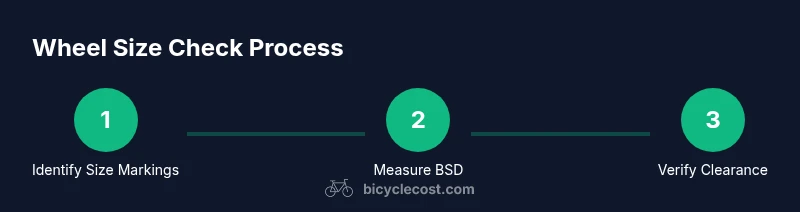
Inspect the tire sidewall and locate the ISO/ETRTO size (e.g., 25-622) or the common inch size (e.g., 700x25c). Write down both the width and BSD values. This is your starting point for compatibility checks.
Tip: If you see both ISO and inch sizes, prefer the ISO/ETRTO data for accuracy. - 2
Confirm BSD on the rim
Use calipers to measure the bead seat diameter directly on the rim. This measurement is the true wheel size reference that ensures the tire you buy will seat properly.
Tip: Measure in millimeters at multiple points to confirm consistency. - 3
Measure outer diameter (optional)
With the tire mounted, measure the wheel’s overall diameter if you cannot remove the tire. This helps you quickly spot obvious mismatches, though it’s less precise than BSD.
Tip: This step is a quick sanity check, not a replacement for BSD. - 4
Record width and diameter values
Create a simple record of BSD, tire width, and any frame clearance notes. This makes future shopping faster and reduces the risk of buying incompatible parts.
Tip: Keep this on hand when visiting shops or ordering online. - 5
Check frame and brake clearance
Ensure the chosen tire width fits between forks, brake calipers, and stay clear of any disc rotor or brake components. If you plan an upgrade, verify clearance under compression.
Tip: If you’re unsure, test fit with the wheel without inflating the tire first. - 6
Verify hub and axle compatibility
Confirm the hub spacing and axle type match your bike frame and the chosen wheel. Mismatched hubs or thru-axles can prevent a wheel from mounting.
Tip: Bring wheel specs or ownership documents when shopping for a new wheel. - 7
Mount and inflate carefully
Mount the tire with correct bead seating, inflate gradually to the recommended pressure, and check for leaks, rub, or misalignment.
Tip: Use tire levers gently to avoid pinching the tube; never exceed recommended max pressure. - 8
Test ride and confirm fit
Take a short ride to verify handling, braking, and clearance. Listen for rubs or unusual contact and recheck torque settings if you changed hubs or axles.
Tip: If anything feels off, stop riding and re-evaluate size and clearance before continuing.
People Also Ask
What does the '622' in 700x25c mean?
622 is the bead seat diameter in millimeters. It defines the rim size that the tire must seat onto. Use this value to ensure wheel and tire compatibility.
622 is the rim's bead seat diameter; match it when shopping for tires and wheels.
Can I use 29-inch tires on a 700C rim?
Many 29er tires are designed for rims with the same BSD (usually 622 mm). If the BSD matches, a 29er tire can fit a 700C rim, but you must verify width and clearance with your frame and brakes.
A 29er tire can fit a 700C rim if the bead seat diameter and clearances match.
Is tire size the same as wheel size?
No. Tire size refers to width and overall diameter, while wheel size refers to the rim's bead seat diameter. Always align both to avoid mounting issues.
Tire size is not the same as wheel size; check both to ensure compatibility.
Do kids bikes use the same standards?
Kids bikes use a range of sizes with their own BSD values. Always check the tire sidewall and rim label for the precise BSD and recommended tire width.
Kids bikes have their own BSD values; use the tire label to verify.
How do I know if a new wheel will fit my frame?
Check dropout spacing, hub type, and brake compatibility first. Then confirm the BSD and tire width won’t rub the brakes or fork.
Check spacing, hub type, and brake compatibility before buying a new wheel.
What about tubeless tires?
Tubeless tires require rims labeled tubeless-ready and appropriate sealant. Verify rim tolerance, bead seating, and valve compatibility before mounting.
Tubeless tires need tubeless-ready rims and proper sealant.
Watch Video
Quick Summary
- Identify the BSD first for accuracy.
- Read ISO/ETRTO markings to confirm the wheel size.
- Check frame clearance before upgrading tire width.
- Verify hub/axle compatibility with the new wheel.
- Test ride to confirm performance and safety.