How to Check Bicycle Tyre Size
Learn how to check bicycle tyre size, decode ISO/ETRTO markings, and verify tire/rim compatibility. Step-by-step guidance, common pitfalls, and expert tips from BicycleCost.


Why tyre size matters for performance and safety
Knowing how to check bicycle tyre size is essential for safe riding, correct tire fit, and optimal performance. According to BicycleCost, accurate tyre sizing helps prevent flats, improves handling, and ensures tubes and tires work together with your rims. Tyre size affects ride comfort, puncture resistance, and speed, and choosing the wrong size can cause bead failure or rim damage. In this section, we explain what size markings mean, how tire width interacts with rim width, and why matching size to your wheel is non-negotiable. You’ll see common examples such as ISO/ETRTO sizes like 37-622 and traditional labels like 700x25C, and you’ll learn the practical steps to verify what’s on your bike today.
Practical sizing isn’t just about numbers; it’s about how the tire meets the rim, how wide the rim is, and what riding you do. If you ride on rough roads or trails, wider tires with compatible bead seats can improve grip and reduce pinch flats. If you ride on smooth pavement, narrower tires may roll faster, but only if the width and BSD match your rim. BicycleCost’s approach blends measurements, markings, and practical checks to help you ride safely and confidently.
Sizing systems explained: ISO/ETRTO vs historical inch sizing
Bicycle tyre sizes come in two main languages: ISO/ETRTO and traditional inch-based labeling. ISO/ETRTO uses a pair of numbers like 37-622, where 37 is the tire width in millimeters and 622 is the bead seat diameter (BSD) in millimeters. The outer diameter when mounted can vary with tire width, but the critical fit is the BSD and width range. Traditional labels (for example 700x25C) describe an approximate outer diameter and width, and can be interpreted differently across brands. Knowing both systems helps you shop confidently across retailers and ensures you don’t buy a tire that won’t mount or seal on your rim. In practice, most modern hybrids, road bikes, and many mountain bikes use BSD 622 (the old 700c standard), while mountain bikes often sit on BSD 584 for some older 29er setups. The key is to verify BSD and width compatibility, not rely on the outer diameter alone.
When you see a label like 37-622, you’re looking at a size that should fit a rim designed to BSD 622. If you see 28-622, that’s a narrower option but still within the same BSD. Understanding how width relates to rim compatibility helps you pick tires that won’t rub on the brakes or foul the frame. For riders who replace tires frequently, learning to read both nomenclatures saves time and reduces returns. Remember, the rim’s internal width also affects which tires will actually seat and seat correctly on your wheel.
Where to find tyre size numbers on your bicycle
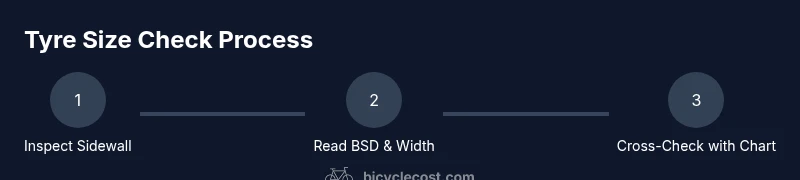
Most bicycle tyres display ISO/ETRTO markings on the sidewall or near the bead. You’ll usually find a pair of numbers separated by a dash, such as 32-622 or 40-635. If you see only a single number or a nonstandard label, don’t force a fit—verify with the wheel manufacturer or a trusted retailer. In addition to sidewall markings, you can consult the rim’s bead seat diameter specification, often stamped on the rim itself or listed in the wheel’s documentation. If the numbers are faded, wipe the sidewall clean, photograph it, and use a magnifying glass to read the code. Some tires also display the maximum tire width that the rim can safely accommodate, which helps prevent over‑wide tires from rubbing on brake calipers or frame corners. When in doubt, measure the BSD with calipers or a precise ruler and cross-check with a sizing chart.