How Big Is a Bicycle? A Practical Sizing Guide for Riders
This guide explains how big a bicycle is by exploring wheel sizes, frame geometry, and rider measurements. Learn typical adult and kids size ranges, plus practical steps to choose a size that fits for comfort and efficiency.


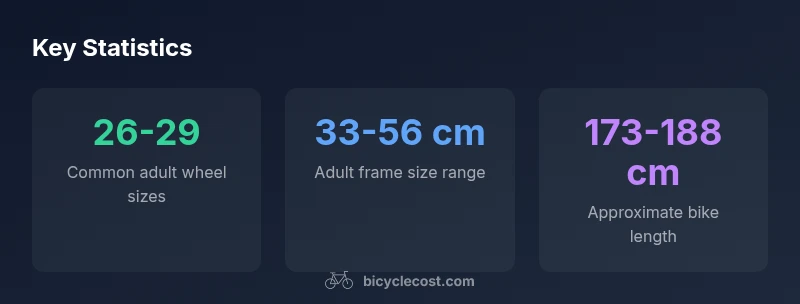
How big is a bicycle? In practical terms, a bicycle’s size is determined by wheel diameter and frame geometry. Adult bikes typically use wheels of 26, 27.5 (650b), or 29 inches, while frame sizes range roughly from 13 to 22 inches (33–56 cm) of seat-tube length. Kids’ bikes use smaller wheels and scaled frames. Fit also depends on rider height and inseam. According to BicycleCost Analysis, 2026, understanding these dimensions provides a foundation for selecting a bike that feels comfortable and efficient on the road or trail.
What 'how big' means in bicycles
In practical terms, answering how big is a bicycle starts with wheel sizes and frame geometry. Adult bikes typically use wheels of 26, 27.5 (650b), or 29 inches, while frame sizes range roughly from 13 to 22 inches (33–56 cm) of seat-tube length. Kids’ bikes use smaller wheels and scaled frames. Fit also depends on rider height and inseam. According to BicycleCost Analysis, 2026, understanding these dimensions provides a foundation for selecting a bike that feels comfortable and efficient on the road or trail. This is the core idea behind BicycleCost's sizing guidance, which emphasizes practical measurements over guesswork.
Wheel size and overall footprint
Wheel diameter has immediate effects on the bike’s overall footprint, rollover capability, and gearing feel. Larger wheels tend to lengthen the effective wheelbase and alter steering characteristics, while smaller wheels offer quicker handling and greater stand-over clearance for shorter riders. The most common adult wheel sizes are 26, 27.5, and 29 inches, with 700c prevalent on many road bikes. When considering how big is a bicycle, remember that wheel size interacts with fork design, frame geometry, and tires to determine fit and ride quality. In practice, you’ll see a spectrum rather than a single standard.
Frame size: seat-tube length and stand-over
Frame size is typically discussed in terms of seat-tube length, or more recently, effective top tube length and stack/reach. Seat-tube measurements usually range from approximately 33 cm to 56 cm for adults, translating roughly to 13”–22” frames, though brands vary. The critical fit factor is stand-over height—the clearance between the top tube and the rider’s inseam when standing over the bike. A comfortable stand-over clearance is essential to avoid toe and shin contact, especially for beginners or riders with limited flexibility.
Geometry, reach, and the bike's length
Beyond wheel size and frame size, geometry controls how long the bike feels and how it positions you. The reach (horizontal distance from the saddle to the handlebars) and stack (vertical height of the handlebar relative to the bottom bracket) determine a rider’s seated and standing posture. A bike with a long top tube and short head tube may feel stretched, increasing knee bend and pressure on the back. Conversely, a short reach can produce a more upright position but reduced aero efficiency. These aspects collectively influence the bike’s overall length and how big it feels when you ride it.
Type-specific sizing differences you should know
Different bike types have distinct sizing norms. Road bikes typically use taller frames with longer top tubes for efficient, aerodynamic positions. Mountain bikes often rely on slacker geometry to improve stability on descents, with varying wheel sizes from 27.5 to 29 inches. Hybrids blend traits of both, aiming for versatile comfort. When asking how big is a bicycle for a given rider, you must consider the rider’s goals: commuting, racing, trail riding, or casual cruising. Brand charts vary, so use them as a starting point rather than a final rule.
How to measure yourself and read size charts
A precise approach starts with measuring your inseam and your overall height. Inseam length helps estimate seat height; dividing inseam by 0.883 (typical for many road bikes) gives a rough saddle height in centimeters. Use this as a baseline and then check the brand’s size chart. Factor in your torso length, arm length, and riding style. If you’re between sizes, prefer the smaller frame with an adjustable saddle and handlebar position; you can fine-tune fit with spacers and stem adjustments. Always verify fit with a test ride.
Size ranges and sizing considerations by bike type
| Aspect | Typical size range | Notes |
|---|---|---|
| Wheel size (adults) | 26-29 inches | Common options for adults |
| Frame size (adult) | 33 cm - 56 cm | Measured as seat-tube length |
| Inseam/stand-over clearance | 0 - 2 inches (0 - 5 cm) | Aim for safe clearance over top tube |
| Kids' sizing | 12-24 inches wheels | Proportional to age/height |
People Also Ask
What is the simplest way to determine my frame size?
Measure your inseam, compare to the brand's size chart, and test ride. If between sizes, start with the smaller frame and adjust saddle height.
Measure your inseam, check the chart, and try a test ride. If between sizes, opt for the smaller frame and tweak saddle height.
Do wheel size and frame size always match?
No. They are related but separate. Wheel size affects ride feel, while frame size determines saddle height and reach.
They’re connected but not the same. Wheel size changes ride feel; frame size sets your reach and saddle height.
Can kids' bikes use the same sizing rules?
Kids’ bikes scale with age and height; wheel choices range from 12 to 24 inches, matched to rider growth.
Kids’ sizing follows their height and growth; choose a wheel size that fits now and allows growth.
What if I’m between two sizes?
Choose the smaller frame and adjust saddle height, with spacers and stem changes if needed for comfort.
If you’re between sizes, go with the smaller frame and fine-tune the setup.
Is there a standard frame size for women vs men?
Most brands offer unisex sizing with fit depending on torso and leg length; gender-specific designs are less universal than they used to be.
There isn’t a universal gender standard—fit matters most for comfortable riding.
“Sizing a bicycle is about matching wheel diameter and frame geometry to your inseam, height, and riding goals. There is no one-size-fits-all.”
Quick Summary
- Start with wheel size and frame range.
- Use inseam and height to pick a frame.
- Road and mountain bikes have different sizing norms.
- Test ride to confirm comfort and reach.
- Consult brand-specific size charts for precision.