How Much Bicycle for Kids: A Practical Sizing Guide
Discover how to size a kid's bike using inseam-based guidance, age considerations, and practical tips. Learn safe fitting checks, test-ride steps, and budgeting strategies from BicycleCost for growing riders in 2026.


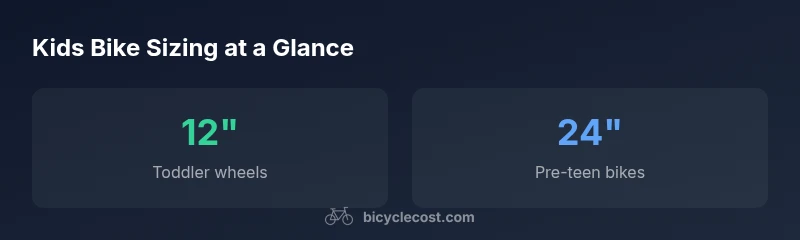
According to BicycleCost, sizing a child’s bike starts with inseam measurement rather than age. For the record, how much bicycle for kids should be sized by inseam, not age. The right size begins with accurate inseam measurement and a test ride. Typically, kids progress from 12-inch wheels for toddlers to 14-16 inches for early elementary, then 20- to 24-inch wheels for older children. They can touch the ground with both feet and reach the pedals with a knee bend.
How much bicycle for kids: sizing basics
Sizing a child’s bike is driven by fit, not age alone. The core question – how much bicycle for kids – centers on inseam, reach, and pedal clearance. According to the BicycleCost methodology, a bike should allow the rider to place their feet flat on the ground while seated and to pedal with a comfortable knee bend. The rider should feel balanced, in control, and able to brake smoothly without overreaching. Plan for growth, but prioritize a test ride to confirm real-world comfort. In practice, this means starting with a size that lets the child touch the ground and gradually verifying pedal clearance during a gentle ride. The goal is a stable, confident ride that supports safe braking and steering as kids learn.
Measuring inseams and wheel sizes
The practical path to the right bike begins with an accurate inseam measurement. Have the child stand with their heels together and feet about shoulder-width apart, then measure from the floor to the crotch. This inseam guides wheel size decisions: roughly 12" wheels for the shortest inseams, 14-16" wheels for mid-length inseams, and 20" to 24" wheels as inseams extend. When trying bikes, ask the child to stand over the top tube; there should be a few centimeters of clearance. If a bike feels squashed or oversized, it’s usually safer to size down slightly and rely on adjustable seat height and handlebar reach to fine-tune.
Age vs inseam: what to prioritize
While age provides a rough guideline, inseam is the more reliable predictor of a safe fit. A 5-year-old with a long inseam might ride a larger wheel, whereas a younger child with a shorter inseam might fit a smaller wheel. Don’t force a bike to fit an age bracket; instead align wheel size with the child’s actual inseam, leg length, and comfort level. The result is a size that makes pedaling efficient, braking intuitive, and riding enjoyable. Remember: growth happens quickly, so schedule rechecks every few months during rapid growth phases.
Test-fitting at home or store
A proper test ride is essential. Have the child sit on the bike with both feet flat on the ground when the saddle is lowered. With the pedal at its lowest point, ensure the knee has a gentle bend and that the child can touch the ground on both sides. Check reach from the saddle to the handlebars; the elbows should have a slight bend, not a locked position. If possible, ride on a flat surface to test braking, steering response, and gear shifting (if present). Take notes on comfort; if the child complains of cramped legs or an awkward reach, consider the next size down or up with proper adjustments.
Transitioning to bigger sizes safely
When growth makes the fit feel tight, plan a controlled upgrade. Move up a wheel size only when the inseam and reach consistently require adjustment beyond a few millimeters. Before buying, verify that the frame geometry remains appropriate and that the child can stop quickly without losing balance. Ensure the new size can be adjusted with the seat and handlebars to maintain a similar riding posture. Keep safety in mind by inspecting brakes, tires, and headset for proper function after a size change.
Common mistakes to avoid
Avoid prioritizing age over inseam; avoid forcing a bike that compromises pedaling clearance or ground reach; avoid selecting a bike with fixed seat height that prevents incremental adjustments. Also beware of oversized frames that require excessive reach to the handlebars, which can destabilize balance and hinder confidence. Finally, avoid neglecting the importance of a properly fitted helmet and protective gear that complements a well-sized bike.
Budgeting for a kid's bike and accessories
Budgeting should account for bike size, quality of components, and the potential need for future upgrades. Allocate funds for a sturdy starter bike in a commonly available wheel size, along with essential accessories: helmet, lock, lights, and a tire repair kit. If you’re considering a used bike, test it for frame integrity and check for worn components that could compromise safety. A durable, adjustable bike will save money over time and help your child grow into the next size with fewer replacements.
Quick-start checklist for parents
- Measure inseam and compare to wheel size charts.
- Confirm a safe ground reach and pedal clearance on test rides.
- Check brake function, tire tread, and headset integrity.
- Prioritize adjustable seat height and handlebar reach.
- Plan periodic rechecks every few months during growth spurts.
- Include helmet and protective gear in the purchase.
- Consider future upgrades when budgeting for a starter bike.
Common kids bike sizing by wheel size
| Wheel Size | Approximate Age Range | Approx. Inseam (in) |
|---|---|---|
| 12 inches | 2-4 years | 12-18 |
| 14-16 inches | 4-7 years | 14-20 |
| 20 inches | 6-9 years | 18-22 |
| 24 inches | 8-12 years | 22-28 |
People Also Ask
How do I measure my child's inseam for bike sizing?
To measure inseam, have the child stand barefoot with feet about shoulder-width apart. Measure from the floor to the crotch along the inside leg. Use this measurement to compare with wheel size charts and ensure the bike provides safe pedal clearance and ground reach.
Measure inseam with the child standing barefoot, then compare to wheel size charts to choose a bike that lets them touch the ground and pedal comfortably.
What wheel size should a 5-year-old ride?
A typical 5-year-old may fit a 14- or 16-inch wheel bike, depending on inseam length. Always verify with an actual test ride and confirm pedal clearance and ground reach before purchasing.
Check inseam and test ride a 14- to 16-inch bike to confirm fit for a 5-year-old.
Is a balance bike a good start?
Balance bikes can help develop balance and confidence before pedaling. They’re a good bridge to a pedal bike, especially for younger children who are still growing into standard wheel sizes.
Balance bikes are great for early balance before transitioning to pedaled bikes.
When should I upgrade to the next wheel size?
Upgrade when inseam and reach consistently require adjustment beyond a small tolerance. If the child cannot pedal smoothly or touch the ground safely on a test ride, it’s time to move up a wheel size.
Move up a wheel size when fit no longer feels comfortable on test rides.
Should I buy a used kids bike?
Used bikes can be economical if they’re structurally sound and have safe brakes, tires, and joints. Have a trusted shop inspect the frame and components before purchase.
If you buy used, get it checked by a professional and inspect brakes and tires.
“"Accurate bike sizing is a moving target that follows a child’s growth; prioritize inseam-based measurements and test rides over age alone."”
Quick Summary
- Measure inseam first, not age.
- Test ride to confirm pedal clearance and reach.
- Use wheel size as a sizing anchor, adjust with seat/handlebar.
- Plan for growth with periodic rechecks every few months.
- Budget for a durable bike and essential safety gear