What Size Bicycle for a 4 Year Old: A Practical Sizing Guide
Learn how to size a bike for a four-year-old with inseam, height, and growth considerations. Practical, data-driven guidance from BicycleCost Analysis (2026) to help you pick the right wheel size and ensure safe, confident riding.


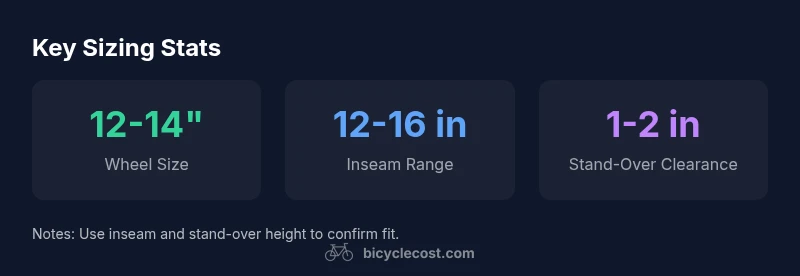
For most 4-year-olds, the right size bike usually means 12- to 14-inch wheel bikes, chosen based on inseam and stand-over height. The goal is to have about a knee bend at the bottom of the pedal stroke and to be able to stand over the frame with both feet flat. Always measure inseam and refer to a sizing chart for accuracy.
What size bicycle for a 4 year old: baseline guidance
Choosing a bike size isn't about age alone—it's about fit. For the question what size bicycle for a 4 year old, the answer usually centers on wheel diameter and the rider's inseam. The BicycleCost team notes that height and leg length provide more reliable guidance than age, and that the ideal bike should allow comfortable pedaling and easy dismount. In practice, most 4-year-olds fall into the 12- to 14-inch wheel category, but some may ride a 14-inch bike earlier or require a 12-inch bike a bit longer. The critical test is how the bike feels when the child sits on the saddle: can they reach the pedals with a slight bend in the knee? Are they able to stand over the frame with both feet flat on the ground? If not, the bike is too large; if the child cannot touch the ground, it may be too small.
We will frequently encounter the question, what size bicycle for a 4 year old, and the core guidance remains inseam- and stand-over driven rather than age-driven. Parents should also consider growth over the coming year and the bike’s geometry, which can influence balance and pedaling efficiency as the rider gains confidence.
Wheel sizes explained: 12, 14, and 16 inches
The most common wheel sizes for young riders are 12", 14", and 16". A 12" wheel bike is typically suited for children with an inseam around 12 inches and a height approximately 32–40 inches, providing a compact pedal circle and quick balance practice. A 14" wheel bike fits many children with inseams around 14–16 inches and heights near 38–44 inches, offering a bit more reach and stability. A 16" wheel bike is often appropriate for taller or more confident 4-year-olds, or those who are approaching 40–48 inches tall and have inseams in the 16–18 inch range. When choosing, prioritize how easily the child can place both feet flat on the ground and how the knee bends at the bottom of the pedal stroke. Remember, wheel size is a proxy for overall reach and balance; frame geometry and seat/handlebar adjustability also matter for a correct fit.
Practical mount/dismount test and growth considerations
- Stand-over height should allow the child to straddle the frame with a small clearance; knee bend should be comfortable with the pedal at its lowest point.
- Pedal reach should not force the child to overextend the knee.
- Look for bikes with adjustable seat posts and, if possible, adjustable handlebars to extend the usable life of the bike as your child grows.
- Growth-friendly bikes often include quick-release seat clamps or easy-to-change crankset options, reducing the need for immediate upgrades as height increases.
Measuring inseam and stand-over height accurately
To size a bike accurately, you’ll need two measurements: inseam and stand-over height. Inseam is measured from the ground to the crotch while the child stands barefoot with legs straight. Stand-over height is the distance from the ground to the top tube when the rider stands over the bike with feet flat. A safe rule of thumb is to have at least 1–2 inches of clearance for stand-over on the bike you choose, and enough inseam for the child to reach the pedals with a slight knee bend. When in doubt, test ride and adjust.
Growth, adjustability, and safety features
- Adjustable seat posts are essential for growing kids. A bike that can grow with the rider reduces the frequency of purchases.
- Quick-release clamps for seat height (and, if available, handlebar height) allow quick adjustments without tools.
- Consider bikes with grips that fit small hands and stable, predictable braking controls.
- Training wheels can be a transitional aid for balance, but ensure they’re removed as soon as the rider gains confidence.
Test-fitting at home or shop: a practical checklist
- Have the child wear comfortable sneakers and stand over the bike frame with both feet flat.
- Check if the inseam allows the knee to bend slightly when the pedal is at the lowest point.
- Confirm there is at least 1–2 inches (2.5–5 cm) of stand-over clearance.
- Verify the saddle height lets the child pedal with a slight knee bend at full extension.
- Inspect braking reach and hand size—can the child grab the brake levers without overreaching?
- If possible, take a short test ride in a safe area; observe balance and stopping ability.
Common sizing mistakes to avoid
Avoid choosing a bike solely by age. Age-based recommendations ignore growth rates and body proportions. A bike that’s too big can hinder balance and cause improper braking technique, while a too-small bike can restrict leg motion and reduce confidence. Always prioritize inseam and stand-over height, and ensure there is room to grow with adjustable components.
Quick-reference sizing checklist for parents
- Measure inseam and stand-over height.
- Start with 12" wheel bikes for shorter inseams; move to 14" as inseam and height increase.
- Prefer bikes with adjustable seat heights and, if possible, adjustable handlebars.
- Confirm the bike allows safe, flat-footed stance on the ground when stopped.
- Perform a short test ride to evaluate balance, braking, and comfort.
Real-world sizing examples: how it plays out in practice
Consider a child who is 39 inches tall with a 15-inch inseam. A 14-inch wheel bike may offer the best balance of reach and ground contact, but a tilt test over the saddle and leg extension should guide the final choice. For a child closer to 42 inches with a 16-inch inseam, a 16-inch wheel bike could be a better fit, providing more stability and room to grow. Always validate fit with a practical test ride.
Sizing data: wheel size vs height and inseam ranges for common 12"/14"/16" bikes
| Aspect | Recommended Wheel Size | Typical Height Range | Inseam Range | Notes |
|---|---|---|---|---|
| Smallest riders | 12-inch | 32-40 inches | 12-14 inches | Best for the shortest inseams |
| Mid-range fit | 14-inch | 38-44 inches | 14-16 inches | Common for many 4-year-olds |
| Tall/advanced riders | 16-inch | 40-48 inches | 16-18 inches | Suitable for older or taller 4-year-olds |
| Growth-ready options | Adjustable seats/handlebars | Varies | Varies | Prioritize growth features |
People Also Ask
What wheel size is best for a 4-year-old?
Most 4-year-olds fit a 12–14 inch wheel bike. Confirm fit with inseam and stand-over height, and rely on the bike’s grow-with-you features.
For most four-year-olds, a 12 to 14 inch wheel bike works best. Always check inseam and stand-over height and look for grow-with-you features.
How do I measure inseam for bike sizing?
Have the child stand with bare feet and legs straight. Measure from the floor to the crotch along the inner leg. Use this number to compare to bike inseam guidance from the manufacturer or sizing chart.
Stand and measure from the floor to the crotch along the inner leg, then compare with the bike's inseam guidance.
Can a child grow into a bike?
Yes, choose a bike with adjustable seat height and, if possible, adjustable handlebars. These features extend the lifespan of the bike as the child grows.
Yes—look for adjustable seat height and handlebars to extend the bike's usefulness.
Are training wheels recommended for four-year-olds?
Training wheels can help initial balance but should be removed as soon as balance improves. Some kids skip them altogether and learn with proper sizing and practice.
Training wheels can help initially, but many kids learn faster with a properly sized bike and practice.
What safety checks should I perform before riding?
Check brake reach, tire pressure, chain/gaiter lubrication, and helmet fit. Ensure the child can reach brakes and stop smoothly.
Check brakes, tires, and helmet fit before every ride.
What if the bike is too small or too large?
If too small, pedals or knees may hit the frame; if too large, the child can’t reach pedals or touch the ground. Reconsider wheel size or adjustable options and test fit again.
If it doesn't fit, you should reassess wheel size and test fit again.
“Accurate sizing is the foundation of safe, enjoyable riding for kids. Measure inseam, verify stand-over height, and choose a bike with room to grow.”
Quick Summary
- Prioritize inseam and stand-over height over age
- Start with 12–14 inch wheels for most 4-year-olds
- Choose bikes with adjustable seat posts for growth
- Test-fit with a short ride to confirm balance and braking
- Always verify 1–2 inches of stand-over clearance