How Big Is a 20 Inch Bicycle? A Practical Sizing Guide
Learn what '20 inch' means in bicycle sizing, how inseams and geometry determine fit, and practical steps to choose the right 20-inch wheel bike for kids and small adults.


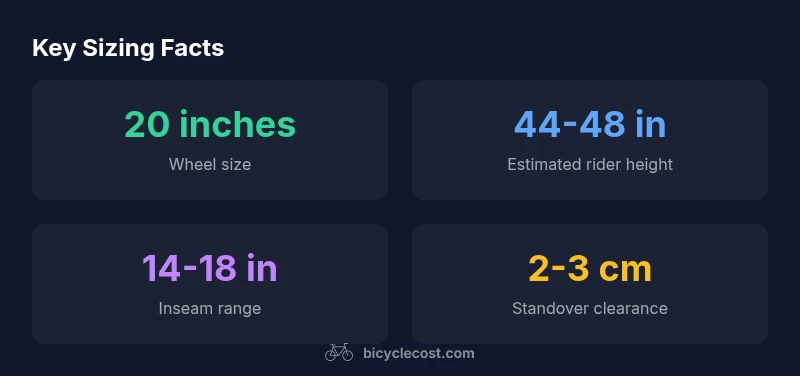
A 20-inch bicycle is named for its wheel diameter, not the rider or frame size. For sizing, measure the rider’s inseam and evaluate frame geometry for reach and clearance. In general, 20-inch wheel bikes suit kids around 44–48 inches tall, with proper seat height and stand-over clearance.
What a 20 Inch Bicycle Really Means
A 20-inch bicycle is named for its wheel diameter, not the rider's height or a fixed frame size. This convention helps shops categorize bikes for children but does not guarantee a perfect fit. In practice, a rider's inseam, torso length, and arm reach matter far more than age or height alone. According to BicycleCost Analysis, wheel size is the starting point for sizing that should be followed by geometry checks and adjustable features to ensure safe riding. When evaluating a 20-inch bike, the primary questions are: Can the rider stand over the frame without discomfort? Is the seat height adjustable to place the knee at a 15-25 degree bend at the bottom of the pedal stroke? Is the reach comfortable so that the rider can operate brakes and gears without over-extending? These checks set up a foundation for a bike that fits well and encourages confidence on the road or trail.
Wheel Geometry and Its Impact on Fit
Wheel size influences several geometry variables: standover height, wheelbase, and overall stability. With 20-inch tires, the bike's center of gravity sits a bit lower than larger wheel models, which helps balance but can reduce clearance over obstacles if the frame is too tall. Frame geometry, such as the top-tube length (reach) and seat-tube angle, determines how far you sit from the handlebars and pedals. Shorter top tubes make a more compact, upright posture, while longer top tubes demand more arm reach. For kids and smaller adults, a balanced combination of wheel size and frame geometry is key. The BicycleCost team notes that 20-inch wheels work best when paired with a frame designed for compact geometry and a seat post that allows meaningful vertical adjustment for growth.
Measuring for a Correct Fit: Inseam Rules of Thumb
Begin with an accurate inseam measurement: stand barefoot with feet about hip-width apart and measure from the floor to the crotch along the inner leg. Record this length in inches. Next, compare the bike's standover clearance—there should be a small gap when you straddle the frame with both feet flat on the ground. Then check the saddle height by placing your heel on the pedal at the lowest point; your leg should be almost straight. Finally, assess reach by sitting on the saddle and ensuring your hands lightly grip the brake levers without overextending. These steps, rooted in inseam-based sizing, prevent common fit issues and promote safe, confident riding. BicycleCost emphasizes that adjustments should be model-specific and verified with a test ride.
A Practical Sizing Guide: From Inseam to Ride
Use a simple three-step approach to translate inseam into a riding position:
- Step 1: Measure inseam (in inches). This guides frame height and standover clearance.
- Step 2: Verify saddle height and reach. The knee should bend about 25 degrees at the bottom of the pedal stroke, and the arms should maintain a comfortable bend without locking elbows.
- Step 3: Check the bike’s geometry in practice. A compact frame with a shorter top-tube length often suits younger riders better, even if wheel size is fixed at 20 inches.
- Step 4: Conduct a brief test ride. You should be able to pedal smoothly, stop confidently, and place your feet flat on the ground when stopped. If any of these aren’t true, reconsider the model or allow for more growth with a different setup. This process aligns with guidance from BicycleCost and ensures a practical, growth-aware fit.
Common Pitfalls and How to Avoid Them
- Overemphasizing age or height instead of inseam and torso length. Always measure inseam and torso reach.
- Choosing a bike solely by wheel size; frame geometry matters for balance and control.
- Ignoring adjustability; look for adjustable seat posts and handlebars that accommodate growth.
- Not testing the fit; a quick ride confirms comfort and control before purchase. BicycleCost cautions that even a 20-inch wheel can feel too large or small depending on geometry and your position on the bike.
How to Test Ride and Adjust
Take a structured test ride focusing on four elements: comfortable seating, confident stopping, stable steering, and adequate clearance. Start with a conservative pace, then accelerate to test braking response. If you notice toe or knee interference, or if you can’t reach the brakes easily, reassess saddle height and handlebar position. After the ride, adjust the saddle height, recheck brake reach, and reassess the stance. For growth, choose models with adjustable seat posts and consider step-through designs for easier mounting and dismounting. The BicycleCost Team recommends documenting measurements and trying multiple models to determine the best long-term fit.
Growth, Transitions, and Long-Term Considerations
Kids quickly outgrow bikes as they grow taller and longer in reach. When selecting 20-inch wheel bikes, prioritize models with adjustable components and clear growth pathways. Some riders may eventually transition to a larger wheel size (22–24 inches) as inseams lengthen and torso reach changes. Planning ahead reduces the frequency of full swaps. For parents and guardians, note that a well-fit 20-inch bike remains a practical stepping stone toward larger wheel bikes, especially if the geometry is designed for growth and the rider develops confident braking and steering skills. BicycleCost highlights that the key is not chasing a specific wheel diameter alone, but ensuring the bike remains safe, comfortable, and capable as the rider matures.
Sizing considerations for 20-inch wheel bicycles
| Aspect | Measurement | Impact | Notes |
|---|---|---|---|
| Wheel size | 20 inches | Defines wheel diameter | Affects standover and balance |
| Inseam-based sizing | 14-18 inches | Guides seat height and frame fit | Test with rider kneecap angle |
| Top-tube reach | Varies by model | Determines rider reach to bars | Important for upright posture |
| Standover clearance | 2-3 cm | Affects mounting/dismounting | Choose models with safer clearance |
People Also Ask
What does a 20-inch bicycle refer to?
A 20-inch bicycle refers to the wheel diameter, not the rider or the frame size. Fit depends on inseam, frame geometry, and adjustable components. Always verify with a test ride.
A 20-inch wheel is about the wheel size, not who rides it. Check inseam, frame geometry, and adjustability, then test ride to confirm.
Is a 20-inch bike suitable for a child who is 4'4" tall?
Height alone is not enough. Use inseam-based sizing and check standover clearance. Test rides are essential to ensure safe reach and pedal comfort.
Height matters, but inseam and reach are more important. Do a test ride to confirm fit.
How do I measure inseam for bike sizing?
Stand barefoot with feet about shoulder-width apart. Measure from the floor to the crotch along the inner leg. Record in inches. Use this inseam to judge frame height and seat position.
Stand barefoot, measure from floor to crotch along the inner leg, and note the inseam in inches.
What safety checks should I perform on a 20-inch bike?
Inspect brakes, tires, and gears. Confirm proper saddle height, handlebar position, and wheel alignment. Ensure quick releases or bolts are secure before riding.
Check brakes, tires, gears, saddle height, and handlebar alignment before riding.
Can an adult ride a 20-inch wheel bike?
Yes, for short, casual rides or learning, but geometry and reach should suit the rider. Most adults will prefer larger wheels for comfort and efficiency.
An adult can ride a 20-inch bike for fun or learning, but check geometry and reach. Bigger wheels are usually more comfortable for adults.
“For 20-inch bikes, proper fit starts with inseam-based sizing and thoughtful geometry—don't rely on wheel size alone. The best bikes support growth while keeping safe pedal reach and clear stand-over.”
Quick Summary
- Know wheel size reflects diameter, not frame size.
- Size by inseam, not height alone.
- Prioritize stand-over clearance and seat height.
- Test ride to confirm fit and comfort.
- Choose models with adjustable geometry for growth.