How Big Is an Adult Bicycle? A Practical Size Guide
Explore how big an adult bicycle typically is, what frame size and wheel choices mean for fit, and practical steps to pick the right size for comfort and performance.


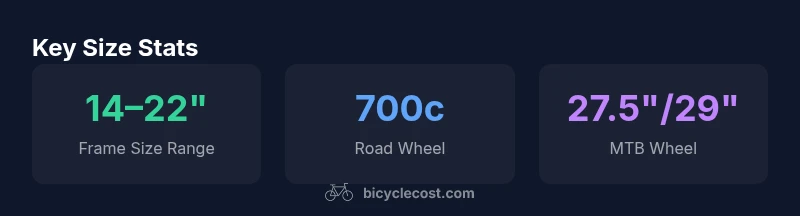
The size of an adult bicycle is defined mainly by frame size, which typically ranges from about 14 to 22 inches (35 to 56 cm) for many riders, though fit depends on inseam, torso length, and reach. Wheel sizes vary by bike type: road bikes commonly use 700c wheels, while mountain bikes commonly use 27.5" or 29" wheels. For accurate fit, start with inseam and reach measurements and consider a professional fitting if possible.
How big is an adult bicycle? A practical orientation
When you ask how big is an adult bicycle, the answer hinges on frame size, wheel choice, and riding goals. Frame size corresponds to the rider’s leg length and torso reach more than a single height number. A well-sized bike reduces knee strain, improves pedal efficiency, and makes steering feel natural. In general terms, adult bike frames span roughly 14–22 inches (35–56 cm), but the exact best size depends on inseam, arm length, and riding posture. The BicycleCost team notes that reliable fit begins with a quick check of inseam and reach, then confirms size with riding comfort tests. This means the question isn’t a single number but a fit story shaped by your body and intended use.
Frame size fundamentals: inseam, height, reach
Frame size is not a one-size-two approach; it’s a geometry question. Inseam length helps determine seat tube height, while reach from the saddle to the handlebars defines how stretched you’ll feel. Taller riders with longer torsos may need larger frames or different geometry to avoid cramped wrists or back pain. For road bikes, the frame size is typically expressed in centimeters or inches, while mountain and hybrid bikes may list sizes in inches or S/M/L clothing-like categories. A precise method is to measure your inseam, convert it using a sizing chart, and cross-check with your torso length and arm reach to estimate an initial frame size. Then a test ride confirms comfort and control.
Wheel sizes and geometry: road vs mountain
Wheel diameter heavily influences ride feel and overall bike geometry. Road bikes most often use 700c wheels, which pair with smaller frames to maintain efficient pedal geometry. Mountain bikes commonly use 27.5" or 29" wheels, which alter the effective top tube length and standover clearance. In practice, wheel size fits your riding terrain: road bikes prioritize speed and quick handling, mountain bikes emphasize traction and stability on rough surfaces. When sizing, ensure your chosen wheel size aligns with frame geometry to preserve comfortable reach, saddle height, and weight distribution.
The role of standover height and stand-over clearance
Standover height—how high you must clear the top tube when standing astride the bike—matters more on frames with taller top tubes. Sufficient clearance reduces the risk of hitting the tube and losing balance during sudden stops. For many adults, a standover clearance of 1–2 inches (2.5–5 cm) is a practical minimum, but this can vary with leg length and riding style. If you frequently place both feet flat on the ground at a stop, you may benefit from a slightly lower standover height or a frame with sloping geometry that increases clearance.
Home measurement guide: inseam, torso, arm reach
To size a bike at home, start with your inseam by removing footwear and standing against a wall with feet about 6 inches apart. Measure from the floor to your crotch to estimate saddle height using the classic formula: inseam in cm × 0.885 ≈ saddle height on a properly adjusted road bike. Next, assess torso length and arm reach by riding posture: your arms should be slightly bent with shoulders relaxed, and your elbow height roughly level with the saddle. Finally, confirm that the handlebar height allows a comfortable bend in the elbows and a neutral wrist position. This home measurement provides a solid starting point before test riding.
How sizing info is presented by manufacturers
Bike brands often publish size charts that map frame dimensions to rider height, inseam, and even torso length. However, variations in geometry—such as headtube angle, stack, and reach—mean two bikes with the same frame size can feel different. When shopping, compare multiple models within your target size range and pay attention to stack and reach numbers. If possible, visit a shop to sit on several frames and observe how the bike feels with your typical riding posture. Remember that size is a baseline; fit is refined by saddle setback, handlebar width, and the stem length.
Fitting and testing: the practical steps to size confidence
A formal fit with a professional bike fitter is the most reliable route to size accuracy, especially if you have unique proportions or injuries. If you forego a formal fit, plan a structured test ride: evaluate knee clearance at full extension, the angle of your knee over the pedal stroke, reach to the handlebars, and the ability to stand flat-footed with minimal toe contact on the ground. Make adjustments incrementally: saddle height first, then saddle fore-aft, followed by handlebar height and reach. Note how each change affects pedaling efficiency, breathing, and comfort. Your goal is a balanced, natural riding position that minimizes fatigue over longer rides.
Representative sizing ranges by bike category
| Category | Size Range | Wheel Size | Notes |
|---|---|---|---|
| Road bike | 52–58 cm (20.5–22.8 in) | 700c | Typically smaller frames for road geometry |
| Hybrid bike | 54–60 cm (21–23.5 in) | 700c | Balanced fit for commuting and light trails |
| Mountain bike | 15–22 inches (38–56 cm) | 27.5" or 29" | Rugged sizing for off-road performance |
People Also Ask
How do I know my frame size is right for me?
Start with your inseam and reach measurements. Compare them to a brand’s size chart, then test ride a few frames in that range to confirm comfort and control. If in doubt, a professional bike fitting can confirm optimal frame size and geometry.
Measure your inseam and reach, compare to size charts, then test ride. A professional fitting can confirm the best frame size for you.
Is wheel size more important than frame size?
Frame size is typically the primary determinant of fit, but wheel size changes ride feel and geometry. For new riders, focus on frame size first, then compare how different wheels affect handling and comfort.
Frame size mostly determines fit; wheel size changes how the bike feels and handles.
Can I ride a bike that's a size up or down?
Riding a bike that's not properly sized can cause knee, back, or neck strain. If you’re between sizes, choose the smaller size with adjustments like stem length or saddle height, and test ride for comfort.
Between sizes? opt for the smaller size with fit tweaks and a test ride.
How often should I get a professional bike fitting?
Get a professional fit when you buy a new bike, after major changes in flexibility or injuries, or if you experience persistent discomfort during rides. Regular tweaks can improve efficiency and comfort.
Consider a fit when you switch bikes or start feeling discomfort on rides.
What is standover height and why does it matter?
Standover height is the clearance between your body and the top tube when standing over the bike. More clearance reduces the risk of hitting the tube and losing balance. Adjust frame choice or geometry to ensure safe clearance.
Standover height is the clearance under the top tube—more clearance equals safer mounting.
What should I check during a test ride for size?
During a test ride, check saddle height, reach to bars, knee bend at the pedal, and the ability to stand comfortably over the bike. If anything feels strained, revisit frame size or geometry.
Test sit, reach, and knee bend; adjust as needed for comfort.
“Size is the foundation of comfort and efficiency; a properly sized bike reduces fatigue and lowers injury risk.”
Quick Summary
- Prioritize frame size first; wheel size complements the ride.
- Inseam, reach, and torso length determine the best size.
- Road bikes use 700c wheels; mountain bikes use 27.5" or 29" wheels.
- Standover height affects clearance and safety at stops.
- Consider a professional fitting for long-term comfort and performance.