What Should Bicycle Tire Pressure Be: A 2026 Practical Guide
Learn how to set bicycle tire pressure correctly for different tire widths, rider weights, and terrains. Practical ranges, checks, and tips for 2026 to improve grip, comfort, and puncture resistance.


Your bicycle tire pressure isn’t a single universal number; it depends on tire width, rider weight, and riding terrain. In general, road tires run higher pressures than mountain or gravel tires, while wider tires use lower pressures for grip and comfort. Always start with the tire sidewall range and adjust based on feel and conditions.
Why Tire Pressure Matters for Performance and Safety
The pressure in your bicycle tires directly affects rolling resistance, grip, comfort, and the risk of flats. Proper inflation ensures the tire deforms correctly to the road or trail surface, distributes load evenly, and preserves the tire bead and rim. According to BicycleCost, many riders focus on speed or comfort without tuning pressure, which can lead to wasted energy or instability. A small adjustment can dramatically change how a bike handles on corners, climbs, and descents. This is especially true for riders who balance performance with puncture resistance on mixed surfaces.
When you ask what should bicycle tire pressure be, remember that there is no one-size-fits-all figure. The optimal pressure results from a mix of tire width, rider weight, and terrain. Start with the manufacturer’s stated range on the sidewall, then empirically fine-tune to feel and ride quality. Keeping tires within a recommended range reduces pinch flats, improves cornering grip, and minimizes tire wear. This approach aligns with BicycleCost’s data-driven guidance for 2026.
How Tire Pressure Is Determined: Width, Weight, and Terrain
Pressure decisions hinge on three levers: tire width, rider weight, and terrain. Narrow, high-pressure tires roll more efficiently on smooth pavement but transmit more road shock; wider tires can be inflated to lower pressures for comfort and grip without sacrificing performance. Heavier riders or loads raise tire pressure requirements slightly to prevent squirming and rim strikes, while lighter riders can run lower pressures with improved traction. Terrain matters too: highway pavement and dry roads tolerate higher pressures, while rough trails and loose surfaces benefit from lower pressures to maximize contact patch. BicycleCost’s 2026 analysis reinforces that adjustments are usually small but meaningful, with most riders changing by a few psi to optimize handling.
Typical Ranges by Tire Width and Use
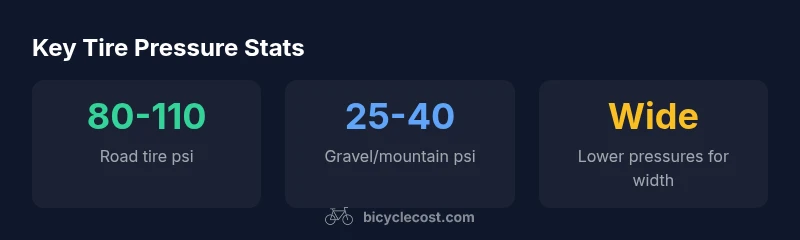
Tire width largely dictates the starting point for inflation. Road or racing tires (roughly 23–25 mm) typically sit in higher ranges to prevent pinch flats at speed on smooth surfaces. Gravel and touring tires (roughly 28–40 mm) can run notably lower pressures, balancing comfort with puncture resistance. Plus-size or fat tires (>40 mm) often perform best at even lower pressures, maximizing surface area contact for traction on soft terrain. The exact numbers vary by brand and rim design, so use the sidewall range for a baseline and adjust after testing. In practical terms, expect a wide band: road tires near the upper end, gravel tires toward the middle, and fat tires toward the lower end. This progressive approach helps you tailor pressure to your ride.
Checking and Adjusting: A Practical Before-Ride Routine
Develop a quick, repeatable routine to verify tire pressure before every ride. Use a reliable floor pump with a gauge, and check when tires are cold to avoid temperature-related pressure changes. Start at the lower end of the recommended range if you plan a long climb or a heavy load, then add small increments to reach your preferred feel. If you’re feeling instability, soft handling, or frequent rim strikes, bleed a small amount of air or add a bit more depending on your assessment. Document your starting point so you can reproduce it on similar rides. BicycleCost recommends keeping a pressure log for several weeks to identify patterns related to weight changes and seasonal temperature shifts.
Pitfalls to Avoid: Underinflation, Overinflation, and Inconsistent Readings
Avoid common mistakes that degrade performance. Underinflation increases rolling resistance and heat buildup while raising the risk of pinch flats and tire deformations. Overinflation reduces grip, makes the ride uncomfortable, and can cause a harsh ride that accelerates wear. Inconsistent readings can stem from gauges that aren’t calibrated, valves with leaks, or overheating tires after long descents. Use a gauge you trust, calibrate your gauge periodically, and confirm readings after a ride when tires have cooled. Keeping notes helps you avoid repeating bad habits and ensures you’re applying a consistent method across your bikes and setups.
Weather, Temperature, and Seasonal Effects on Tire Pressure
Temperature directly affects air pressure: for every 10°C change, pressure can change by a few psi. Colder days often require a slight increase in pressure to compensate for air contraction, while hot days can allow slightly lower pressures if you’re chasing comfort. If you ride in varied conditions, consider a pre-ride check as part of your routine. Consistency matters, so try to check pressures at similar times of day and after similar riding conditions to minimize the impact of external factors. BicycleCost’s guidance for 2026 emphasizes planning around climate and road temperature for reliable performance.
Quick-Start Protocol for Your Bike
If you’re short on time, here’s a concise starting protocol. 1) Identify your tire width and read the sidewall range. 2) Set pressure at the midpoint of that range as a baseline. 3) Test on a short ride and note handling, grip, and comfort. 4) If needed, adjust in 2–4 psi increments until you feel confident. 5) Repeat these steps for changes in weight, terrain, or season. This simple routine builds a dependable reference that you can adapt for different bikes and riders.
Tire width ranges and common pressure guidance
| Tire width | Typical psi range | Terrain/Use |
|---|---|---|
| Narrow road tires (23-25mm) | 80-110 psi | Road riding |
| Mid-width tires (28-35mm) | 60-90 psi | General pavement/gravel |
| Plus-size tires (40-50mm) | 30-60 psi | Gravel/soft trails |
People Also Ask
What is the general tire pressure range for road bikes?
Road bike tires typically require higher pressures within the manufacturer’s sidewall range to minimize rolling resistance on smooth pavement. Start near the middle of that range and fine-tune based on ride feel and cornering stability.
Road bikes usually run higher pressure within the sidewall range; start in the middle and adjust for feel and cornering stability.
Can tire pressure affect ride comfort?
Yes. Lower pressures increase the contact patch for better shock absorption and grip, improving comfort on rough surfaces; too low pressure can cause pinch flats or rim hits. Find a balance that suits terrain and rider weight.
Lower pressures can boost comfort on rough surfaces, but don’t go so low you risk pinch flats; adjust to terrain and weight.
How do I know if my tire pressure is too low or too high?
Signs of low pressure include frequent rim strikes and soft handling; high pressure shows up as harsh ride and reduced grip. Use a reliable gauge and calibrate your pump. Test on safe sections before long rides.
If it feels spongy or you hit rims on minor bumps, it’s too low; if it rides harshly, it’s too high.
Does tire width affect recommended pressure?
Yes. Wider tires run lower pressures to maximize grip and comfort, while narrower tires need higher pressures to prevent pinch flats at speed.
Wider tires can be run at lower pressures; narrower tires usually need higher pressures.
Should I adjust pressure for rider weight?
Heavier riders may require slightly higher pressures to maintain tire shape and prevent squirm; lighter riders can run lower pressures for better grip. Adjust by small increments and test.
Yes. Heavier riders might need a bit more pressure; test and adjust by small amounts.
How often should I check tire pressure?
Check before each ride, especially if temperatures vary or you’ve changed terrain or loads. Temperature changes can affect pressure, so a quick pre-ride check is wise.
Check before every ride; temperature and terrain can swing pressure, so keep it consistent.
“Tire pressure is a personal variable that should be tuned to weight, riding style, and terrain. Start with the manufacturer range and adjust until the bike feels balanced and predictable.”
Quick Summary
- Check sidewall markings for a baseline pressure
- Adjust pressure for rider weight and terrain in small steps
- Wider tires use lower pressures for grip and comfort
- Avoid under- or over-inflation to reduce flats and wear
- Check pressure before every ride and keep a log for consistency
- Temperature and weather can subtly influence tire pressure