What If Bike Chain Is Loose: A Practical Troubleshoot Guide
Urgent, practical troubleshooting for a loose bike chain. Learn quick checks, a step-by-step fix, safety tips, and when to seek professional help to prevent accidents and drivetrain damage in 2026.


A loose bike chain is most often caused by wear, stretching, or a derailleur misadjustment. Start with quick checks: inspect chain wear, ensure the chain seats properly on the sprockets, and tune derailleur tension. If the chain remains slack under load, stop riding and inspect the cassette, chainrings, and pulleys for wear. This is urgent—address it before it worsens.
Symptoms and risks of a loose bike chain
A loose bike chain can slip, skip gears, or drop off the chainring, especially under load. According to BicycleCost, a chain that feels slack or shifts unpredictably is a safety red flag. Riding with a chain that has excessive play increases the risk of derailing, wheel strike, or gear damage, and can lead to sudden loss of propulsion on busy streets or hills. Start by noting when the problem occurs: during acceleration, under load, or on rough pavement. Inspect for visible wear on links, rust, stiff links, or a chain that doesn’t sit squarely on the sprockets. If you notice even a few signs, treat it as urgent and proceed with checks in a controlled, safe environment.
Why chains loosen: wear, stretch, and drivetrain geometry
Chains loosen primarily due to wear and stretch over time, compounded by drivetrain geometry and shifting habits. A worn chain does not engage evenly with the cassette teeth, which can create slack and cause slipping. Misadjusted derailleur settings or loose cable tension similarly allow the chain to sag or skip under load. Environmental factors like dirt, rust, and lack of lubrication accelerate wear. Based on BicycleCost analysis, most chain slack comes from wear and misadjustment rather than an outright break, so early detection and maintenance save money and prevent accidents.
Quick safety checks you can do on the road
- Shift to the smallest chainring and smallest rear cog to reduce tension and observe the chain's behavior.
- Spin the pedals slowly; listen for grinding or rubbing, and look for the chain rubbing the frame or derailleur.
- Check for stiff or rusted links by flexing the chain with your fingers (do not force movement).
- Inspect the derailleur hanger alignment; a bent hanger can mimic chain slack.
- If you notice looseness or skipping under load, stop riding and seek a safe, flat spot to inspect further.
How to diagnose the exact cause
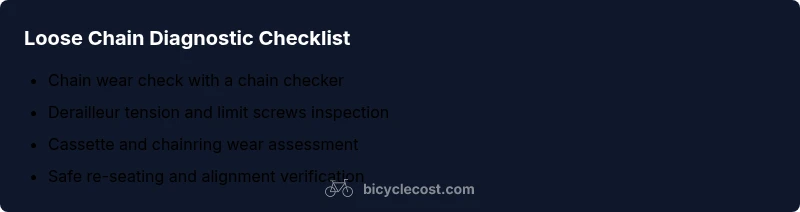
Begin by ruling out immediate derailleur issues: test the derailleur cable tension and limit screws; a loose cable or mis-set screw can create chain slack. Next, check the chain for wear using a chain wear tool; if the chain has elongated beyond the recommended threshold, replace it. Inspect the cassette and chainrings for worn teeth or hooked shapes; worn parts make a fresh chain behave poorly. Finally, ensure the chain is properly seated on the chainring and sprockets during shifting; a misaligned chain can slip even on a new chain.
When to service: limits of home fixes
Most home fixes cover simple adjustments and chain replacement. If your chain is visibly stretched, links stiff, or you notice skipping that worsens with speed, it’s safer to replace the chain and inspect the cassette. If the derailleur cage is bent, or you’re unsure how to adjust screws, seek professional help. The goal is to restore precise shifting and prevent chain derailment.
Diagnostic flow overview (on-the-spot checkpoints)
Use this quick diagnostic checklist when you’re unsure which part is worn. Start with tension and derailleur alignment, then test with a new chain on a short ride. If shifting remains inconsistent, move to cassette and chainrings. Always verify the rear derailleur’s pivot is clean and moves freely. If you’re uncertain about any step, don’t ride aggressively—seek professional service to avoid drivetrain damage.
Common mistakes to avoid
- Over-tightening cable housing or misadjusting limit screws beyond safe range.
- Forcing a stiff or dirty chain instead of cleaning and lubricating.
- Assuming a new chain fixes a worn cassette or chainrings without inspection.
- Ignoring unusual noises or resistance during pedaling.
Preventive care to extend chain life
Regular cleaning and lubrication dramatically extend chain life and shift quality. Keep chains dry after rain, wipe away mud, and inspect for stiff links weekly during riding seasons. Replace the chain before wear becomes excessive, and check the cassette and chainrings for wear at the same time. A simple maintenance cadence saves money and reduces risk on busy roads.
Steps
Estimated time: 25-45 minutes
- 1
Reset safety and shift to the simplest gears
Before touching the chain, shift the derailleur to the smallest chainring and smallest rear cog to reduce tension. This makes the chain easier to inspect and reposition without strong resistance. Move slowly and keep hands clear of the crank.
Tip: Use gloves and a bike stand if possible to keep the bike stable. - 2
Check chain wear with a chain checker
Use a chain wear gauge to see if the chain has elongated beyond the acceptable limit. If it’s stretched, a new chain dramatically improves shifting and reduces the chance of future slip. Don’t rely on visual wear alone—measure for accuracy.
Tip: Check both inner and outer links for wear indicators. - 3
Clean and lubricate the chain
Even a lightly dirty chain can skip or feel slack. Wipe clean, dry, then apply a lubricant designed for your riding conditions. Wipe off excess to prevent dirt buildup.
Tip: Lube after rides in dry weather; re-lubricate more frequently in wet or dirty conditions. - 4
Tune derailleur tension and limit screws
Lightly turn the barrel adjuster to fine-tune cable tension until shifting is crisp across gears. Verify the high and low limit screws prevent the chain from overshifting off the gears.
Tip: Small turns go a long way; test after each adjustment. - 5
Re-seat the chain on chainring and cassette
Carefully align the chain with the teeth of the chainring and cassette as you rotate the crank. Ensure the chain sits fully on teeth and doesn’t skip between links.
Tip: Rotate crank slowly while guiding the chain with your fingers. - 6
Test ride and observe shifting under load
Take a short ride on varied terrain to verify shifting remains precise under load. Listen for slipping, rubbing, or resistance and be prepared to stop if safety is compromised.
Tip: Avoid aggressive shifts until you confirm the issue is resolved.
Diagnosis: Chain is slack, slips under load, or refuses to engage gears.
Possible Causes
- highWorn chain elongation
- highMisadjusted derailleur or improper cable tension
- mediumWorn cassette or chainrings causing poor engagement
Fixes
- mediumReplace worn chain; use a chain checker to confirm elongation and install correct length
- easyAdjust derailleur tension and limit screws; ensure proper cable tension
- mediumInspect and replace worn cassette/chainrings; ensure compatibility with new chain
People Also Ask
What does a loose bike chain feel like?
A loose chain may feel slack, slip under load, or fail to engage gears smoothly. You might hear rubbing or see the chain skip on the sprockets. If this happens, perform checks and adjustments before riding further.
A loose chain feels slack and may slip when you pedal hard. Check wear and derailleur tension, then adjust or replace as needed.
Can a loose chain cause accidents?
Yes. A chain that slips or derails can cause sudden loss of propulsion or a derailment, especially on hills or busy roads. Stop riding and diagnose the issue safely.
Absolutely—slipping or dropping chains can lead to loss of control. Stop riding and inspect the drivetrain before continuing.
Is a loose chain the same as a stretched chain?
Not exactly. A stretched chain means the links have elongated; a loose chain may still be within wear limits but not seated properly or tensioned correctly. Both reduce performance and safety.
They’re related but not identical. Wear causes elongation; misadjustment can also feel loose even when not worn.
How often should I replace a chain?
Replacement depends on riding conditions and wear. Use a chain checker regularly and replace before the chain elongates enough to cause poor shifting or chain slip.
It depends on use, but check regularly and replace when wear is detected.
Should I replace cassette/chainrings with a new chain?
Often yes. A new chain on worn cassette or chainrings will skip and wear quickly. Inspect all drivetrain parts and replace as needed to maintain smooth shifting.
If the gears look worn, replace them along with the chain.
What tools do I need to fix a loose chain?
A chain tool, hex wrenches, a derailleur hanger alignment tool if needed, and a chain wear checker. Having lubrication and a clean rag helps during maintenance.
You’ll want a chain tool, some wrenches, and a good chain wear gauge.
Watch Video
Quick Summary
- Check chain wear regularly and replace before stretch becomes dangerous
- Realign derailleur and tension to restore smooth shifting
- Replace worn cassette/chainrings with a new chain for best results
- Test ride safely and re-check after adjustments